

How to Make Money Forex Trading in India
💹 Explore practical forex trading tips for Indian traders! Learn strategies, risk management, and how to improve your chances of earning money in forex markets.
Edited By
Benjamin Foster
Forex trading, or foreign exchange trading, involves buying and selling currencies with the goal of making profits. Unlike stock markets, forex trading happens 24 hours a day during weekdays because it operates across global time zones. In India, forex trading is gaining traction as more individuals look for alternative investment avenues beyond traditional stocks and fixed deposits.
Forex markets work by exchanging one currency for another, such as exchanging Indian Rupees (₹) for US Dollars ($). The prices depend on various factors like economic indicators, geopolitical events, and market sentiment which constantly shift currency values.
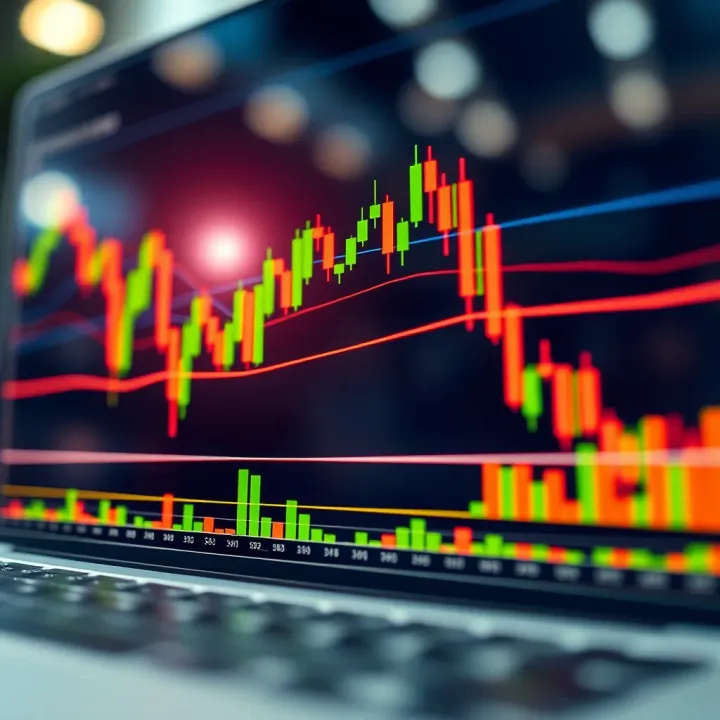
Understanding forex trading basics means knowing about currency pairs. For example, EUR/USD (Euro/US Dollar) is a common pair where traders speculate on whether the Euro will strengthen against the Dollar or vice versa. In India, the Reserve Bank of India (RBI) regulates forex trading to ensure market stability and prevent excessive speculation.
Successful forex trading requires discipline, clear strategies, and savvy risk management. It's not about luck but understanding how the market moves.
To get started, know these key points:
Major currency pairs: These include USD/INR, EUR/USD, GBP/USD, USD/JPY, where USD is mostly involved.
Market participants: Banks, corporations, governments, and retail traders like you and me.
Leverage: Brokers offer leverage allowing traders to control larger positions with smaller capital, but this increases risk.
Volatility: Forex markets can see sharp price movements several times a day.
For Indian traders, it's vital to use SEBI-regulated brokers that comply with Indian laws. Avoid unregulated platforms promising high returns; forex is risky and requires proper education.
Grasping these basics will prepare you for the more detailed strategies and technical concepts that follow. Remember, forex trading moves quickly, and learning to read charts and economic news carefully helps traders take better decisions.
In the upcoming sections, we'll explore how to read forex charts, common trading strategies, the importance of managing risks like stop-loss orders, and tools suited for Indian traders to enter the forex market confidently.
Forex trading forms the backbone of global financial markets. It allows individuals, companies, and governments to exchange currencies, which supports international trade and investment. For an Indian trader or investor, understanding forex trading is key to tapping into opportunities beyond domestic markets, whether for hedging risks or seeking profit.
The forex market’s high liquidity and 24-hour nature make it attractive. But without a solid grasp of its basics, traders risk costly mistakes. Knowing what drives currency movements and how the market functions is essential. For example, an exporter in Mumbai may watch the USD/INR exchange rate closely to time payments or receipts effectively, whereas a student contemplating investing in dollar assets needs to understand currency risk.
Forex trading involves buying one currency while simultaneously selling another. Unlike stock markets, forex is purely about currency value changes relative to each other. Every trade happens in pairs—like EUR/USD or GBP/INR—where one currency’s value is measured against another. Profit depends on predicting these relative moves correctly.
Traders range from individuals speculating on currency movements to multinational corporations managing currency exposure due to cross-border business. The forex market is the largest financial market in the world, with daily turnover exceeding $6 trillion, reflecting its significance.
The forex market includes various players, each with distinct roles. Commercial banks handle the bulk of currency transactions, facilitating international payments and liquidity. Central banks intervene to stabilise their currencies and control inflation; for example, the Reserve Bank of India (RBI) periodically buys or sells rupees to influence the exchange rate.
Hedge funds and institutional traders seek profit from currency moves, often using sophisticated algorithms. Retail traders, like many Indians using online platforms, engage in forex mainly for speculative purposes. Understanding who moves the market helps in gauging liquidity, volatility, and price trends.
Forex operates 24 hours, split across major global trading sessions: Sydney, Tokyo, London, and New York. Each session reflects activity in its region, producing periods of higher volume and volatility. For instance, the London session overlaps with New York in the afternoon, often seeing significant price swings.
Indian traders should note these timings as the Mumbai stock market operates strictly during 9:15 am to 3:30 pm IST. Forex trading outside these hours requires attention to session overlaps and news releases that may cause sudden currency shifts while Indian markets are closed. Matching your trading strategy with the right session improves opportunities and manages risk better.
Forex trading is a dynamic market where timing, participant roles, and currency fundamentals directly impact outcomes. Understanding these aspects is your first step to trading confidently and smartly.
Grasping the key concepts in forex trading is essential to navigate the market confidently. This section breaks down currency pairs, pips, lots, and leverage, which form the backbone of your trading decisions. Understanding these helps you measure risk, calculate profits or losses, and manage your position size effectively.
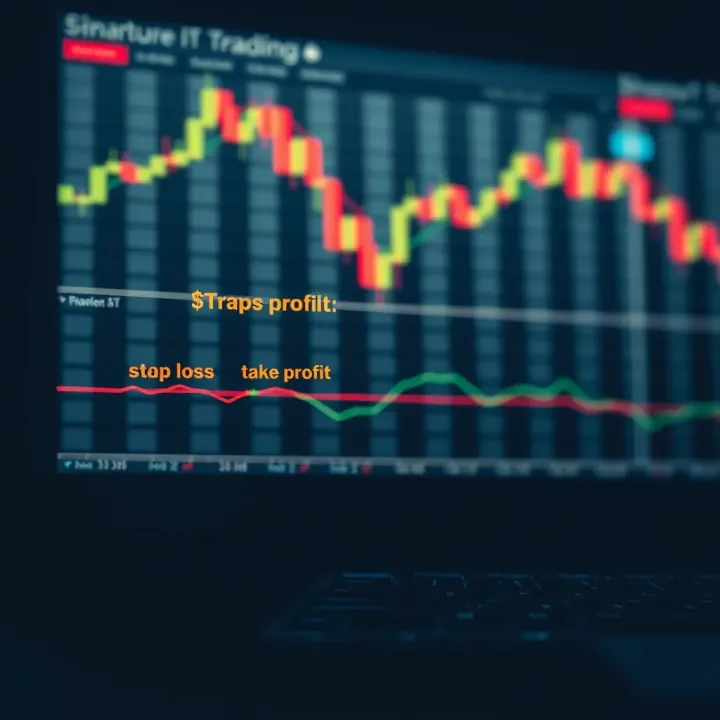
In forex, trading always involves two currencies expressed as a pair. Major pairs feature the most traded currencies globally, like USD/INR or EUR/USD. These pairs generally offer good liquidity and tighter spreads, so traders often prefer them for cost efficiency. Minor pairs exclude the US dollar but include other important currencies like EUR/GBP or AUD/NZD. Though less liquid, they can present unique trading opportunities.
Exotic pairs combine a major currency with that of an emerging market, such as USD/TRY (Turkish Lira) or EUR/INR. These pairs tend to be more volatile with wider spreads, reflecting higher risks and possible big moves. For example, USD/INR can fluctuate based on India’s economic news, creating chances for traders who can handle the ups and downs.
Understanding the base and quote currency clarifies how prices are read. The base currency is the first in the pair, and the quote currency the second. Essentially, the exchange rate tells you how much quote currency you need to buy one unit of the base currency. If USD/INR is quoted at 82.50, it means ₹82.50 is needed to buy one US dollar. This helps you calculate the value of trades and decide when to buy or sell.
A pip is the smallest price movement in a currency pair, usually the fourth decimal place (0.0001). Pips help traders assess market changes in manageable increments. For instance, if USD/INR moves from 82.5000 to 82.5100, it has gained 10 pips. Knowing pip value is practical when calculating your potential profit or loss.
Trading happens in lots, standardised units of currency. A standard lot equals 100,000 units of the base currency, but smaller lot sizes like mini (10,000 units) and micro lots (1,000 units) are available. For beginners, micro lots help limit exposure until more experience is gained. For example, buying one mini lot of USD/INR means trading ₹8,25,000 if the rate is 82.50.
Leverage lets you control a larger trade size with a smaller amount of your own money, using borrowed funds from your broker. It amplifies both profits and losses. For example, a leverage of 1:100 means you can trade ₹1,00,000 with just ₹1,000 in your account. While this can boost earning potential, it also magnifies risks. Traders must use leverage wisely and keep an eye on margin, the minimum funds required to maintain a position. Margin calls can happen if your losses approach your deposited funds.
Understanding these key terms—currency pairs, pips, lots, and leverage—helps you make informed choices in forex trading. Without this knowledge, trading becomes guesswork, increasing the chances of loss.
By mastering these basics, you build a solid foundation for more advanced strategies and risk management techniques covered later in the article.
Starting forex trading in India involves understanding the country’s legal framework, selecting the right broker, and setting up a trading account that fits your needs. This section simplifies these steps with a focus on what Indian traders specifically must consider.
The Reserve Bank of India (RBI) and the Securities and Exchange Board of India (SEBI) regulate forex trading activities in the country. RBI governs cross-border currency transactions and restricts forex dealings to government-approved platforms, ensuring compliance with foreign exchange laws. SEBI oversees trading activities for derivatives and securities, maintaining investor protection and market fairness.
For Indian residents, trading in forex is only permitted through recognised exchanges such as the National Stock Exchange (NSE) and Bombay Stock Exchange (BSE). Indian law does not allow trading in currency pairs outside of these official channels, so traders must stick to currency futures and options offered on these exchanges.
When selecting a forex broker, Indian traders should prioritise factors like SEBI registration, transaction costs, customer support, and platform usability. A broker authorised by SEBI follows strict regulatory standards, reducing risks related to fraud and fund security.
Popular forex brokers among Indian traders include Zerodha, Upstox, and Angel One, all of which offer access to currency derivatives on NSE and BSE. These brokers provide user-friendly apps, multiple order types, and feature integrations suited for both beginners and experienced traders.
To open a forex trading account in India, you need to submit identity proofs such as Aadhaar card, PAN card, and bank statements. These documents help verify your identity under Know Your Customer (KYC) norms mandated by regulators.
For funding your account, Indian traders commonly use net banking, UPI, or IMPS transfers from their linked bank accounts. Some brokers also accept payments via mobile wallets like Paytm or Google Pay, which adds convenience for smaller deposits. Choosing reliable, quick, and cost-effective payment methods is vital to ensure smooth trading operations.
Starting forex trading in India requires clear knowledge of regulations and choosing a broker that complies with local laws. This approach safeguards your investment and keeps your trading experience smooth and reliable.
Forex trading isn’t just about buying and selling currencies—having a solid strategy makes all the difference between consistent profits and losses. Understanding basic forex trading strategies helps traders spot opportunities and manage risks better. This section covers common techniques to give you a practical edge.
Using charts and indicators forms the backbone of technical analysis. Traders rely on price charts to track currency movements over different time frames—minutes, hours, or days. Popular indicators like the Moving Average (MA), Relative Strength Index (RSI), and Bollinger Bands help identify trends and potential reversal points. For example, if the RSI shows a currency pair as oversold, traders might expect a bounce-back, making it a chance to buy.
Charts simplify complex price data into visible patterns. This visual aid helps traders make quick decisions without getting overwhelmed by every tick. Using a candlestick chart, you can observe bullish or bearish sentiments instantly through patterns like 'hammer' or 'shooting star', signalling possible market direction changes.
Support and resistance levels are crucial landmarks in forex charts. Support is a price level where a falling currency might stop sliding because buyers step in to push prices up. Resistance acts as a ceiling where rising prices face selling pressure. Recognising these levels allows traders to enter or exit trades strategically instead of guessing.
For instance, if the USD/INR pair repeatedly drops to ₹74 and bounces back, ₹74 becomes a support level. Traders might set buy orders near this point, expecting a price rise. If it breaks below ₹74, it might signal a new downward trend, prompting stop-loss triggers.
Economic indicators and news impact play a major role in forex markets. Reports like GDP growth, inflation rates, unemployment data, and trade balances affect currency value. Traders watch these indicators closely as unexpected changes can cause sharp market moves.
For example, if India releases a stronger-than-expected GDP growth figure, the rupee may gain strength against the dollar. Conversely, weak industrial output might weaken it. Staying updated helps traders anticipate and react to such fluctuations better.
Interest rates and currency value maintain a tight bond. When a country’s central bank raises interest rates, its currency often appreciates because higher returns attract foreign investors. The Reserve Bank of India’s (RBI) policy changes directly influence the INR’s strength.
Suppose RBI hikes the repo rate to curb inflation. Foreign funds might flow into Indian assets, boosting demand for the rupee and increasing its value. Traders use such signals to time trades or hedge positions accordingly.
Day trading and scalping focus on short-term moves. Day traders open and close positions within the same trading day, avoiding overnight risks. Scalpers take this further by making multiple quick trades across minutes or seconds, aiming for small profits that accumulate.
This works well in volatile pairs like EUR/USD or GBP/USD, where price swings are frequent. However, such strategies demand constant attention and fast execution.
Swing trading and position trading suit those preferring longer-term plays. Swing traders hold positions from days to weeks, riding on medium-term market trends. Position traders go even longer, sometimes months, basing decisions more on fundamentals than minute price changes.
If you spot a steady uptrend in USD/INR due to sustained economic growth, a position trader might buy and hold through ups and downs, aiming for larger gains over time. This approach requires patience but suits traders who can’t monitor markets constantly.
Mastering these basic strategies equips you with tools to navigate forex markets confidently, balancing quick plays and thoughtful holds based on technical and fundamental insights.
Managing risks is a vital part of forex trading that every trader must prioritize. The foreign exchange market is highly volatile, with currency values fluctuating rapidly due to economic news, geopolitical developments, or market sentiment. Without proper risk management, even experienced traders can face heavy losses. It is not just about maximising profits but protecting capital to sustain longer in this fast-moving market.
Risk management helps you control the amount of money you are willing to lose on a trade. For example, if you start trading with ₹50,000, risking ₹500 per trade means you preserve most of your capital even if several trades go against you. This approach safeguards you from large drawdowns that can wipe out your account. Most successful traders recommend risking no more than 1-2% of your trading capital on any single trade.
By applying risk management rules, you avoid emotional decisions like chasing losses or overtrading, which often lead to poor results. It also enables you to stay disciplined, which is key for consistency over time. Essentially, risk management gives you the confidence to trade without the fear of abrupt losses and helps smoothen your trading journey.
Stop loss and take profit orders are practical tools that help implement risk management automatically. A stop loss limits your loss by closing the trade once the price moves against you by a set amount. For instance, if you buy EUR/USD at 1.1000 and set a stop loss at 1.0950, your trade will close if the price falls 50 pips, limiting your loss.
Take profit orders work the other way around by locking in your gains when the trade reaches a favourable level. Suppose you expect the price to rise to 1.1100; placing a take profit order there ensures your profit is booked without needing to monitor the market constantly.
Using these orders not only protects your capital but also eliminates guesswork and reduces stress while trading. It’s good practice to calculate stop loss and take profit levels based on technical analysis like support/resistance or volatility.
Many traders jump into forex without a plan or risk controls. They often let emotions like greed or fear guide their decisions. Common mistakes include risking too much on a single trade, ignoring stop loss orders, and overtrading. For example, some may double their investment trying to recover losses, which can quickly spiral into bigger losses.
Another typical error is chasing news events without proper analysis. Such reactive trading can backfire because market reactions sometimes defy expectations. Instead, it’s best to stick to your strategy, respect your risk limits, and avoid impulsive moves.
Successful forex trading is less about predicting every move and more about preserving your capital with smart risk management strategies.
To wrap up, managing risks effectively helps you balance potential profits with the likelihood of losses. This discipline is the foundation for sustainable forex trading, especially for Indian traders looking to grow their investments steadily over time.
💹 Explore practical forex trading tips for Indian traders! Learn strategies, risk management, and how to improve your chances of earning money in forex markets.
📉 Curious about Forex trading in India? Learn how currency exchange works, key factors affecting rates, risks, and strategies to trade smartly.
📈 Explore online forex trading in India with this detailed guide. Learn market basics, strategize smartly, and manage risks for better decisions. 🇮🇳

Discover how to pick the best online forex trading platform in India 🇮🇳. Learn about key features, security tips 🔒, and smart strategies for safe trading.
Based on 6 reviews