

Understanding Binary Values: Basics and Applications
Explore how binary values (0 and 1) power digital systems, enable data storage, support error detection and shape technology we rely on daily 💻📲.
Edited By
Amelia Foster
Binary calculation forms the backbone of all modern computing systems. At its core, it relies on the binary number system, which uses just two digits: 0 and 1. Unlike the decimal system, which employs ten digits from 0 to 9, binary simplifies representation to only two states. This simplicity makes it ideal for electronic circuits, where switches are either ON or OFF.
Understanding binary is essential not just for computer science students but also for investors and professionals analysing tech-driven financial markets. Technology firms in India and worldwide depend heavily on binary-coded processing, which powers everything from mobile banking apps to large-scale data centres.

In binary calculation, numbers represent powers of two instead of ten. For example, the binary number 1011 translates to:
1 × 2³ (8)
0 × 2² (0)
1 × 2¹ (2)
1 × 2⁰ (1)
Adding these yields 11 in decimal. This positional value system is straightforward once you get used to it.
Basic binary arithmetic includes addition, subtraction, multiplication, and division. These operations follow rules similar to decimal arithmetic but are simpler due to the limited digits. For instance, binary addition only involves adding 0s and 1s, where 1 + 1 results in 0 with a carryover of 1.
Beyond theoretical concepts, binary calculation has practical uses in areas such as digital electronics, data encryption, and programming. Indian startups focusing on fintech and AI integrate binary logic regularly to optimise performance and security. Knowing how binary numbers convert back and forth to decimal is also crucial for debugging code and understanding computing outputs.
Mastering binary calculation improves your grasp of how computers store and process data, giving you an edge in technology-driven fields.
Overall, this section sets the stage for diving into binary arithmetic principles, conversion methods, and real-world applications relevant to India’s rapidly growing digital landscape.
Understanding the basics of the binary number system is fundamental for grasping how modern digital devices work. Unlike the decimal system that we use daily, binary operates on a different principle, relying on just two digits. This simplicity actually forms the backbone of all digital electronics, including the computers and smartphones that are now part of everyday life in India and worldwide.
The decimal system is based on ten digits (0 through 9), which reflects our natural counting choice, possibly stemming from having ten fingers. Each position in a decimal number represents a power of ten. In contrast, the binary system uses base-2, meaning it has only two digits: 0 and 1. This difference might seem small, but it greatly affects how numbers are represented and processed in computers.
The practical relevance of binary's base-2 is clear when you think about circuits. Digital devices work on two states: on and off, corresponding conveniently to 1 and 0. This duality simplifies the hardware design while still enabling complex calculations. Think of it as a light bulb that’s either switched on or off; the binary system mimics this behaviour perfectly.
The significance of having only two digits – 0 and 1 – lies in error resistance and simplicity. It’s far easier to distinguish between two clear signals than to manage ten. For example, an electrical circuit either has voltage or it doesn’t. This makes the binary system a reliable choice for data storage and transmission, especially in Indian contexts where infrastructure may not always be flawless. It allows electronics to interpret signals without ambiguity, improving overall device stability.
Binary uses a positional value system, similar to decimal, but each position represents a power of two instead of ten. Starting from the right, the first digit represents 2^0 (which is 1), the next represents 2^1 (which is 2), then 2^2 (4), and so on. Understanding this helps decode how binary numbers translate into figures we understand in everyday life.
For instance, take the binary number 1011. From right to left, this breaks down as:
1 × 2^0 = 1
1 × 2^1 = 2
0 × 2^2 = 0
1 × 2^3 = 8
Adding these values up gives 8 + 0 + 2 + 1 = 11 in decimal.
Another example is the binary number 11010, representing:
0 × 2^0 = 0
1 × 2^1 = 2
0 × 2^2 = 0
1 × 2^3 = 8
1 × 2^4 = 16
Summing these yields 16 + 8 + 0 + 2 + 0 = 26 in decimal.
Remember, once you familiarise yourself with these basics, converting between binary and decimal becomes straightforward—an essential skill for anyone working with digital technology or studying computer science.
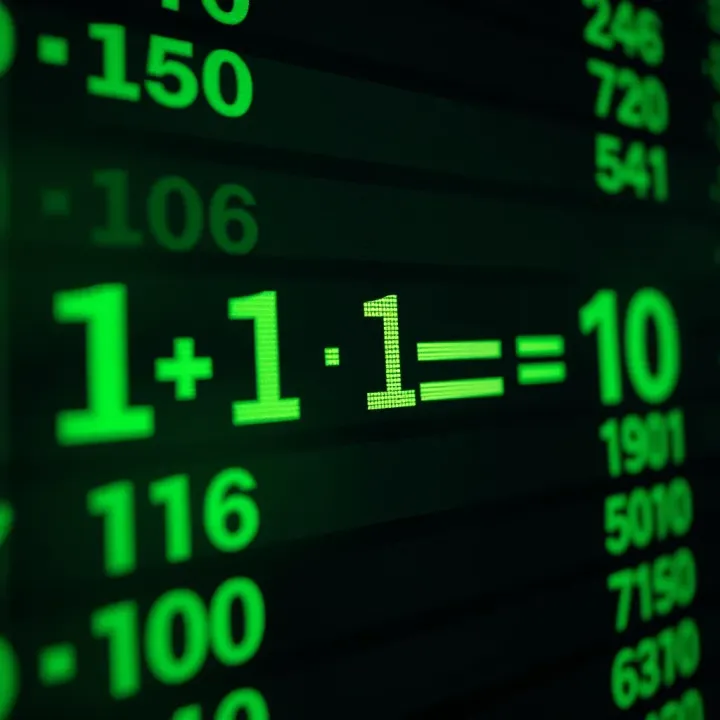
These simple yet powerful concepts form the foundation of binary arithmetic and digital logic that you will encounter frequently, whether dealing with computer programming, data analysis, or hardware design. The clarity of the binary system itself explains why it remains a core part of India’s expanding digital economy and technology sectors.
Performing arithmetic operations in binary is fundamental to digital computing. Modern devices, including computers, mobile phones, and financial trading systems, rely heavily on these operations happening at the most basic level. Understanding how to add, subtract, multiply, and divide binary numbers is not just academic; it helps in grasping how data processes take place behind the scenes in software and hardware.
Rules for binary addition are simple but essential. Binary addition follows four main rules: 0 + 0 equals 0; 1 + 0 equals 1; 0 + 1 equals 1; and finally, 1 + 1 equals 10 where you write 0 and carry over 1 to the next higher bit. This carry-over process mirrors decimal addition but operates within base 2. For example, adding 1011 (eleven decimal) and 1101 (thirteen decimal) results in 11000 (twenty-four decimal). This basic arithmetic forms the backbone of everything from processor instructions to encryption algorithms.
Binary subtraction using borrowing works similarly to decimal subtraction with borrowing but follows base-2 logic. If the top bit is smaller than the bottom bit, a borrow of 1 is taken from the next higher bit, which itself becomes 0 or is recursively borrowed from. For instance, subtracting 1010 (ten decimal) from 1101 (thirteen decimal) involves borrowing to get the correct difference 0011 (three decimal). This method is crucial for operations like memory management and arithmetic logic unit (ALU) functions in processors.
Steps in binary multiplication closely resemble decimal multiplication but simplified since digits are only 0 or 1. Multiplying by 1 keeps the number unchanged, while multiplying by 0 yields zero. You shift the multiplicand left for each bit position, then add according to the multiplier's bits. For example, multiplying 101 (five decimal) by 11 (three decimal) means shifting and adding to arrive at 1111 (fifteen decimal). This process is vital in rendering graphics, executing complex calculations, and signal processing.
Binary division process with examples follows the long division technique but again with base-2 digits. You compare the divisor against segments of the dividend, subtract when possible, and bring down bits stepwise. For instance, dividing 1101 (thirteen decimal) by 10 (two decimal) results in 110 (six decimal) remainder 1. Mastering binary division aids in understanding CPU instruction cycles and algorithms used in cryptography and data compression.
Knowing the practical steps of binary arithmetic operations equips you to better appreciate the logic that governs digital systems, empowering you to debug code, develop algorithms, or optimise data processing workflows effectively.
Understanding how to convert between binary and decimal systems is fundamental for anyone working with digital technology or computing. Decimal numbers, which we use in daily life, follow base-10, while computers operate using binary, base-2. Bridging this gap allows professionals and learners to interpret computer data accurately and troubleshoot effectively.
One common way to convert a decimal number into binary is the division-remainder technique. This involves dividing the decimal number by 2 repeatedly and noting the remainder each time. The binary equivalent is formed by reading these remainders in reverse order. This method provides a straightforward approach, especially useful when converting large numbers without a calculator.
For example, to convert the decimal number 19 to binary:
Divide 19 by 2: quotient 9, remainder 1
Divide 9 by 2: quotient 4, remainder 1
Divide 4 by 2: quotient 2, remainder 0
Divide 2 by 2: quotient 1, remainder 0
Divide 1 by 2: quotient 0, remainder 1
Reading remainders from last to first, you get 10011, the binary representation of 19.
Practical conversion examples like this help solidify understanding beyond theory, making it easier to convert any decimal numbers encountered in finance or computing tasks.
Converting binary back to decimal commonly involves summing powers of two. Each digit in a binary number represents 2 raised to the power of its position index, counting from right to left starting at zero. Adding the values where the digit is 1 gives the decimal equivalent.
For instance, take the binary number 1010:
The rightmost bit represents 2^0 = 1 (digit is 0, so ignore)
Next bit: 2^1 = 2 (digit is 1, include 2)
Next bit: 2^2 = 4 (digit is 0, ignore)
Leftmost bit: 2^3 = 8 (digit is 1, include 8)
Adding 8 + 2 = 10, the decimal equivalent.
Worked examples like this demystify binary numbers, especially useful for students and professionals analysing data at the bit level. They aid in decoding machine instructions or verifying calculations in software development.
Practising these conversions sharpens one's ability to navigate between human-friendly decimal and machine-friendly binary numbers, a skill increasingly valuable in India's expanding IT and digital sectors.
By mastering these methods, you gain a practical edge in handling digital data, aiding both learning and professional work in finance, technology, and beyond.
Binary calculation forms the backbone of modern technology, powering devices from simple calculators to advanced supercomputers. Its application in digital electronics and computing systems defines how information is processed, stored, and transmitted efficiently.
Binary logic in circuits plays a foundational role in electronics. Digital circuits rely on binary states—represented as '0' and '1'—to perform logical operations. This simple two-state system makes designing reliable, fault-resistant circuits easier, especially under varying electrical conditions. For instance, logic gates like AND, OR, and NOT operate by manipulating these binary inputs to produce specific outputs—a principle that underlies everything from basic timers in home appliances to complex control units in industrial machinery.
Beyond gates, combinational and sequential circuits use binary logic for more sophisticated tasks. Flip-flops, for example, store binary information as memory bits, enabling devices to remember past states. This architecture is essential for creating registers, counters, and other digital components vital in electronics.
Use in microprocessors and memory units showcases how binary is integral to central processing units (CPUs) and storage. Microprocessors execute instructions encoded in binary machine language. Each command, whether adding numbers or fetching data, translates into a unique pattern of bits. This approach offers speed and compatibility across different hardware.
Memory units such as RAM (Random Access Memory) and ROM (Read-Only Memory) also operate through binary data storage. Each memory cell holds either a 0 or 1, allowing the system to record and retrieve vast amounts of data rapidly. Indian IT hubs, like Bengaluru and Hyderabad, heavily rely on such technology for software development and server management.
How computers interpret data through binary is central to their operation. Whether it's characters, images, or sound, all data ultimately convert into sequences of bits. For example, the letter 'A' corresponds to the binary code 01000001 in ASCII encoding. This universal standard lets computers around the world maintain consistency in representing textual information.
This binary interpretation extends to multimedia data too. In music apps popular in India, such as Gaana or JioSaavn, audio files compress to binary formats that mobile devices decode for playback. Thanks to binary's efficiency, even smartphones with limited resources handle complex tasks smoothly.
Binary coding in software and networking underpins how applications run and communicate. Software programs compile down to binary instructions to directly command the hardware. This ensures programs execute quickly and reliably.
On the networking side, data packets sent over the internet are encoded in binary for transmission. Protocols like TCP/IP use binary headers to route data efficiently. For Indians relying increasingly on internet services for trading or banking, this system guarantees secure and swift communication.
Understanding these applications reveals why binary calculation remains a crucial skill. It connects the dots between theoretical knowledge and real-world technology, empowering professionals and learners alike to grasp the mechanics behind their digital tools.
Understanding common pitfalls and practical tips is key to mastering binary calculation. These insights save time and reduce frustration, especially for students and professionals new to the system. Real-world applications such as programming, electronics, and data analysis rely heavily on accurate binary work, so avoiding mistakes can improve efficiency and results.
Misunderstanding carryovers in addition: One frequent stumbling block is the carryover process in binary addition. Unlike decimal addition where a carry happens after reaching 10, in binary it occurs once the sum reaches 2. For example, adding 1 + 1 in binary results in 0 with a carryover of 1 to the next higher bit. Overlooking this leads to incorrect sums, especially when adding longer binary numbers. For practical relevance, this mistake can cause bugs in software computations or errors in digital circuit designs.
To avoid this, practice breaking down binary additions bit by bit, always watching for the carry when two 1s add up. Performing addition column-wise helps maintain accuracy and builds intuition for how binary arithmetic flows.
Errors in conversions between systems: Converting numbers between binary and decimal is another area prone to errors. A common issue is misapplying the division-remainder method for decimal to binary conversions or incorrectly summing powers of two during binary to decimal conversions. For instance, misunderstanding place values can result in converting 1011 (binary) as 12 instead of 11.
Such errors disrupt digit recognition in computing tasks or cause misinterpretation of data. To avoid this, it's vital to remember each binary digit represents an increasing power of two starting from the rightmost bit. Double-check conversions by converting the number back to its original system as a validation step.
Practice exercises tailored for learners: Regular, focused practice cements understanding of binary principles. Exercises that simulate real-life scenarios, like coding challenges or electronic circuit problems, help translate theory into skill. For example, repeatedly converting numbers between decimal and binary with varied complexity sharpens mental agility.
Many study materials designed for Indian students preparing for exams like JEE or UPSC include binary calculation problems, bridging academic learning with practical utility.
Using tools and resources available online: Utilising online tools such as binary calculators and interactive tutorials accelerates learning. These help verify manual calculations instantly and provide step-by-step guidance. Websites offering quizzes and visual aids support learners to grasp concepts faster without confusion.
Moreover, Indian educational platforms and coding sites often provide context-specific resources aligned with local curricula, improving relevancy and retention. Leveraging such resources complements traditional study and enhances confidence in handling binary calculations effectively.
Mastering binary calculation not only aids academic success but also equips professionals in technology sectors to work efficiently with digital systems that pervade modern India’s economy.
Explore how binary values (0 and 1) power digital systems, enable data storage, support error detection and shape technology we rely on daily 💻📲.

Learn binary subtraction with clear rules and easy examples ✏️ Perfect for students and pros aiming to master digital maths, complements, and related operations.

📊 Learn how binary numbers work, convert between binary & decimal, and grasp binary math with real-life computer applications in this easy guide.

🔢 Discover how online binary calculators work and their practical uses for students, programmers & engineers. Learn features, benefits & popular tools for effective use.
Based on 8 reviews