

Live Intraday Trading Guide for Indian Traders
📈 Master live intraday trading on Indian markets with practical tips, real-time analysis, smart execution, and solid risk management strategies!
Edited By
Isabella Wright
Intraday trading means buying and selling shares within the same trading session. The key to success here is picking the right time to trade. Unlike long-term investing, intraday trading relies heavily on market timing to seize quick gains and reduce risks.
The Indian stock market operates from 9:15 am to 3:30 pm IST on weekdays, but not all hours are equal in terms of volatility and opportunity. Early trading hours tend to be more volatile due to overnight news and market reactions, while mid-session often sees reduced activity. Towards the closing hours, volatility may pick up again as traders adjust their positions.

Understanding these patterns helps traders choose windows where stocks show predictable movements.
Timing your trades according to Indian market behaviour can improve your chances of profit and help manage the risks of sudden price swings.
Here are some factors to consider when deciding your trading window:
Market opening (9:15 am - 10:30 am): Sharp price movements often occur as the market digests overnight global developments and local events. This time suits traders who can react quickly to volatility.
Mid-session (11:00 am - 1:30 pm): Typically quieter, with less volume and fewer price swings. This period might suit conservative intraday strategies or those avoiding large market noise.
Closing session (2:30 pm - 3:30 pm): Increased activity as traders square off positions before market close, presenting fresh opportunities.
Besides time, intraday traders also watch factors like sector performance, stock liquidity, and news flow to pick the best moments for action.
In short, successful intraday trading in India requires careful observation of when the market tends to move fast and when it slows down. Aligning your trades with these timings boosts your ability to catch profitable trades while reducing exposure to sudden losses.
Intraday trading means buying and selling stocks within the same trading day, aiming to benefit from short-term price movements. Understanding the timing of these trades is crucial because the Indian stock market does not remain equally active throughout the day. Knowing when the market is most volatile or liquid can help traders decide the right moments to enter or exit positions, reducing risks and maximising returns.
For example, traders often prefer the first hour after the market opens because news from overnight or global markets influences sharp price movements. Similarly, the final hour can show increased activity as traders close or adjust their positions before the day ends. Without grasping these timing nuances, even well-planned trades might suffer unnecessary losses.
Intraday trading involves executing buy and sell orders on the same day, preventing the need to hold stocks overnight. Traders focus on small price fluctuations within the day to make profits. Unlike long-term investing, intraday requires quick decisions and a good understanding of market behaviour during different times of the day.
Consider a trader who buys shares of a bank at ₹350 in the morning and sells them at ₹355 by noon, pocketing ₹5 per share. Success depends on spotting such price swings and timing the buy and sell points accurately.
The National Stock Exchange (NSE) and Bombay Stock Exchange (BSE) operate between 9:15 am and 3:30 pm Indian Standard Time (IST) on regular trading days. This six-hour window is divided into various trading sessions, with the main session running continuously, allowing traders to buy and sell shares.
Trading during this period is influenced by factors like global market openings, economic announcements, and company news. For instance, the market sees peak activity soon after 9:15 am due to the accumulation of overnight global information.
Before the normal trading hours, there is a pre-open session from 9:00 am to 9:15 am. During this phase, orders accumulate, helping form an opening price that balances demand and supply. Traders can place or modify orders but cannot execute trades instantly.
Similarly, after the market closes at 3:30 pm, a post-close session runs for a few minutes where participants can place orders for the closing price. This session is vital for settling positions and helps in determining the closing price, which many use as a reference for the next day.
Understanding these sessions is key for intraday traders, as the pre-open session often sets the tone for the day, while the post-close session can influence overnight positions and market sentiment.
Being aware of these timings equips traders with better chances to align their strategies effectively within the Indian stock market’s rhythm.
Market behaviour and volatility change significantly at various points during the trading day, shaping the best windows for intraday trading. Understanding these patterns helps traders pick the right moments to enter and exit positions, minimising risk and maximising gains.
The morning session in India’s stock markets starts with a buzz, primarily driven by global market cues and overnight developments. For example, if the US markets closed positively or negatively, Indian markets often react immediately when they open, reflecting that sentiment.

Overnight news on economic indicators, corporate earnings, or geopolitical events can trigger sharp price movements early in the day. Traders keen on intraday gains find the first half hour particularly useful to gauge market direction based on these global triggers.
The first hour after the market opens tends to show higher volatility and volume. This period sees traders quickly realising profits or cutting losses from overnight positions.
For instance, a stock hitting a breakout point on strong morning momentum may offer quick trading opportunities. But on the flip side, sudden swings can catch inexperienced traders off guard, so cautious position sizing is recommended.
Typically, volatility eases around noon as traders take breaks and digest the morning’s movements. With fewer participants active, price fluctuations narrow and trade volumes often drop.
This 'quiet phase' is common across Indian trading desks, creating a low-risk but also low-reward window where price may consolidate before the afternoon session.
During this slowdown, traders might avoid opening fresh aggressive positions unless technical signals strongly suggest it. Instead, many focus on monitoring open trades or preparing for potential afternoon volatility.
Some scalpers find this period tough due to compressed spreads, making it less profitable to trade frequently. Swing traders often use this time for analysis and planning.
Volatility often rises again during the last hour of trading as institutions and traders adjust positions before closing. This surge creates both opportunities and risks.
For example, a stock that was steady midday can suddenly jump or drop sharply near the close due to fresh orders or news released during the day.
Traders frequently use this phase to square off or hedge their intraday bets, making it one of the most active periods. Some prefer to close the day’s trades by 3:15 pm to avoid overnight risk, while others ride the closing volatility for additional gains.
Knowing when volatility spikes or dips during the day lets traders align their strategies to market rhythm, improving their chances of success in intraday trading.
Timing your trades based on the strategy and stock type you follow can make a big difference in intraday trading outcomes. Different strategies thrive at different hours, and sectors react uniquely to market events. Understanding these nuances helps you optimise entries and exits, reduce risks, and make the most of market moves.
Scalping involves rapid trades to profit from small price changes. For scalpers, the first hour after market open — typically 9:15 am to 10:15 am — is often the best time. This period shows high volatility and liquidity as traders react to overnight news and global cues. Quick price swings in this window create multiple trading opportunities in a short span.
Liquidity and spread matter a lot for scalpers. Stocks with tight spreads and high volume during the session reduce trading costs and slippage. Large-cap shares like Reliance Industries and HDFC Bank often offer the liquidity scalpers crave in the morning, making their price movement easier to capitalise on without bearing wide bid-ask spreads.
Swing traders watch price trends that last several hours to days. The morning trend often signals momentum strength. Observing stock performance between 9:15 am and 11:30 am helps swing traders decide if they should hold or exit during midday. For example, if a stock like Tata Steel gains steadily in the morning, swing traders may hold through noon expecting continuation.
Later in the afternoon, say between 2:30 pm and 3:30 pm, price reversals or breakouts become common due to profit-booking or fresh orders. Momentum traders watch this window for reversal plays or breakout buy signals. Afternoon moves in financial shares such as ICICI Bank may offer good momentum trades before market close.
Volatility in banking and financial sectors tends to spike early in the session with the release of economic data or corporate results. Trades in stocks like State Bank of India or Kotak Mahindra Bank often perform best from opening till late morning when such news breaks.
Technology and FMCG stocks generally show steadier trends but pick up momentum during midday or afternoon hours. For example, Infosys or Hindustan Unilever might see more consistent volume and modest price changes after the initial frenzy settles. Traders focusing on these sectors may find midday hours suitable for less erratic trading.
Matching your intraday trading times to your strategy and stock sector can enhance profit potential and lower risks in volatile markets. Knowing when specific stocks or strategies perform helps you stay ahead and fine-tune your approach.
Choosing when to trade during the day is not random—it hinges on several key factors that shape market behaviour. Understanding these helps you pick the right window to optimise profits and avoid unnecessary risks. Market volatility, liquidity, global cues, and economic announcements all sway intraday price movements. By tuning into these, you trade smarter rather than just harder.
Economic reports and company announcements often trigger sudden price swings. For example, key data like the Consumer Price Index (CPI), Wholesale Price Index (WPI), or RBI policy statements usually hit the market at specific times, causing sharp volatility. Traders who keep an eye on these schedules can plan their trades to catch favourable moves or avoid unpredictable bursts.
Corporate earnings, dividend declarations, or merger news unleash buying or selling pressure on stocks. Suppose a major IT firm releases quarterly earnings that beat estimates around 10 am; you may find sharply rising volumes and altered price trends for that stock and its sector during this period. Ignoring such events can leave you on the wrong side of a trade.
Timing your trades around scheduled economic or corporate news cuts down risk and offers chances to capitalise on market reactions.
Though US and European markets operate mostly outside Indian trading hours, their influence seeps in through overnight news and futures markets. For instance, a sharp fall in the Dow Jones or FTSE 100 after Indian markets close tends to set a cautious tone for the next day’s open in India. Traders who check international market trends after 8:30 pm IST get an early glimpse of possible market direction when trading resumes the next morning.
At times, significant policy announcements or geopolitical developments in these regions can cause pre-market gaps or early morning volatility in India. Keeping updated with global cues helps anticipate such moves better.
Indian market hours partially overlap with other Asian markets such as Singapore, Hong Kong, and Japan. This overlap between 9:15 am and 12 pm IST means developments in these markets can directly affect price action in India, especially in sectors like technology or exports.
For example, a positive rally in the Nikkei index during Indian market hours can boost investor sentiment here, translating into higher volumes and brisk price movements. Similarly, any sudden downturn in regional markets during this period often pulls Indian markets down.
Liquidity—the ease of buying or selling without causing big price changes—varies with time, affecting spreads (the gap between bid and ask prices) and trading costs. Markets usually see highest volumes during the opening hour (9:15 am to 10:15 am) and closing hour (3 pm to 3:30 pm), which means tighter spreads and better price discovery.
Conversely, liquidity dips around midday, widening spreads and increasing transaction costs. A trader buying or selling during low-volume periods may face slippage, where orders execute at unfavourable prices.
Knowing these patterns helps you avoid costly trades during quiet times while exploiting high-liquidity windows for smoother execution and better profitability.
Getting the timing right in intraday trading can make all the difference between profit and loss. Practical tips help traders navigate the ever-fluctuating stock market, especially in India where volatility patterns and market cues vary throughout the day. By following these tips, you not only avoid unnecessary risks but also gain the confidence to act when opportunities arise.
Staying updated is vital for intraday traders as market-moving events often happen fast. Setting price alerts on your trading platform for specific stocks can ensure you don’t miss crucial entry or exit points. For example, if a banking stock crosses ₹450 early morning, you might want to check why and decide if it’s worth trading. Alongside alerts, monitoring news feeds about corporate results, policy announcements, or geopolitical developments is essential. When the Reserve Bank of India (RBI) announces changes in repo rates, the banking sector usually reacts sharply within minutes. Real-time news apps like Moneycontrol or ET Markets can be your eyes and ears. Being ahead of the curve helps in timing trades effectively rather than reacting late to market surprises.
The Indian market often slows down around midday from 1 pm to 2:30 pm. Liquidity tends to dry up, and price movements become muted. Trading during these phases increases transaction costs and the chances of getting stuck in unfavourable positions. Experienced traders usually avoid opening new bets during this lull. Instead, they use this time to review their strategies and prepare for the afternoon session’s expected volatility. For instance, if you scalp stocks like Reliance or TCS, it’s better to be inactive during the subdued hours as spreads tend to widen. Avoiding overtrading not only preserves your capital but also prevents emotional fatigue, which can cloud judgement later.
Technical indicators act as practical tools to decide when to get in or out of trades within the day. Popular indicators such as the Moving Average Convergence Divergence (MACD), Relative Strength Index (RSI), and Bollinger Bands help identify momentum shifts and potential reversals. Suppose the RSI on a particular stock dips below 30 before the market opens, signalling oversold conditions — this may suggest a bounce-back opportunity soon after the opening bell. Combining multiple indicators reduces false signals; for example, RSI below 30 plus a MACD bullish crossover can strengthen a buy decision. Chart patterns like flags or pennants appearing during high-volume trading hours also provide clues for entries or exits. Remember, no single indicator guarantees success, but disciplined use aligned with your chosen strategy improves timing and risk management.
Practical timing in intraday trading is about being alert, patient, and using tools smartly. Setting alerts, avoiding low-volatility trades, and applying technical analysis sharpen your edge in India’s dynamic stock market.
These tips proved helpful for many traders focusing on NSE and BSE stocks because they balance risk while maximising chances for profit. Try to personalise these methods based on your trading style and the sectors you prefer. Over time, you’ll find that good timing stems from both preparation and experience rather than luck alone.
📈 Master live intraday trading on Indian markets with practical tips, real-time analysis, smart execution, and solid risk management strategies!

📈 Master live intraday trading in India with easy strategies, best tools, risk tips, and key rules to trade smartly and protect your investments daily.

📈 Learn intraday trading basics, tools, strategies, and risk management tailored for Indian markets. Practical tips to trade smart every day!
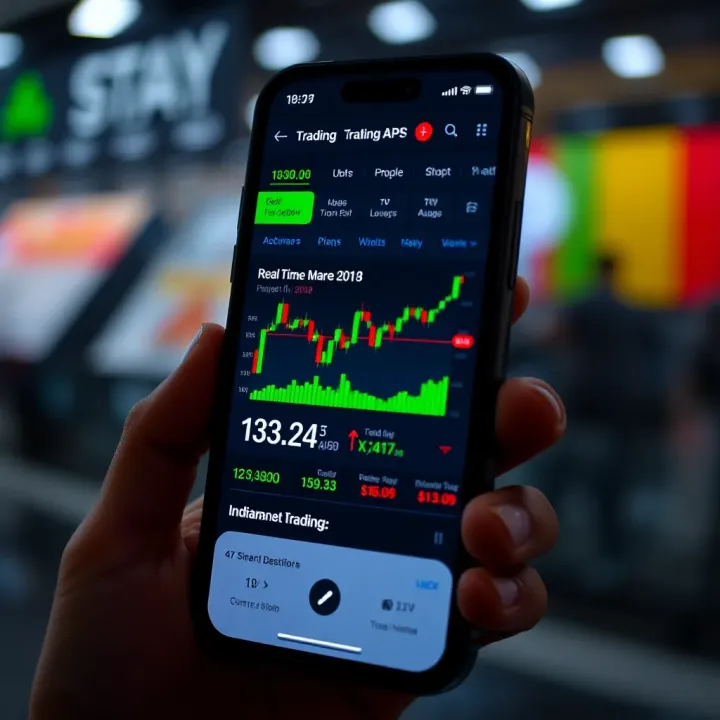
📈 Discover how to pick the best trading app for Indian investors! Compare features, security, user experience & costs to invest smarter today.
Based on 8 reviews