

Understanding Market Candlestick Patterns for Trading
📊 Master candlestick patterns to boost trading skills in India! Learn key charts, identify trends, and combine tools for precise market moves.
Edited By
Isabella Wright
Candlestick patterns offer a practical way to track market sentiment and price movements in stocks. Unlike plain line charts, candlestick charts give you more detailed insight into how a stock performed during a trading session — opening, closing, highs, and lows — all wrapped up in one visual.
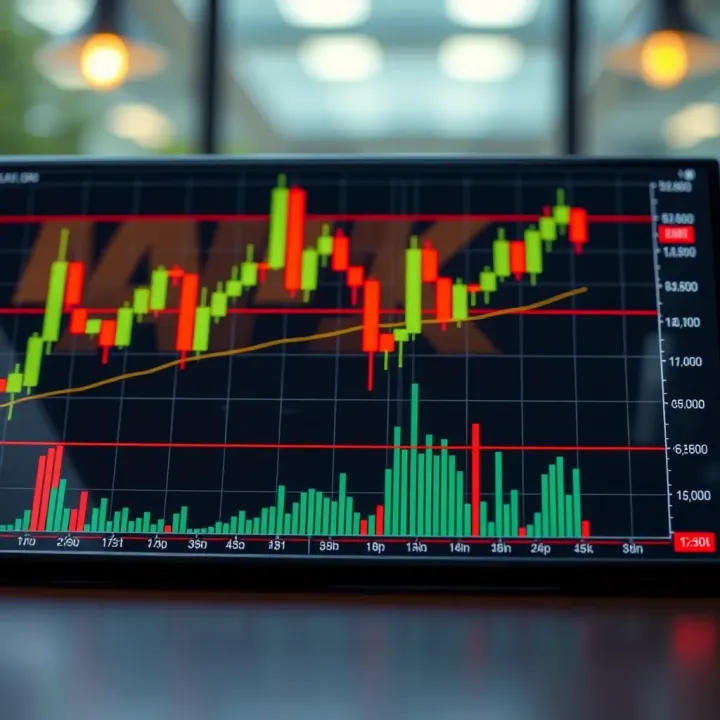
Each candlestick has a body and wicks (or shadows). The body shows the gap between opening and closing prices. If the close is higher than the open, the candlestick is typically green or white, indicating bullish movement. If the close is lower, the body usually appears red or black, signalling bearish trends.
Getting comfortable reading these patterns equips you to spot potential reversals or continuation trends before they become obvious with other tools. For example, recognising a 'Doji' — where opening and closing prices are nearly identical — can suggest indecision in the market. Combined with other indicators, this might hint at an upcoming change in the stock’s direction.
Understanding candlestick patterns helps you make quicker decisions and manage risks better. It's especially valuable when you’re watching volatile stocks on platforms like the NSE or BSE.
Here are the basics to focus on:
Single Candlestick Patterns: These include Doji, Hammer, and Shooting Star. Each tells a simple story about intraday price movement.
Multiple Candlestick Patterns: Patterns like Engulfing or Morning Star form over two or three candles. They offer deeper insights into market turns.
Volume & Location: Consider how much the stock traded during the pattern and where it appears on the chart. This adds context to the pattern’s strength.
By mastering these basic concepts, you can soon interpret charts like a pro, using them alongside fundamentals and news. This foundational skill helps traders and investors alike to anticipate price shifts and align their strategies accordingly.
Stay tuned as we unpack key candlestick patterns and practical ways to apply them effectively in the market.
Understanding candlestick charts forms the backbone of effective stock market trading. These charts provide instant visual cues about price movements, enabling traders and investors to make informed decisions quickly. Unlike line charts or bar charts, candlesticks pack multiple data points into a single visual form, offering a richer picture of market sentiment.
A candlestick in trading represents price movement for a specific time interval, such as one minute, one hour, or one day. The concept dates back to 18th century Japan, where rice traders used "candlesticks" to track price fluctuations visually. Today, this technique remains popular thanks to its clarity and ease of interpretation.
Each candlestick summarises four key prices: opening, closing, highest, and lowest during that period. This compact format helps traders quickly grasp how a stock or asset behaved within that timeframe, making it easier to spot trends and potential reversals.
A candlestick consists of three main components:
Body: The rectangular part between the opening and closing prices. It shows whether price rose or fell during the interval.
Wicks or Shadows: The thin lines above and below the body indicating the highest and lowest prices.
A long body suggests strong buying or selling pressure, while short bodies signal indecision. Wicks highlight volatility — for example, a long upper wick indicates that prices climbed but sellers pushed back.
Each candlestick encapsulates four price points:
Opening Price: The price at which trading began in that period.
Closing Price: The last price traded during the interval.
High Price: The peak price achieved.
Low Price: The lowest price reached.
Traders use this data to understand market pressure. For instance, if the closing price is higher than the opening price, it shows buyers dominated, pushing the price up.
The colour of the candlestick further simplifies interpretation:
A green/white candle means the closing price is higher than the opening price, indicating bullishness.
A red/black candle means the closing price fell below the opening, signalling bearishness.
In Indian trading platforms, green and red hold standard meanings—green for gains and red for losses—helping traders spot momentum quickly.
Learning to read these basics allows you to capture short-term market moods and plan trades accordingly, rather than relying on guesswork or delayed data.
By mastering these fundamentals, beginners can use candlestick charts confidently alongside other technical tools to improve their trading strategies.
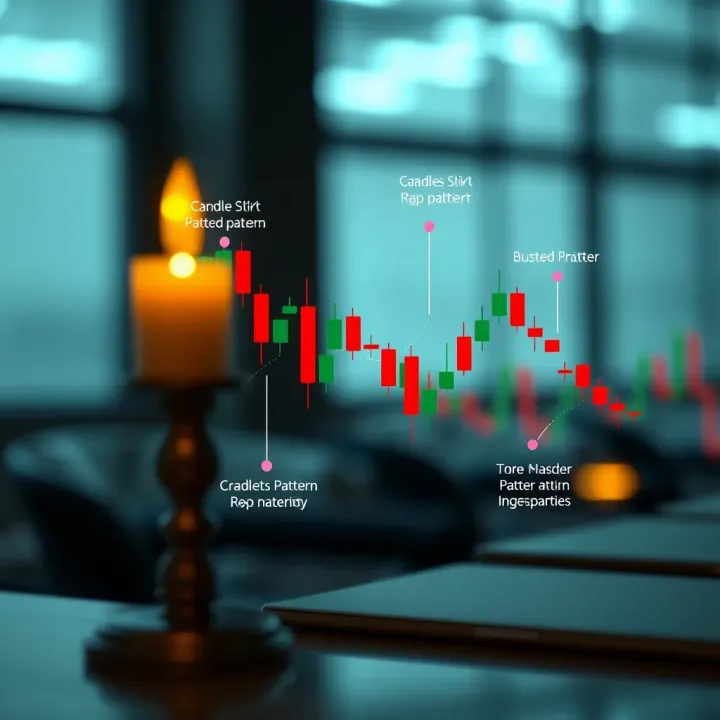
For beginners in stock trading, recognising key candlestick patterns is essential. These patterns provide quick signals on market sentiment and potential price movements. By understanding these, you can make more informed trading decisions rather than relying on guesswork or gut feeling.
A Doji forms when the opening and closing prices are nearly the same, resulting in a very thin or no body with long wicks. This pattern indicates market indecision—buyers and sellers are at a standstill. In practical terms, spotting a Doji after a strong uptrend or downtrend can signal that momentum is slowing and a reversal may happen soon.
Though similar in shape—a small body with a long lower wick—these two have different implications depending on their position. A Hammer appears after a downtrend, suggesting a possible bullish reversal as buyers step in. Conversely, a Hanging Man after an uptrend warns that selling pressure is increasing, warning traders of a bearish reversal. These patterns give clues on when to enter or exit positions.
This pattern features a small body near the day's low and a long upper wick. It usually shows up after a price rise and signals that buyers tried pushing prices higher but sellers took control, pushing it down by close. The Shooting Star warns traders that a downtrend might be on the way.
In a Bullish Engulfing pattern, a small red (bearish) candle is followed by a larger green (bullish) candle that completely covers the previous one. This indicates strong buying interest and potential trend reversal upwards. The Bearish Engulfing is the opposite—a small green candle followed by a bigger red candle—signalling strong selling pressure and a likely downtrend. These patterns help confirm shifts in market control.
The Morning Star is a three-candle pattern signalling a bullish reversal: a long red candle followed by a small-bodied candle (star) and then a strong green candle. Traders often view it as a sign to consider buying. The Evening Star is its bearish counterpart—starting with a strong green candle, then a small-bodied star, and finishing with a long red candle—indicating downward momentum.
Three White Soldiers are three consecutive long green candles with consecutively higher closes, reflecting strong and steady buying, signalling a sustained uptrend. On the flip side, Three Black Crows are three long red candles with consecutively lower closes, signalling a consistent downtrend. Both patterns help traders confirm the strength of market moves rather than reacting to single-day anomalies.
Understanding these patterns equips beginners with practical tools to read the market better. Still, relying solely on them without considering broader market context or volume can lead to errors.
Interpreting candlestick patterns plays a vital role in predicting market movements. For traders and investors, recognising these patterns helps anticipate potential price changes and make informed decisions. The shape and sequence of candlesticks provide clues about market sentiment, allowing you to gauge whether a trend might reverse or continue. This insight is particularly valuable when trading volatile stocks or aiming to time entry and exit points more effectively.
Reversal patterns signal a change in the market's direction. When a prevailing trend loses momentum, certain candlestick formations indicate buyers or sellers are gaining control, prompting a shift. For example, after a downtrend, a bullish reversal pattern suggests prices could climb. This knowledge helps prevent losses by alerting traders to exit short positions or prepare for buying opportunities.
Common reversal signals include the Hammer, where a long lower wick and small body hint that sellers pushed prices down but buyers regained strength by closing near the open. Its counterpart, the Hanging Man, appears in uptrends and warns of potential selling pressure. These patterns work well when confirmed by other indicators or price action.
Several reversal patterns stand out for their reliability. The Bullish Engulfing pattern happens when a small bearish candle is followed by a bigger bullish candle engulfing the previous one, signalling a possible upturn. Conversely, the Bearish Engulfing pattern implies a downtrend might follow after a brief rally.
The Morning Star and Evening Star patterns involve three candles and offer more precise signals. The Morning Star marks the end of a bearish phase as buying interest re-emerges, while the Evening Star shows sellers regaining control post a bullish rally. Watching these patterns on Indian stock charts like those of Reliance Industries or Tata Steel can provide practical signals during volatile market phases.
Continuation patterns indicate the price trend is likely to carry on in the same direction. When the market pauses briefly without reversing, these patterns form consolidation zones before the previous trend resumes. Spotting such patterns prevents premature exits and helps you hold positions longer.
A clear sign of price continuation is tight-range candles clustering together, reflecting market indecision but leaning towards the existing trend. Recognising these moments avoids getting shaken out during regular fluctuations.
Popular continuation patterns include the Rising and Falling Three Methods. In the Rising Three Methods, a strong bullish candle is followed by several small bearish or neutral candles within the range, then another bullish candle closes above the first. This shows buyers dominating despite short pauses.
Another example is the Flag and Pennant patterns, seen after a sharp price spike. Flags form small rectangles slanting against the trend, while pennants look like tiny symmetrical triangles. These patterns often precede a continuation of the original trend, so Indian traders watching stocks like HDFC Bank during earnings season might see these shapes appear.
Mastering how to interpret both reversal and continuation patterns can improve your market timing and reduce risk exposure in trading.
By studying these patterns carefully alongside volume and support levels, you increase your chances of making smart, timely trades aligned with market momentum.
Candlestick patterns provide valuable clues about price action, but relying on them alone can lead to misleading conclusions. Combining these patterns with other analysis tools strengthens trading decisions and improves accuracy. Indian traders, especially in volatile markets like NSE and BSE, benefit significantly from this layered approach.
Volume serves as a validation tool for candlestick patterns. A bullish engulfing pattern with low volume might be a false signal, while the same pattern accompanied by rising volume gains credibility. Volume reflects the intensity of market participation, helping traders distinguish between genuine moves and short-lived fluctuations.
For example, during earnings season, stocks like Reliance Industries often show increased volume. If a rebound candlestick pattern appears alongside a spike in volume, it suggests solid buying interest. Conversely, a candlestick pattern without significant volume change might hint at weak conviction among traders.
Support and resistance levels help confirm the importance of candlestick signals. A hammer pattern near a known support level holds more weight than one formed randomly mid-trend. These levels act as psychological price points where traders expect reversals or pauses, making patterns more reliable when aligned with them.
To spot support and resistance practically, Indian traders look at historical price data where the stock repeatedly reversed or consolidated. For example, the ₹2,000 level in Infosys shares has often acted as strong support. Using charting tools to draw horizontal lines on such levels helps identify areas where candlestick signals carry more meaning.
Combining candlestick patterns with volume and key price levels enhances the accuracy of market forecasts, giving traders an edge in the complex Indian stock markets.
Incorporating volume and support or resistance analysis provides a fuller picture. This helps avoid false entries and better timing, essential for navigating the dynamic environment of Indian equities and derivatives trading.
Trading with candlestick patterns can be rewarding, but beginners must apply practical strategies to avoid pitfalls. These tips focus on using patterns as tools rather than crystal balls, combined with smart risk management and hands-on practice. This grounded approach helps traders deal with market uncertainties while harnessing candlestick insights effectively.
Not relying solely on patterns
Candlestick patterns are useful for spotting market sentiment, but they aren't foolproof signals. New traders often make the mistake of entering trades based solely on a pattern like a hammer or engulfing candle without confirming other factors. For instance, a bullish engulfing pattern may appear in a weak downtrend but fail to trigger a genuine reversal if the broader market context does not support it. It’s wise to combine pattern signals with volume trends, moving averages, or fundamental news to make better decisions.
Accounting for market context
Patterns behave differently depending on the market environment. A doji appearing in choppy, sideways markets means indecision, while the same in a strong trend could signal a pause or upcoming reversal. Recognising support and resistance levels alongside patterns can add weight to the signal. For example, a shooting star near a well-established resistance zone in Nifty 50 charts carries more significance than one formed randomly in the middle of a range. Understanding such context prevents hasty moves and costly mistakes.
Setting stop-loss orders
Stop-loss orders protect your capital by automatically closing a trade if the price moves against you. When trading candlestick patterns, it’s important to place stop-loss levels sensibly — just below the pattern’s low in bullish setups or above the high in bearish ones. For example, if you buy after a morning star pattern on Infosys shares, a stop-loss slightly below the pattern’s lowest candle limits losses if the signal fails. This avoids heavy damage to your trading account due to unexpected market moves.
Position sizing for safety
Even with good setups, losses happen. That’s why appropriate position sizing matters. Beginners should risk only a small portion of their trading capital on each trade, typically 1-2%. So if you have ₹2 lakh allocated for trading, risking ₹2,000 to ₹4,000 per trade helps contain losses. Using fixed percentage risk rather than fixed lot size avoids blow-ups during volatile periods, keeping your portfolio stable over time.
Benefits of simulated trading
Demo accounts mimic live markets without risking real money, making them ideal for practising candlestick chart reading and pattern recognition. You can test how patterns perform in different market conditions and refine entry and exit rules. Paper trading lets you record outcomes and learn from mistakes calmly. This builds confidence and discipline before moving to live trades.
Recommended Indian platforms for practise
Several Indian brokers offer demo accounts with access to NSE and BSE stocks. Zerodha’s Kite platform, Upstox, and Angel One provide user-friendly interfaces for simulated trading. They include real-time price data allowing you to practise spotting patterns like morning stars in Reliance or bearish engulfing in Tata Motors. Starting here is smart, especially if you plan to transition to real trading with these brokers later.
Practical trading with candlestick patterns demands more than recognising shapes — combining patterns with market context, managing risks, and practising extensively forms the backbone of successful trading.
📊 Master candlestick patterns to boost trading skills in India! Learn key charts, identify trends, and combine tools for precise market moves.

📈 Master candlestick patterns with this practical guide! Understand charts, spot common signals, and improve trading strategies with expert tips and risk advice.

Learn how multi candlestick patterns enhance your trading skills 📊. Understand formations, confirmation signals, and risk management for smarter decisions.
📊 Learn to spot and use common candlestick patterns in trading. Understand price movements, key patterns, and boost your stock market strategy effectively.
Based on 6 reviews