

Guide to Online Forex Trading in India
📈 Discover essential tips on online forex trading in India, including platform selection, market insights, regulations, and how to manage risks effectively.
Edited By
Henry Morgan
Forex trading is like the modern bazaar of money, where currencies are bought and sold across the globe every second. For many in India, diving into the world of forex can seem intimidating at first, especially with so many online platforms and strategies floating around. But, if you take it step by step, learning forex trading online becomes not just manageable but also quite rewarding.
This guide lays out everything a beginner needs to know: from understanding what forex trading really means, choosing the right platform to trade on, grasping essential trading strategies, learning how to manage risks smartly, to the importance of staying updated and improving your skills continuously.
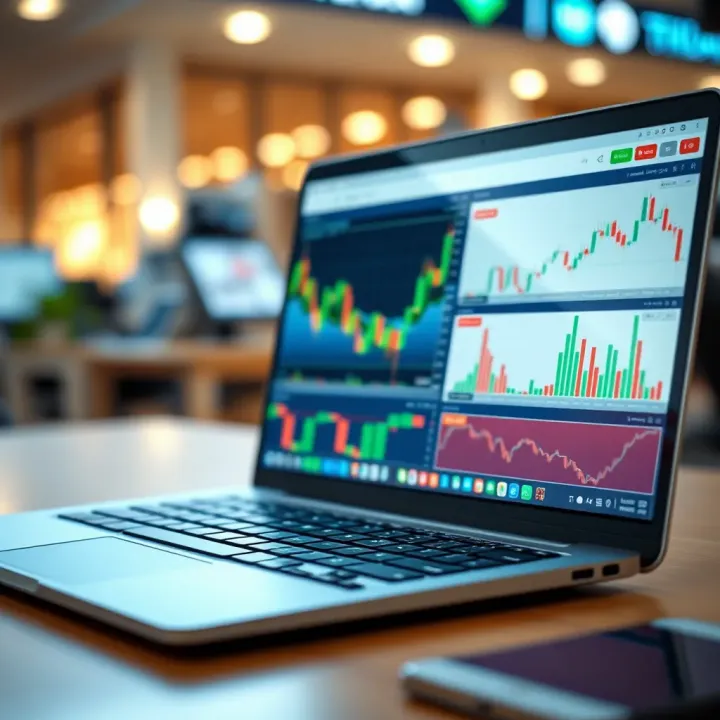
Whether you’re a student curious about how currency exchanges work, a professional seeking to grow your investment portfolio, or just someone aiming for a new source of income, this guide speaks directly to you. India’s growing access to good internet facilities and digital payment systems makes now a great time to get started.
By the end, you’ll have a clear idea of how to start trading forex online confidently and avoid common pitfalls that trip up beginners. Think of this as your first friendly chat about the world of forex — no fluff, just practical tips you can put to use right away.
Remember, like any skill, forex trading takes patience and practice. Getting your basics right is your best bet for long-term success.
Understanding forex trading is the first step before diving into actual trades. It sets the foundation, guiding newcomers on how this market functions and why it's worth their attention. This knowledge not only helps in avoiding costly mistakes but also in spotting opportunities that might not be obvious at first glance.
Forex trading, or foreign exchange trading, is the act of buying one currency and selling another simultaneously. It’s about capitalizing on the fluctuations in currency values to make a profit. For example, if you believe the US dollar will strengthen against the Indian rupee, you buy USD/INR pairs. Later, if the dollar gains value, selling it back nets a profit.
Understanding the basic idea is vital because forex isn’t similar to stock trading where you buy shares of a company's ownership. Instead, you're dealing with currency pairs and exchanging value between nations. This makes the market highly liquid and operational 24/5, allowing plenty of chances to trade.
The forex market operates decentralized across global financial centers. Transactions happen electronically over-the-counter (OTC), meaning no physical exchange takes place on a centralized exchange like the NSE or BSE in India.
Prices move based on supply and demand influenced by economic indicators, geopolitical events, and market sentiment. For example, if India's inflation rate rises unexpectedly, it could weaken the rupee, impacting forex prices.
Traders use real-time data and tools provided by platforms such as MetaTrader 4, which offer quotes, charts, and technical indicators. A trader places 'buy' or 'sell' orders based on predictions about currency movements, often using leverage to amplify potential gains (though with bigger risks).
The internet has democratized forex trading. You don’t need to be a millionaire or a financial institution to enter the market anymore. Retail traders in India can open accounts with brokers like IG or Zerodha, starting with minimal investments, often as low as $100.
This ease of access allows individuals to participate regardless of location and schedule, making forex trading more inclusive. For instance, a software engineer in Bangalore can trade forex during breaks or after work hours thanks to online platforms.
Online forex platforms bring vital features that traditional trading lacked. They offer:
Instant trade execution and real-time pricing
Demo accounts to practice without risking real money
Educational resources including webinars and tutorials
Advanced tools for technical analysis, such as Moving Averages and RSI
Some platforms also provide social trading, where beginners can observe and copy trades from experienced traders. Such features reduce the learning curve, helping new traders build confidence and skills.
Remember, while the forex market is accessible and potentially profitable, it requires careful study and discipline. Understanding how it works and the advantages of online trading platforms can save time and reduce unnecessary risks.
This knowledge forms the base on which all other trading skills are built.
Stepping into the world of online forex trading can feel like diving into a vast ocean without a map. This section breaks down the essentials to kickstart your trading journey. It's not just about clicking 'buy' or 'sell'; it's about knowing who you trust with your money, understanding the technical steps to set up your trading space, and ensuring safety from day one. For someone in India, where online forex has grown significantly in popularity, it’s even more crucial to get these basics right to avoid pitfalls.
When picking a forex broker, you're essentially choosing a partner to navigate the currency markets. The wrong choice can lead to money lost or headaches, so pay attention here.
Here are the must-checks:
Fees and spreads: Low trading fees and narrow spreads improve profitability. For example, brokers like ICICI Direct or Zerodha provide competitive rates that can save you a lot over time.
Trading platform usability: A user-friendly, stable platform like MetaTrader 4 or 5 makes your trading smoother. Look for features like one-click trading and real-time price updates.
Customer service: Fast, helpful support is a lifesaver when you face issues. Test this by reaching out with questions before committing.
Account types: Different account options cater to beginners or pros; find one that matches your initial capital and style.
Each factor directly impacts your trading experience. Don’t rush; a poorly chosen broker adds unnecessary risk.
Regulation is the watchdog ensuring your broker plays fair. In India, brokers regulated by the Securities and Exchange Board of India (SEBI) or those recognized internationally with FCA (UK) or ASIC (Australia) licensing offer better security.
Why does this matter? Without regulation, brokers might operate unscrupulously—like withholding withdrawals or manipulating prices.
Safety nets: Regulated brokers must keep client funds separated from their operational cash, reducing risks if the broker faces financial trouble.
Always verify the broker's license and reviews before opening an account. This step is your first line of defense against fraud.
After picking your broker, the next step is getting your account ready. This process is more than just paperwork—it ensures the platform know who you are and keeps your investments secure.
Expect to provide:
ID proof (Passport, Aadhaar card)
Address proof (Utility bills, bank statement)
This KYC (Know Your Customer) check is mandatory in India to prevent money laundering and protect both you and the broker. It might seem like a hassle, but it’s quick when you have your documents ready.
Funding your account varies with brokers:
Bank transfers: Secure but sometimes slow.
UPI payments: Instant, convenient for Indian traders.
Credit/Debit cards: Quick but watch out for extra charges.
Select a method that suits your trading frequency and comfort with online transactions. Also, check if the broker supports INR deposits to avoid currency conversion costs.
Starting right with a trusted broker and a fully verified, funded account sets the stage for more confident and controlled forex trading. Don’t skip these vital early steps, because they build the foundation for your success down the road.

Understanding the core concepts behind forex trading is a must for anyone looking to step into this market. This section will unravel the fundamentals that traders deal with every day, breaking down currency pairs, how prices are quoted, and the role of leverage and margin. Without grasping these ideas, you're basically sailing blind—it's like trying to solve a puzzle without knowing what the picture looks like.
Forex trading revolves around currencies traded in pairs. Major pairs involve the most traded currencies globally, such as EUR/USD (Euro/US Dollar), USD/JPY (US Dollar/Japanese Yen), and GBP/USD (British Pound/US Dollar). These pairs typically offer tight spreads and good liquidity, making them a favorite for beginners and pros alike. Minor pairs, like EUR/GBP (Euro/British Pound) or AUD/NZD (Australian Dollar/New Zealand Dollar), don't include the US Dollar but still hold decent trading volume.
Knowing which pair to trade is more than preference—it affects the trading costs and potential volatility you might face. For example, trading GBP/USD often means wider price swings compared to EUR/USD, so your strategies and risk management plans must reflect these traits.
Every forex pair has two prices: the bid and the ask. The bid price is what buyers are willing to pay, while the ask price is what sellers want. The difference between these two is the "spread," a critical cost element in trading. Imagine you're eyeing EUR/USD at a bid of 1.1000 and an ask of 1.1002—the spread here is 0.0002 or 2 pips.
Understanding these prices helps you time your trades better. For instance, if you want to buy, you pay the ask price and hope the bid price rises so you can sell at a profit. Keeping an eye on spreads is especially important during volatile times or less liquid hours when spreads can widen unexpectedly.
Leverage is like a double-edged sword in forex trading. It lets you control a larger position with a small amount of your own money, known as margin. Say you want to trade $10,000 worth of euros but only put up $100—the leverage here is 100:1.
This magnifies your potential gains but also your losses. Many Indian brokers offer leverage typically between 50:1 and 200:1, meaning the stakes can get pretty high fast. It’s essential to use leverage wisely, especially in a market as fast-moving as forex.
Opening positions on margin brings inherent risks. If the market moves against your trade, losses are not capped by your initial investment; you could end up owing more than you deposited. This makes risk management tools like stop-loss orders critical.
Imagine you opened a position on USD/INR expecting it to rise, but unexpected news pushes it down sharply. Without proper margin control, your broker might issue a margin call, demanding extra funds to keep the position open or forcibly closing it at a loss.
Tip: Always keep an eye on your margin level and avoid maxing out your leverage to shield yourself from sudden, damaging moves.
By getting these basic concepts under your belt, you’ll be prepared to dive deeper into actual trading strategies with a stronger, safer footing. Forex isn't just about guessing which way a currency will go—it’s knowing the mechanics behind the scenes that really makes a difference.
Developing trading skills and strategies is where the rubber meets the road in forex trading. It's not enough to just understand the market basics—you need a solid strategy to navigate the daily swings and unexpected moves. Think of it like learning to drive: knowing the rules of the road helps, but mastering the controls and anticipating traffic is what keeps you safe and on course. Sharpening these skills can boost your confidence and improve decision-making, which is especially crucial when real money is on the line.
Reading charts is like reading a story painted with numbers and lines. Charts display currency price movements over time, using candles or bars. Each candle provides insight into the price action during a specific period, showing the open, high, low, and close. For example, if the candle is green (or white, depending on the platform), it means the price closed higher than it opened, signaling bullish momentum. Recognizing patterns such as "head and shoulders" or double tops can help anticipate where prices might head next. In practice, everyday traders use charts to spot trends or reversals, giving them clues when to buy or sell.
Using indicators helps simplify complex price movements into more digestible signals. Indicators like Moving Averages smooth out price data to reflect trend direction, while the Relative Strength Index (RSI) shows if a currency is overbought or oversold. For instance, an RSI above 70 might signal a reversal is coming, meaning the currency’s price could drop soon. These tools aren’t foolproof but give traders an added edge by backing decisions with data rather than gut feeling alone.
Economic indicators like GDP growth rates, employment data, and inflation numbers affect currency values considerably. When India’s inflation data rises unexpectedly, the Reserve Bank might intervene with policy changes, impacting the rupee's strength. By staying updated on these indicators, traders can anticipate shifts in currency prices. For example, a surprise cut in interest rates often weakens a nation's currency because it reduces investors’ returns.
News impact on currency values is often immediate and sharp. Political instability, central bank announcements, or major economic reports can send currency prices swinging wildly. For example, unexpected comments from the US Federal Reserve chair have historically caused sudden moves in the USD pairs. Traders need to know when such news hits to avoid surprises or spot quick opportunities. Many use economic calendars to track important events and prepare their trades accordingly.
Trend following is one of the most straightforward strategies. It involves jumping on a currency pair that's moving steadily in one direction, like the EUR/USD rising over several days. Traders using this approach might enter a buy trade during an uptrend, holding on until signs show the trend is weakening. The idea is to ride the wave instead of fighting it, which often reduces risk.
Range trading focuses on currency pairs moving sideways between a set high and low price, forming a “range.” Imagine USD/JPY bouncing back and forth between 110 and 112 for days. Range traders buy near the low end of the range and sell near the high end. This works best in quiet markets without strong trends, offering repeated chances for profit within a predictable zone.
Breakout strategies look for moments when currency prices explode out of these ranges or chart patterns. If, say, GBP/USD has been stuck below 1.3300 for weeks but then breaks above decisively, a breakout trader would enter a buy position expecting continued momentum upward. However, breakouts can be false alarms too, so many use stop losses and confirmations like increased trading volume before committing fully.
Developing these skills and understanding these strategies isn’t a sprint but a marathon. Consistent practice and staying updated with market behavior will sharpen your instincts and techniques, making forex trading a more grounded and potentially rewarding venture.
Risk management and trading discipline form the backbone of sustainable forex trading. Without a firm grip on these, even the best trading strategies can fall apart. Managing risk means lining up your trades so even if the market swings against you, you don’t lose more than you can afford. Meanwhile, trading discipline keeps your emotions in check and ensures you stick to your plan, rather than chasing quick wins that often lead to losses.
For example, let's say you decide to trade the USD/INR pair but allow yourself to lose no more than 1% of your trading capital per trade. By setting clear boundaries upfront, you protect yourself from severe blows during volatile market conditions. Several traders have found that this approach alone saves their accounts from wiping out when the unexpected hits.
Stop loss orders are critical tools that automatically close a trade at a preset price to limit losses. Imagine you enter a trade on EUR/USD at 1.1000, willing to risk only 50 pips. You’d place a stop loss at 1.0950 (if selling) or 1.1050 (if buying), depending on your direction. The key is to place the stop loss at a level that protects your capital without cutting off potential room for the trade to move in your favor.
A practical approach is to examine recent support and resistance levels or use the Average True Range (ATR) indicator to gauge typical price movement, setting the stop loss just beyond these points. This prevents getting kicked out of a trade due to normal fluctuations.
Setting take profit levels is just as important as stop losses. These are your predefined points where you close the trade to secure gains. For instance, if you expect the USD/JPY to rise by 100 pips, you might set your take profit accordingly, ensuring you don’t get greedy and miss locking in profits.
A smart trader often uses a risk-to-reward ratio of at least 1:2. If risking 50 pips, aim to gain 100 pips or more. This ensures even with multiple small losses, a single big win can cover previous setbacks. Trailing profit orders can also be used to lock in profits as the trade moves favorably, adjusting the stop loss to maintain gains.
Emotional impulses are the enemy of trading success. It’s easy to react to sudden market moves by placing hasty trades, driven by fear or greed rather than logic. This usually leads to poor outcomes.
One practical tip is to take a pause before executing any trade, especially after a loss. A quick breath, review of your trading plan, or even stepping away from the screen helps prevent knee-jerk actions. Some traders even set stricter rules like “no trading after losses exceeding a certain amount in a day” to avoid revenge trading.
A well-crafted trading plan acts like a map through the choppy waters of forex markets. It outlines your entry and exit rules, money management guidelines, and psychological tactics to stay disciplined. Without this, you’re sailing blind.
For example, your plan might specify trading only during peak liquidity hours, risking no more than 1% per trade, and always using stop losses. You might also schedule regular reviews to assess performance and tweak strategies. Sticking to such a plan keeps your decisions consistent and less prone to emotional disruption.
Consistency doesn’t mean never losing. It means controlling your losses and emotions well enough to keep going and improve over time.
To sum up, mastering risk management and trading discipline is not about eliminating risk — that’s impossible — but about managing it smartly so you stay in the game longer and improve your odds. Forging these habits early on gives forex traders in India a solid foundation to build their trading career confidently and sustainably.
When starting out or even sharpening your forex trading skills, the right learning resources can make spells of difference. These resources help traders grasp complex concepts like currency pairs, leverage, and market trends, especially in an online environment where guidance is not in your face every minute. Whether you are trading from Mumbai or a quiet town in Kerala, using solid educational tools can significantly lower the steepness of the learning curve.
Forex trading courses come in all stripes, from no-cost YouTube tutorials made by experienced traders to comprehensive paid courses from platforms like Babypips or Coursera. Free courses are perfect for dipping your toes without risking money, giving you quick insights into chart reading or basic strategies. Meanwhile, paid courses often dive deeper, providing structured learning, detailed case studies, and sometimes personal feedback, which is crucial if you're serious about honing your skills.
You might find Udemy courses tailored for Indian forex traders, touching upon local taxation or regulations. Remember, a course's price tag doesn't always guarantee quality, and many free courses can be just as enlightening if you pick wisely.
Not all courses are cut from the same cloth, and picking the right one matters. Look for courses that balance theory and practical examples, preferably with real-time market case studies. Check if there are updated lessons—forex markets evolve, and outdated information can lead you astray.
Additionally, courses that offer quizzes, assignments, or interactive webinars can help reinforce your learning. A good course should also explain risk management clearly because that’s what keeps your trading sustainable. Reviews from fellow traders can guide you to avoid low-quality content.
Demo accounts act like your forex playground. They let you try out trading platforms such as MetaTrader 4 or 5 without putting real money on the line. This is especially handy for beginners who want to get a feel for charting tools, order types, and how leverage works without waking up to nasty surprise in their bank accounts.
Despite dealing with virtual money, the emotions can feel real, fostering discipline and decision-making skills. Indian brokers like Zerodha or FXTM offer demo accounts designed to mimic live market conditions closely.
Treat your demo account as seriously as a real one. Set realistic goals and avoid the temptation to test wild strategies just because the money is virtual. Use this time to practice your entry and exit points, test stop loss and take profit levels, and familiarize yourself with economic events that shake markets.
Keep a trading journal, even for demo trades, noting why you made each decision and what the outcome was. This habit sharpens your analytical skills and prepares you for live trading. Also, try to pivot gradually from demo to small real trades, so you don’t get caught off guard by the emotional differences.
Joining trading forums such as Trade2Win or local Indian trading Facebook groups connects you with fellow traders who can share insights, warnings, and successes. These communities often circulate practical tips about brokers, software glitches, and even occasional freebies like expert webinars or indicator templates.
Active participation can prevent costly mistakes and keep your motivation high, especially during those inevitable drawdown periods in trading.
Sometimes, the fastest way to learn is to have a mentor. Mentorship programs, whether through private coaching or organized courses, offer personalized feedback tailored to your strengths and weaknesses. A mentor can help you untangle confusing concepts, refine your strategy, and hold you accountable.
In India, several forex educational firms offer such services, but be cautious to vet the mentors’ track records and avoid promised 'guaranteed profits' schemes—those are red flags.
It’s often said that forex trading isn’t just about making money but about learning how to manage risks and emotions better. Using the right learning resources makes that possible.
In short, blending courses, trial via demo accounts, and connecting with trading communities creates a learning ecosystem that fosters both knowledge and confidence. Whether you’re a student, a budding trader, or a finance professional, investing time in these resources pays off in smarter, more controlled trading.
Understanding the legal landscape around forex trading is essential for anyone looking to trade currencies online in India. The rules ensure you're operating within the law and help protect you from illegal or risky platforms. Without a grasp on these rules, traders might accidentally cross boundaries leading to penalties or losses. More importantly, legal clarity helps build trust and confidence in your trading activities.
In India, only certain currency pairs are allowed for trading on recognized exchanges like the NSE (National Stock Exchange) and MCX-SX (Metropolitan Stock Exchange). The most popular and legally permitted pairs involve the Indian Rupee against major currencies such as the US Dollar (USD/INR), Euro (EUR/INR), British Pound (GBP/INR), and Japanese Yen (JPY/INR).
Why does it matter? Trading currency pairs that are permitted by the Indian government means your activities are compliant with the Foreign Exchange Management Act (FEMA). This regulation keeps forex trading transparent and restricts the use of unregulated forex instruments that might expose you to fraud or excessive speculation.
For example, a trader trying to trade USD/EUR through an offshore broker might run into problems because this pair isn't allowed to be traded on Indian exchanges. So, sticking to permitted pairs ensures smoother operations and legal safety.
Besides limiting currency pairs, India imposes other restrictions. Offshore forex trading, especially with brokers not regulated by SEBI (Securities and Exchange Board of India) or the Reserve Bank of India (RBI), is considered illegal. Individuals engaging in forex trading outside these regulations risk penalties, including fines and prosecution.
Compliance requires traders to use brokers registered within India who follow KYC (Know Your Customer) norms and RBI guidelines. Proper record-keeping and reporting are also a must to avoid trouble from tax authorities. These rules are designed to prevent money laundering and maintain financial stability.
Trading without observing these compliance rules is like walking on thin ice—you might not fall through immediately, but the risk is high and consequences severe.
The forex market’s complexity often attracts fraudsters looking to take advantage of unsuspecting traders. Common scams include promises of guaranteed returns, unregulated brokers offering unrealistic leverage, and phishing attempts to steal personal information. Beware of platforms that ask for large upfront fees or pressure you to trade quickly.
Ponzi schemes disguised as forex hedge funds can also trick traders. They pay returns using new investors' money, not actual profits. When the flow of new investors stops, the scheme collapses, leaving many out of pocket.
A practical tip: if a forex platform guarantees profits or looks too good to be true, it probably is.
To steer clear of scams, always trade through brokers regulated by SEBI or at least recognized by the RBI. Verify their registration status before opening an account. Use brokers who openly provide transparent fee structures without hidden charges.
Keep your login credentials secure and avoid sharing them with anyone. Use strong passwords and change them regularly. Also, start with small investments and never trade with money you can’t afford to lose.
Stay updated on common scam tactics by following reputable finance news outlets and communities like the Forex Association of India.
Staying on the right side of India’s forex trading laws while being cautious about scams can protect your money and help you build a sustainable trading practice.
By knowing the rules and spotting red flags early, you can focus on developing your trading skills safely and effectively. Trading in this manner not only keeps you compliant but also lets you learn without unnecessary risks from illegal or fraudulent activities.
📈 Discover essential tips on online forex trading in India, including platform selection, market insights, regulations, and how to manage risks effectively.
Explore live forex trading basics, platforms, risk strategies, market analysis, and trading psychology to trade confidently in the dynamic currency market 📈💹
Explore the best online trading apps in India 📈. Learn about features, security, fees, regulations, top platforms & tips for smarter trading!

📈 Explore online paper trading in India: learn how to practice stock trades risk-free, discover benefits, challenges, and tips for success.
Based on 9 reviews