
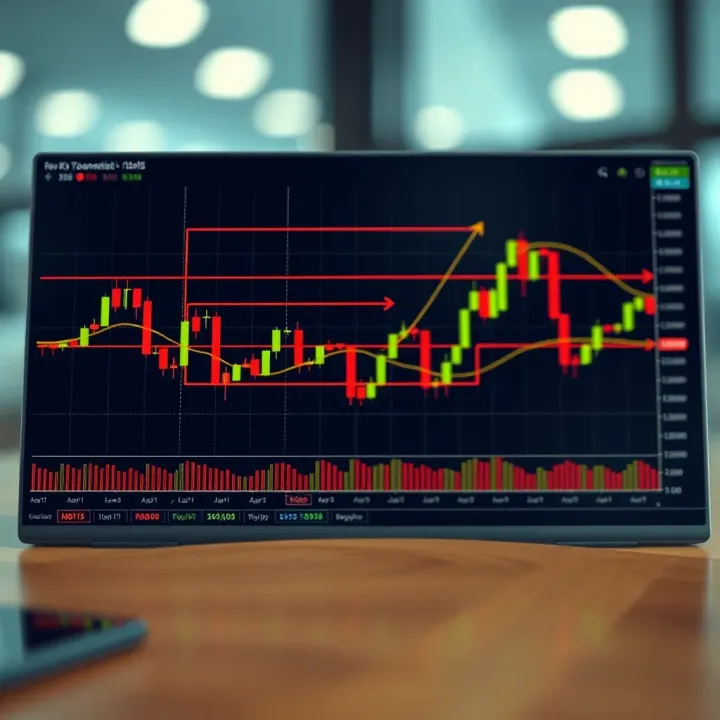
Momentum Candlestick Patterns Explained
📈 Master momentum candlestick patterns to spot strong market moves. Learn key setups, smart strategies, and practical tips for better trading decisions.
Edited By
Amelia Foster
Trading can often feel like trying to read tea leaves—uncertain and unpredictable. But candlestick patterns offer a way to cut through that fog, giving traders visual clues about market sentiment and possible price moves. These patterns aren’t magic, but when you understand the ones that have proven dependable over time, you start seeing the market’s story unfold more clearly.
In this article, we'll break down the most reliable candlestick formations that many traders swear by. From bullish reversals that hint at a price rise to bearish signals warning of a downturn, these patterns can give you an edge if used right. We’ll also touch on how to confirm these signals using other market indicators and share practical tips for applying this knowledge alongside your existing strategies.

Whether you’re a seasoned trader or just dipping your toes into the markets, knowing these patterns can help you make sharper trading decisions. The goal here isn’t just to memorize shapes on a chart but to understand what those shapes mean in real trading scenarios. Let’s get started—your next smart move might just be a candlestick away.
"Candlestick patterns are like the market’s handwriting—once you learn the script, you can anticipate the next sentence."
By the end of this guide, you’ll recognize which candlestick patterns merit your attention, avoid the noise of false signals, and blend candlestick analysis smoothly into your trading toolkit.
Candlestick patterns have become one of the go-to tools for traders wanting to read market sentiment quickly and effectively. Unlike simple line charts, candlesticks offer a detailed snapshot of price action in a given period, revealing not just direction but also the intensity of buying or selling pressure. This added insight helps traders make smarter decisions, whether they’re looking to enter, exit, or hold their positions.
For example, a trader watching Nifty 50 might spot a bullish engulfing pattern signaling a likely upward reversal after a decline. Recognizing this early can mean catching the upswing before the crowd wakes up to it. That’s why understanding these patterns isn’t just academic—it’s practical and can directly impact your bottom line.
Moreover, candlestick charts reflect a lot more context than just numbers. They capture human psychology at work—fear, greed, hesitation, and confidence—all packed into those red and green bars. Getting a handle on them means tuning into the market’s mood swings, which is invaluable in today’s fast-moving Indian equity markets.
Remember, no pattern guarantees results alone, but when combined with other technical tools and sound risk management, candlestick patterns offer a reliable edge that many investors overlook.
Overall, this section introduces you to the world of candlesticks, setting the stage for deeper dives into how to identify, interpret, and apply the most trustworthy patterns out there. Whether you’re a novice or a seasoned trader, knowing what these patterns mean can help cut through the noise and give your trades a firmer footing.
Getting the hang of spotting trustworthy candlestick patterns is a game-changer for any trader. Knowing how to pick out the patterns that actually have weight behind them—not just random price blips—helps you make smarter trading decisions. It's like learning to read the market's body language instead of just guessing.
Reliable candlestick patterns don't appear out of thin air. They have specific traits that hint at what's likely ahead in price movements. Recognizing these traits means fewer false alarms and better timing for entering or exiting trades. In day-to-day terms, this skill saves time and money by avoiding unnecessary trades and catching genuine opportunities.
Volume acts as the backup singer to any candlestick pattern. Without decent volume, a pattern might just be noise. For example, if you see a bullish engulfing pattern on Infosys with high trade volumes compared to previous days, it suggests strong buying interest backing that move. On the other hand, a similar pattern on low volume could mean the signal lacks conviction.
Watch for spikes or steady increases in volume that align with the direction the pattern suggests. Volume confirmation increases confidence; it's like the market yelling, "Yes, I mean it!"
A pattern doesn’t operate in a vacuum. Its place within the prior trend matters a lot. For instance, spotting a hammer candlestick after a prolonged downtrend on the Nifty 50 index signals potential reversal. However, the same hammer inside a sideways market carries less punch.
Understanding trend context helps avoid jumping the gun. Always ask: Is the market currently trending up, down, or sideways? Does the pattern confirm or contradict this? This insight steers you away from traps and toward opportunities.
Don’t underestimate the visual impression of the candle itself. Big bodies generally mean stronger conviction than tiny ones. A long green candle swallowing a smaller red one (bullish engulfing) is more reliable than a subtle overlap.
The shape matters too: long wicks might suggest indecision or rejection of price levels. For example, a shooting star with a long upper wick on Tata Motors shares a loud message that bulls tried but failed to push prices higher.
In practical terms, larger, well-formed patterns usually signal stronger moves. Keep an eye out for clean, clear shapes on your charts—those are the patterns worth trusting.
At times traders expect candlestick patterns to be foolproof. That’s a setup for frustration. Patterns don't guarantee outcomes but instead indicate probabilities. For example, a doji candle doesn’t always mean the market is about to reverse; it simply shows indecision at that moment.
Another misconception is treating every occurrence of a pattern the same way. The same bullish engulfing pattern might lead to a sharp rally in one stock but stall in another depending on market conditions and context.
Lastly, many overlook the importance of confirmation. Jumping in on the first sign of a pattern without waiting for follow-up confirmation (like next-day price action or volume cues) can lead to premature trades.
Remember, candlestick patterns are tools—not crystal balls. Use them alongside other analyses to paint a more accurate market picture.
When it comes to bullish candlestick patterns, these formations serve as powerful visual tools that help traders spot potential upward price movements. Recognizing these patterns allows investors and market analysts to enter trades at favorable points with greater confidence. Real-life trading, especially in volatile markets like the Indian stock exchange, often pivots on understanding these bullish signals accurately. Let’s look at three of the most reliable bullish patterns and how they can be practically leveraged.
The hammer pattern stands out for its simplicity and effectiveness in signaling potential market reversals from a downtrend to an uptrend. Characterized by a small body near the top and a long lower shadow, the hammer shows that sellers pushed the price down during the session but buyers regained control, closing near the opening price. This tug-of-war suggests waning selling pressure.
Take for instance Infosys Ltd during a recent downturn; a hammer candle formed after several days of decline, indicating a possible reversal. Traders who noticed this could pair it with volume spikes or RSI rising from oversold conditions to confirm the signal.
Variations like the inverted hammer signal the same bullish potential but occur after deeper price dips, indicating a potential bottom. The key for investors is not to jump at every hammer candle but to consider trend context and confirmation signals.

This is one of the most straightforward and convincing patterns for traders awaiting a bullish shift. A bullish engulfing pattern appears when a small bearish candle is immediately followed by a larger bullish candle that completely engulfs the previous day’s range.
Imagine Reliance Industries showing this pattern after a drop; the large green candle typically confirms strong buying pressure and a change in market sentiment. A smart move would be to confirm this with some volume analysis — higher than average volume usually strengthens the validity of the engulfing candle.
The clarity of bullish engulfing candles helps traders set stop-loss orders below the pattern’s low, offering a good risk-to-reward ratio. But remember, context is everything – spotting an engulfing pattern near a key support level usually has more weight than one appearing mid-trend.
The morning star is a three-candle pattern that’s slightly more complex but highly reliable for spotting bullish reversals. It consists of a long bearish candle, followed by a small-bodied candle (which suggests market indecision), and then a strong bullish candle that closes well into the first candle’s range.
Consider Tata Motors during a choppy market phase; a morning star pattern helped traders identify a shift from bearish to bullish sentiment, allowing good entry points just as prices started to climb.
This pattern’s strength lies in its formation sequence — traders often wait for the third candle’s confirmation before making a move. It’s a helpful pattern for those who want to avoid false signals and wait for clear indications of trend change.
Recognizing these patterns in the Indian markets is invaluable but coupling them with volume data and other indicators like moving averages or RSI can greatly enhance trading accuracy.
In summary, mastering the hammer, bullish engulfing, and morning star patterns helps traders not just identify promising bullish setups but also manage their trades more effectively. Each pattern serves as a piece of the puzzle that, when combined with good risk management and confirmation tools, improves one’s edge in the markets.
Knowing reliable bearish candlestick patterns is essential for traders aiming to spot potential downtrends or sell signals early. These patterns help anticipate market reversals or continuation downward moves, so one can act quickly to safeguard profits or minimize losses. While bullish patterns signal buying opportunities, bearish ones are equally important for managing risk and identifying exit points in volatile markets like India’s NSE or BSE.
The shooting star is a classic bearish reversal pattern often seen at the top of an uptrend. It looks like a candle with a small body near the low end and a long upper shadow. This upper wick shows buyers pushed prices up during the session but sellers took control by the close.
For example, imagine SBI shares rising steadily but suddenly forming a shooting star with the price pushed up to ₹480 before closing low near ₹465. This signals hesitation and selling pressure, suggesting the rally might lose steam.
Traders watch for confirmation next day — a lower open or bearish close often seals the reversal signal.
Its significance lies in revealing the battle between bulls and bears: the long wick means bulls tried hard but were overcome. Its simplicity makes it a favorite for many seeking to exit or short stocks.
The bearish engulfing is a powerful two-candle pattern that signals a strong shift in momentum from buying to selling. The second candle fully covers or "engulfs" the first candle’s body, indicating sellers have overtaken buyers decisively.
Consider Reliance Industries on a day when it forms a small bullish candle followed immediately by a big bearish candle that covers it entirely. This sudden gain in selling pressure after a minor rally can warn of a sharp pullback.
Key points:
Usually appears after a clear upwards move.
Confirms that sellers are ready to push prices down.
Works best when supported by volume spikes.
This pattern helps traders avoid getting caught in false breakouts and serves as a cue to tighten stops or take profits.
The evening star is a three-candle pattern signaling a top reversal. It begins with a strong bullish candle, followed by a small-bodied candle (often a doji) that gaps up, showing indecision, and ends with a bearish candle that closes well into the first candle’s body.
For instance, in Tata Motors, an evening star might appear after a steady climb, with the third candle closing significantly down from the high point. This signals that buyers lost control and bears stepped in aggressively.
Highlights:
Gaps and candle size indicate changing sentiment.
The middle candle reflects uncertain market psychology.
The pattern suggests a trend change rather than just a pause.
Traders using the evening star often watch for confirmation in the following sessions, such as further declines or increased volume to validate the pattern.
Bearish candlestick patterns like the shooting star, bearish engulfing, and evening star are essential tools. They don’t just signal a reversal; they give traders a chance to control risk in fast-moving conditions, typical of nuanced markets like India’s where sudden shifts can catch many off guard. Sticking to these patterns with proper confirmation can improve one’s trading precision noticeably.
Candlestick patterns give traders a peek at potential market moves, but on their own, they can sometimes tell an incomplete story. To sharpen accuracy and reduce the chances of false signals, integrating these patterns with other technical tools is essential. This combined approach helps verify the strength of the signal and improves decision-making.
Using multiple indicators allows traders to see market dynamics from different angles. For instance, a bullish engulfing pattern may look promising, but if the relative strength index (RSI) is already in overbought territory, it might warn against jumping into a long position. The key is to look for confirmation rather than taking any single tool at face value.
In the sections below, we’ll explore how moving averages, RSI, and volume analysis can complement candlestick patterns effectively.
Moving averages smooth out price data over a specific period, making it easier to identify trends. When combined with candlestick patterns, moving averages can signal whether the pattern aligns with the broader trend or contradicts it.
For example, if a hammer pattern forms near the 50-day moving average during an uptrend, it adds weight to a potential bullish reversal. Conversely, spotting a shooting star above the 200-day moving average may suggest stronger resistance and a potential upside pause.
Traders often watch for a crossover involving short- and long-term moving averages to confirm breakout chances. If a bullish candlestick pattern appears right before a golden cross (like the 50-day MA crossing above the 200-day MA), the odds of a sustained price rise improve.
RSI is a momentum oscillator that measures the speed and change of price movements. It ranges from 0 to 100 and can indicate whether a stock or asset is overbought or oversold, helping traders gauge if a candlestick pattern is likely to follow through.
Consider a bearish engulfing pattern occurring when RSI is above 70 (overbought). This scenario strengthens the case for a price correction. On the flip side, a bullish pattern forming with RSI below 30 (oversold) might signal a reversal soon.
Using RSI alongside patterns prevents chasing trades when momentum is already stretched. It offers a reality check on whether the market conditions favor the expected move from the candlestick signal.
Volume acts as a backdrop to price movement. A candlestick pattern accompanied by heavy volume suggests stronger conviction from market participants, making the pattern more trustworthy.
Take the example of a bullish engulfing pattern on the Nifty 50 index. If the engulfing candle closes with a volume spike, it indicates robust buying interest supporting the reversal, making it a viable entry point. Without volume support, the same pattern might be less reliable or even misleading.
Additionally, volume trends can indicate the sustainability of a breakout or breakdown following a pattern. Declining volume while price rises might hint at a weak rally, suggesting caution.
Combining candlestick patterns with moving averages, RSI, and volume analysis provides a multi-layered check. This not only cuts down on false signals but also increases confidence in trade setups, ultimately leading to better risk management and improved trading performance.
In the next sections, we’ll discuss common pitfalls that traders should watch out for when relying on candlestick patterns, ensuring you’re not caught off guard in real trading situations.
Candlestick patterns are powerful tools, but they don't operate in a vacuum. Many traders stumble by relying too heavily on these patterns without considering the bigger picture. Avoiding common pitfalls can save you from costly mistakes and improve your success rate.
One of the biggest mistakes is viewing candlestick patterns in isolation. Markets are influenced by many factors beyond the immediate price action — like macroeconomic news, policy changes, or global events. For example, a Bullish Engulfing pattern might signal a buy opportunity, but if it coincides with unfavorable central bank announcements or weak economic data in India, the signal might quickly fizzle out. Always check the broader trend and fundamental context before making a trading decision.
Relying solely on one candlestick pattern without additional confirmation is a risky move. For instance, spotting a Hammer candle might excite you about a reversal, but without supporting signals—like increased volume or confirmation from moving averages—it could just be a false alarm. Combine patterns with other technical indicators or wait for follow-through candles to avoid jumping the gun.
Doji candles can be tricky because they represent indecision, but they are often misunderstood as guarantees of a trend reversal. A Doji needs to be interpreted within its proper context. For example, if a Doji appears during a strong uptrend with high volume, it might just signal a pause instead of a reversal. Also, different types of Doji (like Long-Legged or Dragonfly) have different implications. Traders should study these nuances and avoid treating every Doji the same way.
Remember, candlestick patterns are clues, not certainties. Combining them with other tools and market knowledge forms a stronger foundation for your trades.
In summary, avoiding these common traps—overlooking the market context, depending on single signals without backup, and misunderstanding Doji patterns—can dramatically improve your candlestick chart reading skills and trading outcomes.
Trading in the Indian markets comes with its own set of quirks and nuances. Applying candlestick patterns here isn't just about spotting the patterns and making trades; it requires understanding the local market psyche and economic factors unique to India. For example, the daily price swings in the Nifty 50 or BSE Sensex can be more volatile around quarterly earnings or government policy announcements than in some other markets. Recognizing this helps traders avoid false signals that might occur in calmer markets.
Indian markets often show sharp responses to news, especially political or regulatory events. Suppose a bullish engulfing pattern forms right after a budget announcement promising new infrastructure projects. In that case, the pattern could signal a stronger move than usual because of positive sentiment among retail investors. However, the same pattern might not be as reliable during festivals or holidays when volume tends to drop.
Traders should learn to weigh these events alongside classic candlestick signals. In fact, sectors like banking or pharma might behave differently when the Reserve Bank of India's policies or drug price controls are announced. It's wise to track sector-specific reactions to tailor candlestick pattern interpretations for better accuracy.
Economic announcements—like GDP growth figures, inflation data (CPI, WPI), or RBI rate decisions—can cause sudden spikes or drops, making candlestick patterns tricky to trust if taken in isolation. For instance, a shooting star pattern just before the RBI's monetary policy statement might get invalidated by a surprise interest rate cut.
An effective strategy is to check upcoming economic calendars and avoid opening or closing trades solely based on candlestick signals minutes before these events. Instead, wait for the dust to settle post-announcement to confirm if the signal holds or if new patterns have emerged.
Remember, even the most reliable candlestick patterns can mislead if major economic news causes a sudden market shift. Patience and verification are key.
Using candlestick patterns as a sole entry or exit guide can lead to overconfidence and unexpected losses. Indian markets, known for their intraday volatility and occasional gaps caused by after-hours news, demand strict risk management.
Here are practical tips to keep risks in check:
Set stop-loss orders just beyond the wicks or shadows of the candlesticks to limit downside in case the pattern fails.
Combine patterns with volume analysis; higher volume confirms stronger conviction behind the move.
Don’t put all eggs in one basket; distribute risk by trading multiple stocks or sectors rather than relying on a single pattern in one scrip.
Use position sizing carefully based on the pattern’s reliability and the trade setup’s confidence level.
For example, if a Morning Star pattern appears on Reliance Industries with strong volume after a market dip, a trader could allot a smaller position initially and then add more only after confirmation from moving averages or RSI indicators to manage risk effectively.
Practical trading in India's fast-moving market demands blending candlestick patterns with local knowledge and solid risk controls. This balanced approach helps traders not just spot reliable signals but also survive and thrive amid unpredictable shifts.
📈 Master momentum candlestick patterns to spot strong market moves. Learn key setups, smart strategies, and practical tips for better trading decisions.

📈 Learn how to read and master candlestick patterns for trading success with clear explanations, key tips, and practical insights to boost your skills.
📊 Learn to spot and use common candlestick patterns in trading. Understand price movements, key patterns, and boost your stock market strategy effectively.
📈 Discover powerful candlestick patterns to analyze market trends and make smart trading decisions. Includes PDFs with visual aids and step-by-step guidance.
Based on 12 reviews