

Understanding Binary Numbers and Their Uses
📊 Explore how numbers are represented in binary code, its role in computing, simple methods to convert from decimal, and uses in programming & electronics.
Edited By
Isabella Scott
Binary translation is a technical process that transforms executable code designed for one processor architecture into equivalent code that runs on another architecture. This means software compiled for, say, x86 processors can run on ARM processors without needing the original source code or recompilation. The method becomes especially important in today’s diverse computing environments where different hardware platforms coexist.
Unlike traditional recompilation, which requires source code access, binary translation works directly on compiled machine code. This feature makes it vital for legacy software support, where source code is often unavailable, and for enabling software portability across devices such as mobile phones, embedded systems, and desktops.
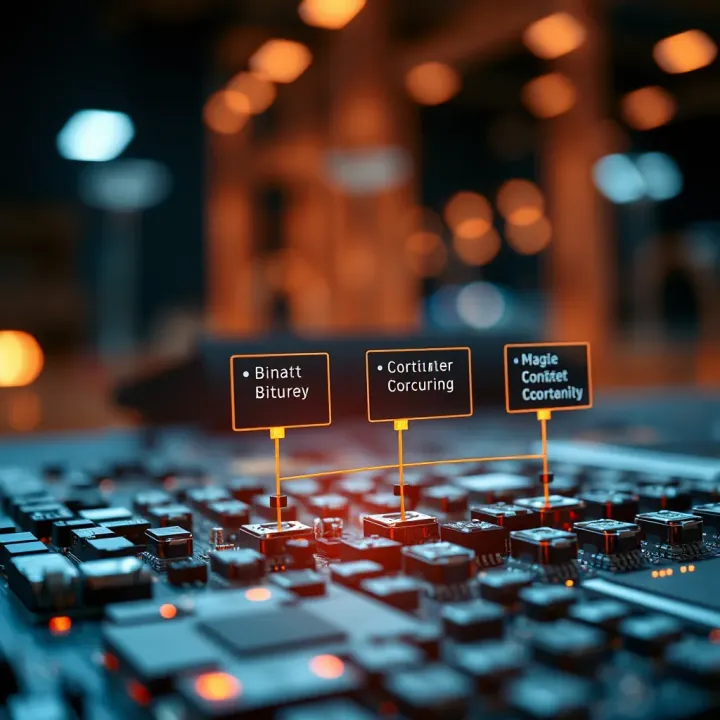
Binary translation bridges architectural gaps, ensuring smooth execution of existing applications across varied hardware without rewriting code.
There are two main types of binary translation:
Static translation: Converts the entire binary before execution. Though faster at runtime, its inflexibility can cause issues with dynamic code features.
Dynamic translation: Translates code on-the-fly during execution, allowing optimisations and adjustments based on runtime behaviour but adding some overhead.
In practice, binary translation is used by companies like Apple to run Intel-based Mac applications on their new ARM-based chips through software like Rosetta 2. Similarly, gaming consoles use it to support older game libraries on new hardware.
Challenges include managing architectural differences like instruction sets, memory layout, and system calls. Security also takes centre stage since translation layers can introduce vulnerabilities if mishandled. However, advances in machine learning and just-in-time compilation are improving translation accuracy and speed.
Understanding these fundamentals helps in recognising how binary translation enables legacy software continuation and cross-platform compatibility—key concerns for investors and technology professionals tracking trends in computing hardware.
Binary translation is a technique that converts executable code written for one processor architecture so it can run on another. This process allows software compiled for a specific hardware platform, say an Intel x86 chip, to operate seamlessly on a different architecture like ARM, without needing the program's source code. This capability has become particularly relevant as device diversity grows—smartphones, laptops, servers often run on varied chips, yet users demand consistent software behaviour.
At its core, binary translation involves analysing machine-level instructions of a program and recreating their functionality on another architecture. Unlike source code translation, which depends on access to original code written in high-level languages like C or Java, binary translation works directly with compiled binaries. This makes it invaluable in scenarios where source code is unavailable, such as legacy software or proprietary applications.
The translation can happen before execution—called static translation—or during runtime, known as dynamic translation. Both methods aim to preserve the logic and output of the original program while adapting it to different hardware specifics. For instance, when a Windows application compiled for Intel processors runs on an ARM-based Windows device, dynamic binary translation plays a key role behind the scenes.
Binary translation matters because it bridges the gap between diverse hardware and software ecosystems. By allowing binaries to run across architectures without modification, it extends the lifespan of older software and eases software deployment on new hardware platforms.
For example, consider the case of India's own billion-plus mobile users. Many apps originally designed for Intel-based processors may need to run on ARM-based smartphones prevalent today. Binary translation helps ensure these apps remain usable, safeguarding user experience and developer investments.
In enterprise and security settings, binary translation also aids in malware analysis and software security testing. Analysts can observe how malicious binaries behave on different platforms without needing their source, helping to identify vulnerabilities or develop defence mechanisms.
Binary translation offers a practical, behind-the-scenes solution to one of computing’s enduring challenges: running software reliably across the sprawling variety of hardware architectures found today.
In short, understanding binary translation unlocks insights into software compatibility, performance optimization, and security practices that matter across industries. This article will explain its key methods, applications, and the hurdles developers face to make this technology work smoothly.
Binary translation comes mainly in two flavours: static and dynamic. Both approaches serve to convert binary code from one machine architecture to another, but they differ sharply in when and how the transformation takes place. Understanding these differences is key for applications ranging from legacy software support to security analysis.
Static binary translation involves converting the entire binary executable code before it runs. The translator parses the source code thoroughly, rewrites it to match the target architecture, and outputs a new executable file. This method is like translating a book beforehand rather than interpreting it on the fly. An example is recompiling old games designed for PowerPC processors to run directly on x86 chips in PCs.
This approach offers predictable performance because the translation happens once. However, static translators must handle the complexities of the original instruction set and control flow comprehensively. Any dynamic behaviour or self-modifying code can pose challenges. Despite this, static translation suits scenarios where performance and repeatability outweigh flexibility.
Dynamic binary translation (DBT) works differently by translating code during execution, often in small chunks or individual instructions. This just-in-time approach enables the system to adapt translation based on runtime behaviour, offering greater flexibility. An example is software like QEMU that lets you run ARM or MIPS programs on Intel-based computers by converting instructions as they execute.
DBT can optimise heavily used code paths while skipping rarely executed segments, improving efficiency. Also, it can handle self-modifying code better since it translates in real time. Still, this flexibility comes at a cost in overhead, as translation incurs latency during execution.
Static translation generally delivers faster execution because the entire binary is pre-processed, enabling direct running without translation overhead. For example, in embedded systems where real-time performance matters, static translators are preferred. On the flip side, dynamic translation’s run-time processing adds overhead, but careful caching of translated code often mitigates this.
Dynamic translation shines where code behaviour is unpredictable or based on runtime conditions. Systems dealing with just-in-time compiled languages or complex software emulation benefit from DBT’s ability to adjust on the fly. Static translation struggles with dynamic instructions or cases requiring on-demand code generation, limiting adaptability.
Static translation fits well in environments demanding stable, repeatable execution, such as converting legacy enterprise software to run on modern hardware without changing source code. Meanwhile, dynamic translation suits security research or malware analysis, where monitoring diverse, unknown code paths dynamically is essential.
Having clarity on these approaches guides developers, researchers, and businesses in picking the right tool for their specific needs, balancing speed, flexibility, and accuracy.
In summary, choosing between static and dynamic binary translation depends on the application context, expected workloads, and performance criteria. Each technique offers distinct advantages making them essential in digital ecosystems requiring cross-platform compatibility and efficient code reuse.
Understanding how binary translation stands apart from emulation and virtualisation helps you grasp its unique role in software compatibility and performance. All three technologies deal with running software across different hardware or environments, but they use distinct methods that impact speed, resource use, and flexibility.
Emulation recreates an entire hardware environment in software, allowing programs designed for one platform to run on another incompatible system. For example, a classic gaming console emulator lets you play old Nintendo games on your laptop by mimicking its hardware completely. Virtual machines (VMs), on the other hand, create isolated environments on the host machine, running separate operating systems simultaneously. A simple case is using VMware or VirtualBox to run Windows on a Linux setup. Both emulation and VMs provide full system functionality but often at the cost of high resource consumption and lower speed compared to native execution.
Binary translation translates machine code from one architecture to another either statically (all at once) or dynamically (during execution). Unlike emulators that simulate hardware step-by-step, binary translation rewrites code so it runs natively on the host processor. This reduces overhead, resulting in faster execution and lower resource use.
Take Apple’s transition from Intel to its own ARM-based M1 chips. Apple used dynamic binary translation to run older Intel applications smoothly without needing full emulation, which would have slowed down performance. This method allows legacy software to run with near-native speed.
Architecturally, emulation replicates the entire instruction set and hardware behaviour, while virtualisation sits between hardware and OS layers to share resources securely. Binary translation targets only the code translation aspect, converting instructions from one format to another without simulating hardware.
In practice, binary translation offers a middle path: better performance than emulation and more compatibility than strict virtualisation, fitting well where running diverse software efficiently matters.
Emulation: Full hardware simulation, slower speed, high resource use.
Virtualisation: Multiple OS sharing hardware resources with minimal overhead.
Binary Translation: Converts code across architectures for near-native performance.
Each approach suits different needs, but binary translation is particularly valuable when backward compatibility and performance must go hand in hand.
Binary translation plays a significant role in modern computing by bridging compatibility gaps, enhancing security, and boosting performance on a range of hardware. Its practical use cases demonstrate why this method remains relevant despite rapid changes in processor architectures.
One of the most common applications of binary translation is ensuring software runs smoothly across different hardware without modification. For example, apps designed for x86 processors can be translated to run on ARM-based devices, which power many smartphones and some laptops. Apple’s Rosetta 2 is a well-known case; it uses binary translation to allow Intel-based Mac applications to run on their new ARM-based M1 chips seamlessly. This approach avoids rewriting the entire software, saving time and cost, while offering users access to a broad range of applications regardless of their device architecture.
Binary translation is invaluable in the cybersecurity field, especially for analysing malware. Tools employ dynamic binary translation to execute suspicious code in a controlled environment, observing behaviour without risking actual systems. This helps security analysts understand malware tactics and signatures. Moreover, this method supports sandboxing techniques where malware runs in an isolated translated environment, preventing harmful effects while enabling detailed probes. Such usage is critical for banks and fintech companies in India, where rising cyber threats demand robust malware detection mechanisms.
Beyond compatibility, binary translation is increasingly used to tune software performance for diverse hardware. It allows real-time optimisation, translating machine code into platform-specific instructions that exploit unique processor features. For instance, cloud providers running various server CPUs can use binary translation to boost efficiency without redeveloping software stacks. Similarly, in India’s growing embedded systems market, devices with constrained resources benefit from this as it refines code execution to fit power and thermal limits. The result is faster, more efficient apps that maintain responsiveness across hardware.
Binary translation offers a practical bridge, letting software cross architecture boundaries, improve security defences, and squeeze better performance from existing devices.
Implementing binary translation is no walk in the park. It involves navigating through a maze of technical hurdles that can affect the performance, security, and accuracy of the translated code. These challenges shape how effectively binary translation can be deployed across different systems and applications, particularly where real-time performance and security are critical. Understanding these issues helps stakeholders manage expectations and make informed choices.
One major challenge lies in decoding and translating complex instruction sets accurately. Modern processors often include extensive and sometimes proprietary instruction sets with nested operations and rarely used commands. For example, translating ARM’s Thumb-2 instructions, which mix 16-bit and 32-bit codes, into x86 equivalents requires sophisticated parsing to maintain program logic. Errors or oversights here can lead to bugs, crashes, or unexpected behaviours. This complexity demands constant updates as hardware vendors evolve instruction sets, pushing binary translators to keep pace with these changes.
Security is another critical concern. Binary translation often deals with untrusted code or legacy binaries, which may hide malware or exploits. Translators need robust mechanisms to prevent these threats from slipping through during the translation process. For instance, dynamic binary translators running on secure environments must ensure that translated output does not introduce vulnerabilities. Maintaining integrity also means ensuring no tampering or corruption of data during execution, all while respecting the original software’s intended operation. This balance between openness for translation and tight security controls is delicate and challenging.
Speed and accuracy often pull binary translation in opposite directions. Fast translation methods risk degrading output accuracy or ignoring subtle hardware behaviours, while highly accurate translations can incur significant performance penalties. Take dynamic binary translation in gaming consoles: achieving real-time performance is vital, yet inaccuracies can ruin the user experience. Implementors must carefully choose optimisation and caching strategies that deliver responsive performance without sacrificing correctness. Finding this sweet spot remains a tough problem, especially with increasingly diverse hardware ecosystems.
Effective binary translation depends heavily on handling these challenges well, blending technical expertise with practical compromises to meet the demands of today’s varied computing environments.
Understanding these obstacles is essential for investors, developers, and analysts aiming to evaluate the feasibility and future growth of binary translation technologies. With ongoing improvements in algorithm design and machine learning integration, some of these barriers are poised to diminish, though the core complexities will likely persist.
Binary translation is evolving rapidly, largely because of advances in related fields like machine learning (ML) and artificial intelligence (AI). These technologies are making binary translation more adaptive, efficient, and capable of handling increasingly complex software and hardware landscapes. For investors and tech professionals, understanding these developments helps anticipate which firms or platforms might lead in cross-architecture compatibility.
Machine learning is transforming binary translation by enabling smarter pattern recognition and adaptive code translation. Instead of following static rules, ML models can learn from vast codebases, optimising the translation of tricky instruction sets. For example, some ML-driven binary translators can predict code execution paths in real time, reducing lag and improving efficiency during dynamic translation.
This shift is particularly relevant in security and malware analysis, where AI can detect suspicious behaviour faster by understanding translated code's intent. Indian cybersecurity firms investing in AI-based binary translation tools could see productivity gains and quicker threat response times. On top of that, AI integration helps translation tools better handle new or uncommon processor architectures, making cross-device software compatibility smoother.
Cross-platform software remains a hot topic as companies seek to deploy applications across mobile, desktop, and embedded devices without rewriting code each time. Binary translation plays a key role here by enabling apps compiled for one architecture—say ARM, common in smartphones—to run on x86 PCs without source code access.
With improved translation technologies, developers can save months of work rewriting or recompiling large codebases. Take a software company that wants its Android app to run natively on Windows laptops using x86 processors. Advanced binary translators can bridge this gap, opening new markets without massive development costs.
Moreover, this evolution supports India's growing startup ecosystem, where limited resources mean any tool that cuts time-to-market and development expense is invaluable. As binary translation tools become smarter and easier to integrate, cross-platform launches will become more practical, boosting innovation and competition.
The future of binary translation is tightly linked with AI advances and the need for agile cross-platform solutions, promising faster and more reliable software compatibility across diverse devices.
In short, those watching binary translation technology should keep an eye on AI-driven improvements and their impact on cross-architecture software deployment. These trends hint at a more connected and flexible digital ecosystem, particularly advantageous for Indian tech companies and developers targeting both domestic and global markets.
📊 Explore how numbers are represented in binary code, its role in computing, simple methods to convert from decimal, and uses in programming & electronics.
📊 Learn how binary numbers work, convert between binary & decimal, and grasp binary math with real-life computer applications in this easy guide.
Explore optimal binary search trees 🌳 in algorithm design and analysis. Learn dynamic programming methods, practical uses & performance tips for efficiency.
🧮 Learn how online binary addition works, explore common methods and tools, tackle challenges, and improve accuracy for digital calculations in computing.
Based on 10 reviews