

Understanding Optimal Binary Search Trees
Explore optimal binary search trees 🌳 in algorithm design and analysis. Learn dynamic programming methods, practical uses & performance tips for efficiency.
Edited By
Amelia Walker
Binary trees form a backbone for many algorithms and applications in computer science, particularly in organising data efficiently. They consist of nodes, each having at most two children — commonly referred to as the left and right child. This simple structure allows binary trees to be adapted into several specialised forms, depending on the needs of the algorithm or system.
Understanding the different types of binary trees is crucial, especially for professionals working with databases, search engines, or financial data, where swift data retrieval and manipulation can impact performance directly. For investors or traders dealing with large volumes of real-time data, the right binary tree structure can make a noticeable difference in system responsiveness.

Not all binary trees are built the same. While a basic binary tree only ensures a hierarchical parent-child relationship, many advanced applications require additional properties:
Binary Search Trees (BSTs): These maintain elements in sorted order, allowing quick search, insertion, or deletion. Think of keeping track of stock prices sorted by ticker code.
Balanced Trees (AVL, Red-Black Trees): To avoid performance pitfalls in worst cases, these trees keep their height as small as possible, often maintaining balance through rotations.
Special Trees (Threaded, Complete): Threaded trees increase traversal speed by making use of empty child pointers, whereas complete binary trees ensure all levels except possibly the last are fully filled, which helps optimise memory and lookup.
Choosing the right type of binary tree depends on the specific needs of your application — whether quick search, balanced insertions, or efficient traversals take priority.
In the following sections, we will explore these types in detail, highlighting their characteristics and practical use cases. This will guide you in selecting the optimal tree structure that fits your performance and data organisation requirements.
Binary trees form the backbone of many data structures used in computer science and software development. Understanding their basic concepts is essential because they provide a foundation for more complex tree structures like binary search trees and AVL trees. At their core, binary trees help organise data hierarchically, enabling efficient searching, insertion, and deletion operations.
A binary tree is a hierarchical structure where each node can have at most two child nodes, commonly referred to as the left and right child. This restriction differentiates binary trees from more general trees that allow any number of children. The binary structure supports many practical applications, such as representing arithmetic expressions or organising sorted data for quick access.
The binary tree’s structure also defines specific properties like depth or height, which determine the number of levels present from the root down to the leaves. These properties affect how fast operations like search or traversal can perform. For instance, a shallow tree with fewer levels leads to quicker searches compared to a skewed or unbalanced tree.
Each element in a binary tree is a node. The very first node, called the root, serves as the entry point. Nodes without children are called leaves; these mark the end points of branches within the tree. For example, in a decision-making application, leaves might represent final outcomes.
The height of a binary tree measures the longest path from the root to any leaf node. This metric matters in performance contexts. For instance, in a balanced binary tree used for database indexing, maintaining a low height ensures that queries run efficiently even as data grows large.
Binary trees can be stored mainly in two ways: arrays and linked lists. Arrays suit complete or nearly complete binary trees well since nodes can be mapped to specific indices. This mapping simplifies parent and child location calculations and is commonly used in heap implementations.
Linked list representation uses nodes containing pointers to their left and right children. This flexible structure works well for trees that are not complete, accommodating irregular shapes without wasting memory on empty positions. For example, expression trees often use linked structures due to their complex forms.
Traversal refers to visiting all nodes in a tree systematically. Inorder traversal processes the left subtree, the current node, and then the right subtree. This method is particularly helpful for retrieving data from a binary search tree in sorted order.

Preorder traversal visits the current node before its children, which aids in copying the tree or evaluating prefix expressions. Postorder traversal, on the other hand, visits child nodes before the parent and is widely used in deleting trees or evaluating postfix expressions.
Mastering these traversal methods is key to manipulating binary trees effectively in sorting, expression evaluation, and other fundamental computing tasks.
Each traversal type serves distinct purposes and choosing the right one depends on the specific application need. For example, if you want sorted output from a binary search tree, inorder is the way to go; for expression evaluation, preorder or postorder might be better suited.
Understanding these basic concepts lays the groundwork for identifying and utilising special types of binary trees effectively in software and algorithm design.
Understanding common types of binary trees helps clarify how different structures serve various computing needs. These trees vary by completeness and arrangement, affecting how efficiently they store and access data. For instance, learning the distinctions between full, complete, and perfect binary trees aids you in selecting the best fit for data storage, prioritisation, or traversal tasks.
A full binary tree is one where every node except the leaves has exactly two children. That means if a node isn't the end of a branch, it must have a left and a right child. For example, a tree with a root having two children, and each of those children with two children, forms a full binary tree. This structure is common in scenarios needing a balanced layout for operations like decision trees.
Usage scenarios highlight how full binary trees suit applications requiring predictable tree shape to simplify logic. They often appear in expression parsing or in binary heap implementations where uniform node distribution improves performance consistency.
Unlike a full binary tree, a complete binary tree is fully filled on all levels except possibly the last, which fills from the left. This slight relaxation means nodes may not always have two children but maintain a compact structure. The key distinction is this: all levels before the last are full, but the last level may be partially filled starting from the left side.
This shape is especially handy in implementing heaps, widely used in priority queues. A complete binary tree lets arrays efficiently represent the heap without gaps, which simplifies parent-child indexing during insertion or deletion.
A perfect binary tree combines the conditions of full and complete trees: all internal nodes have two children, and all leaves are at the same level. This results in a perfectly balanced tree with a mathematically predictable number of nodes — exactly (2^h+1 - 1) nodes for height (h). For example, a perfect binary tree of height 2 holds exactly 7 nodes.
Applications of perfect binary trees include scenarios requiring symmetrical data structure for consistent processing times. They appear in network routing algorithms and pipe-lined processing systems, where balanced workload distribution is crucial.
Recognising these tree types' properties helps optimise data structures for specific algorithmic needs, reducing storage overhead and improving access times.
In sum, full, complete, and perfect binary trees each come with unique features suited for different practical uses. Knowing their characteristics allows better design choices in areas like memory management, algorithm efficiency, and real-time data handling.
Binary Search Trees (BSTs) form a vital part of efficient data organisation in many applications, from database indexing to memory management. They are structured to keep data sorted, allowing quick access such as searching, adding, or deleting entries. This section will break down BSTs and their balanced variants, which aim to improve performance by maintaining tree height.
A BST is a binary tree where each node holds a value, with left child nodes containing smaller values and right child nodes larger ones. This ordering helps in quickly locating data: instead of searching the entire tree, you decide direction based on current node comparisons. For instance, looking for ₹1,000 in a BST where the root node is ₹5,000 means you move to the left subtree immediately, skipping all larger values.
Basic operations on BSTs include insertion, deletion, and search. Insertion places new values by traversing from the root to the correct leaf position, preserving the BST property. Searching works similarly — it compares the target value with nodes along the path, usually completing in time proportional to the tree's height. Deletion, more complex, handles three cases: a leaf node, a node with one child, or a node with two children, adjusting pointers and sometimes replacing nodes to maintain order. These operations help maintain dynamically changing datasets, such as a trader’s watchlist or a portfolio’s asset list.
BSTs may skew heavily if data rolls in sorted or nearly sorted, degrading search times to linear. Self-balancing trees solve this by keeping height near minimal.
AVL Trees balance themselves by tracking the height difference (balance factor) between left and right child nodes for every node. When imbalance occurs, AVL trees perform rotations — left, right, or double — to restore balance. This ensures operations run in O(log n) time, which is critical in real-time systems like stock trading platforms, where speed matters. Consider a portfolio application updating asset prices constantly; AVL trees keep retrieval fast despite frequent changes.
Red-Black Trees use colour properties (red or black) to enforce balanced paths. Each path from root to leaf follows rules that prevent any branch from becoming too long. While offering slightly less strict balance than AVL trees, Red-Black Trees allow faster insertion and deletion because fewer rotations occur. Their flexibility suits scenarios where many insertions/deletions happen, such as maintaining order books in commodity exchanges or user databases.
Both AVL and Red-Black trees ensure that even with large datasets, search and update operations remain efficient, making them popular choices in databases and file systems.
In summary, understanding BSTs and their balanced variants helps in choosing the right structure for applications demanding reliable and quick data operations. With financial data growing rapidly, applying these trees can optimise performance significantly.
Specialised binary trees improve on basic tree structures by tailoring organisation to specific needs, which speeds up certain operations. These trees are especially useful in situations where efficiency matters, such as database indexing, compiler design, or real-time systems. They build on standard binary tree concepts but add tweaks that help reduce traversal time, minimise memory use, or simplify complex computations.
Threaded binary trees modify the standard binary tree by using otherwise unused null pointers to point to the next node in sequence. Instead of storing null in pointers where there is no child, the empty left or right pointers link to the predecessor or successor node, respectively. This "threading" allows for quicker in-order traversals, without needing additional stack space or recursion.
This technique is especially relevant when system memory is limited, or performance is critical. For example, embedded systems or older computing devices with tight resource constraints can benefit from this design. It reduces overhead and simplifies traversal logic, which otherwise might involve complicated pointer management.
By using threads, the traversal process becomes more direct and faster, as nodes connect implicitly to their in-order neighbours. This design cuts down the usual traversal time taken by recursive calls or stack-based approaches. It offers almost linear space usage since no extra stack memory is required during traversal.
In practical terms, threaded trees are ideal for applications requiring frequent in-order visits—such as symbol table management in compilers or event scheduling—while maintaining low memory use. This increased traversal speed helps keep processes responsive, which is crucial in time-sensitive environments.
Expression trees represent arithmetic expressions where leaves are operands (numbers or variables), and internal nodes are operators (+, -, *, /). They help parse and evaluate expressions programmatically by explicitly showing the order of operations and the hierarchy of calculations.
In programming language compilers or calculators, expression trees simplify the task of converting complex infix expressions into simpler forms. The tree structure allows easy evaluation of expressions, handling operator precedence and associativity naturally. This reduces errors and improves clarity in arithmetic processing.
Expression trees can be traversed in different ways to output expressions in infix (usual human-readable), prefix (operator before operands), and postfix (operator after operands) notations. Each ordering suits different computing needs:
Infix: Closer to standard mathematical notation but requires parentheses to resolve ambiguity.
Prefix: Useful in certain compilers and interpreters because it eliminates the need for parentheses.
Postfix: Favoured in stack-based calculators and evaluation algorithms for its straightforward processing.
By converting expressions into these notations via tree traversal, computer programs handle calculations efficiently and accurately. This capability is important in voice assistants, coding platforms, and any system requiring dynamic evaluation of mathematical expressions.
Specialised binary trees like threaded and expression trees address specific operational challenges, offering practical optimisation over general binary structures. Their design choices directly affect performance, making them a valuable study area for students and professionals involved in software development and algorithm design.
Explore optimal binary search trees 🌳 in algorithm design and analysis. Learn dynamic programming methods, practical uses & performance tips for efficiency.

Explore how optimal binary search trees 🧠 boost search efficiency, their structure, algorithms, and real-world uses. A must-read for CS enthusiasts!
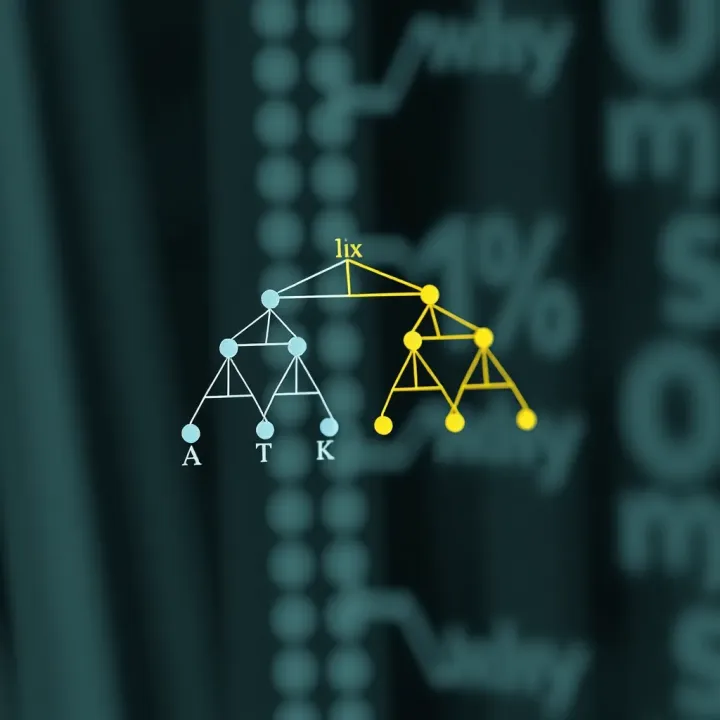
Explore 📘 the max depth of a binary tree 🌳, learn key algorithms, practical uses, and tips to efficiently calculate and visualize it in your projects.
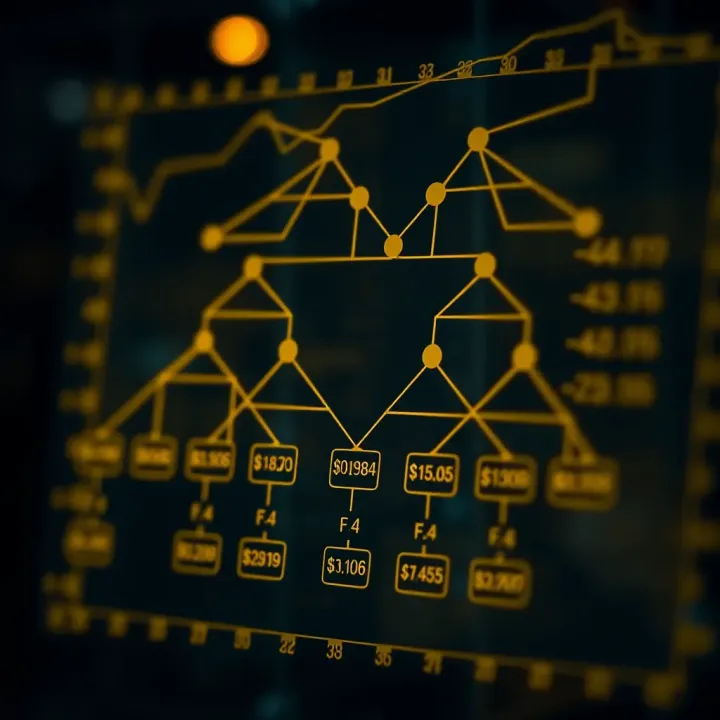
Learn how dynamic programming builds optimal binary search trees 🔍 for efficient search cost minimization. Explore concepts, complexity, and examples here!
Based on 5 reviews