

Understanding Binary Search with Clear Diagrams
Explore binary search with intuitive diagrams 📊 that detail each step, edge case handling, and efficiency benefits over linear search, enhancing your coding skills effectively.
Edited By
Benjamin Foster
Risk management is not just a buzzword; it's a vital tool for businesses, investors, and professionals who want to safeguard against unexpected losses. The process involves identifying potential threats that could impact an organisation's goals, then assessing and controlling these risks to avoid or minimise their adverse effects.
At its core, the five-step risk management process offers a structured way to handle uncertainties. It starts with recognising what could go wrong and moves through assessing how likely and impactful these risks are. This methodical approach helps decision-makers avoid rash choices based on incomplete information.
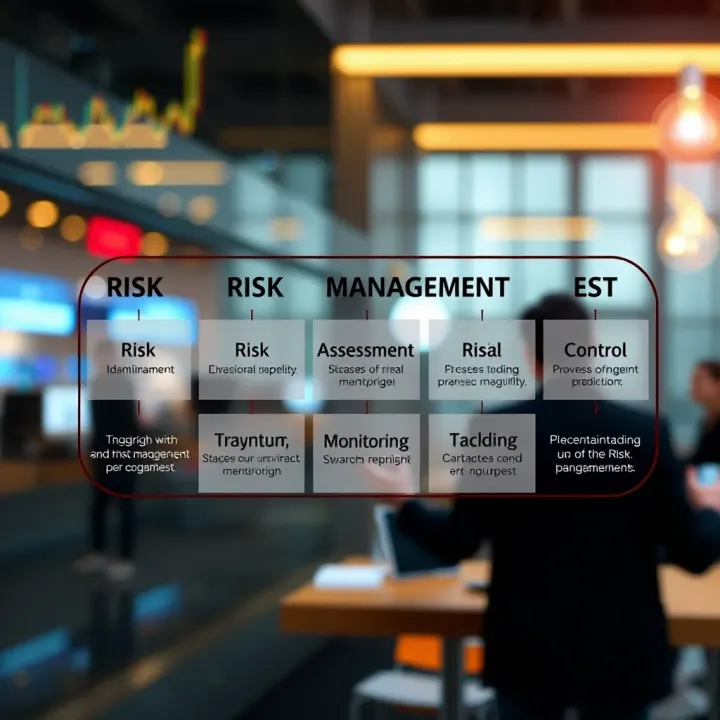
For example, a financial analyst evaluating a new investment may use this process to pinpoint market, credit, and operational risks. By doing so, they can calculate potential downsides and decide whether the returns justify the risks involved.
Effective risk management isn’t about eliminating every risk but about understanding and controlling them to protect value and ensure smoother operations.
The following five steps form the backbone of this approach:
Identify risks – Listing all possible threats relevant to the business or project.
Analyse risks – Determining the likelihood and consequences of each risk.
Evaluate risks – Prioritising risks based on their potential impact.
Treat risks – Implementing strategies to mitigate or transfer risks.
Monitor and review – Continuously tracking risks and adjusting strategies as conditions change.
Throughout these stages, clarity and thoroughness are critical. Even small oversights can cascade into significant challenges later. That’s why many Indian companies integrate risk management into their day-to-day operations, ensuring compliance with regulators like SEBI and RBI, and maintaining financial health.
Understanding these steps prepares you to manage threats proactively, whether in market trading, finance projects, or organisational planning. The process acts as a foundation for making informed decisions and building resilience in a volatile environment.
Identifying potential risks early in the risk management process helps businesses prepare better and avoid surprises later. Recognising risks shapes your whole approach, allowing you to plan resources and strategies effectively. For investors or finance professionals, understanding the types of risks specific to their domain can prevent unexpected losses and improve decision-making.
Operational risks arise from everyday business activities. For example, a manufacturing unit may face equipment breakdowns or supply chain delays, directly affecting production and sales. In finance, market fluctuations, credit defaults, or liquidity shortages pose financial risks that can impact cash flow and profitability. Accurately recognising these helps organisations act swiftly, such as by diversifying suppliers or hedging currency exposure.
Failure to follow regulations can lead to fines, legal battles, or licence cancellations. Compliance risks might include non-adherence to GST rules or delays in filing Income Tax Returns (ITR), which can trigger penalties. Legal risks go beyond compliance—they cover contract breaches, intellectual property disputes, or labour law violations. For example, a startup ignoring labour regulations might face lawsuits, derailing its growth prospects.
Damage to brand reputation can impact customer trust and revenue. Think of a social media controversy that snowballs into a PR crisis or a business decision that customers see as unethical. Strategic risks include wrong market entry choices or poor product launches that misalign with business goals. For traders and investors, these risks may translate into sudden value erosion, demanding careful monitoring.
Gathering diverse viewpoints through brainstorming sessions or interviews with frontline staff, management, and external experts uncovers risks that data alone might miss. For instance, sales teams can highlight emerging competitor threats, while legal consultants can flag upcoming regulatory changes. This method encourages open dialogue, providing insights essential for thorough risk mapping.
Reviewing past records like financial statements, audit reports, and incident logs helps spot recurring issues or trends signalling potential future risks. For example, a firm noticing repeated IT system failures can prioritise cyber security investments. Historical data offers concrete evidence, reducing guesswork when recognising risks.
Using checklists tailored to the industry ensures systematic coverage of common risk areas, minimising omissions. Risk registers document identified risks, their causes, impact levels, and owners responsible for mitigation. This organised approach facilitates ongoing monitoring and quick reference during reviews or audits, streamlining risk management efforts.
Early recognition of risks allows organisations to act before problems escalate, saving costs and safeguarding reputation. Without this first step, the entire risk management process becomes reactive rather than proactive.
In short, noticing the right risks demands a blend of experience, data review, and structured tools. For traders, analysts, and finance experts alike, this foundation makes managing the unexpected more manageable and less costly.
Evaluating risks effectively means estimating both how likely a risk is to happen and what its consequences could be. This helps businesses prioritise risks and allocate resources wisely, rather than spreading efforts too thin. For instance, a trader might assess the chance of currency fluctuations affecting a portfolio and weigh that against potential financial loss. Understanding these elements clearly ensures risk management is both proactive and focused.
Qualitative assessment relies on expert judgment and descriptive categories—such as high, medium, or low probability—to estimate risk likelihood. This approach works well when precise data is scarce but a quick overall sense is needed. For example, a startup evaluating cyber threats may use qualitative ratings from its IT team due to limited breach history.
Quantitative assessment uses numerical data and statistical methods to calculate the probability of a risk event. This method suits scenarios with available historical data and measurable outcomes. A financial analyst predicting market downturn probabilities based on past trends exemplifies this. Combining both approaches often gives a more balanced view.
Probability scales help standardise risk likelihood estimates across teams and projects. For example, a 1 to 5 scale might define 1 as "rare" and 5 as "almost certain." Having a common language makes discussions more precise, reducing misunderstandings. Indian firms handling joint ventures or compliance risks can better align teams through such scales.

Additionally, clear scales simplify communication with stakeholders unfamiliar with technical risk details. Rather than vague descriptions, they can grasp where a risk stands on a straightforward scale, aiding decision-making.
Assessing a risk’s impact includes estimating direct financial losses and the knock-on effects on operations. For example, a disruption in supplier logistics could delay production, triggering not only extra costs but also missed delivery deadlines. This can pile up losses that outweigh upfront expenses.
Understanding such impacts helps businesses plan mitigation strategies with accurate costing and resource allocation. For instance, investing in multiple suppliers avoids total shutdown if one faces issues.
Reputational damage often hits harder and lasts longer than financial losses. A single compliance failure or product defect can erode customer trust, affecting sales for months or years. Think of how a food recall can ripple through brand perception across India’s vast consumer base.
Measuring this impact requires considering customer loyalty, public relations costs, and potential regulatory scrutiny. This evaluation ensures that reputation-related risks receive adequate attention alongside purely financial concerns.
A risk matrix charts risks based on their likelihood and impact, often in a colour-coded grid. This visual tool quickly highlights which risks deserve priority. For example, risks with high probability and severe impact appear in the red zone, demanding immediate action.
Indian businesses use risk matrices to simplify complex risk landscapes, especially while complying with SEBI norms or implementing internal audits. This helps top management focus on what really matters instead of getting lost in details.
Besides matrices, risk ranking gives a detailed order of risks based on calculated scores combining likelihood and impact. Techniques like scoring models or weighted averages come handy here.
Ranking risks supports more granular planning—especially when resources are limited. For instance, a financial services firm might rank credit, market, and operational risks to allocate capital effectively and meet RBI regulations.
Evaluating risks precisely is the bridge connecting risk identification and effective risk handling. Without clear assessments, even the best mitigation plans may fail because they focus on secondary threats instead of the real hazards.
Overall, assessing both likelihood and impact offers a clearer picture that guides better, faster, and more efficient decisions in risk management.
Planning how to handle risks is a key step in risk management. It moves the process from just knowing what risks exist to deciding exactly how to tackle those risks. This stage lays out clear actions to reduce potential harm or losses, which is essential for businesses to stay resilient and avoid unexpected shocks.
A well-constructed risk plan helps organisations allocate resources efficiently. For example, a manufacturing firm might decide to invest in better machinery maintenance to avoid costly breakdowns rather than wait for issues to occur. In finance, a trader could plan stop-loss orders to limit downside risk. Without proper planning, businesses may react haphazardly, increasing vulnerability.
Avoidance means steering clear of activities or decisions that expose the business to risk. This is the simplest way to eliminate a risk but is not always practical. For instance, a company may avoid entering a market known for unstable regulations or political unrest. This approach reduces chances of loss but might also limit growth opportunities.
In many cases, completely avoiding risk isn’t possible. Still, where the potential cost outweighs the benefit, avoidance remains the first line of defence. A classic example is a bank deciding not to lend to high-risk borrowers to avoid default.
Mitigation focuses on reducing the severity or likelihood of a risk rather than removing it altogether. This approach suits situations where risk is inherent but manageable. For example, an IT firm may implement security protocols and regular backups to limit the impact of a cyberattack.
A practical approach to mitigation ensures risks don’t spiral out of control. By investing in protective measures, organisations improve their ability to handle setbacks with minimal disruption.
Risk transfer involves shifting the burden of risk to a third party, often through contracts or insurance. This helps businesses protect themselves financially from potential losses. For example, a construction company may buy insurance to cover damages from accidents on site or transfer risk through subcontractor agreements.
This strategy is common in sectors like manufacturing and services where the cost of risk is significant. It provides peace of mind but also requires careful contract drafting to ensure that responsibilities are clearly outlined.
Sometimes, the best option is to accept a risk, especially when the cost of avoiding or mitigating it is higher than the potential harm. Businesses accept minor risks routinely, understanding that some risks are unavoidable.
For instance, a retailer might accept the risk of occasional theft as part of doing business, balancing it against the expense of excessive security. Acceptance requires continuous monitoring so that the risk remains manageable.
Improving internal processes can significantly reduce risk. This might involve automating manual tasks to cut errors or streamlining communication channels to prevent misunderstandings. For example, a bank updating its loan approval process to include multiple verification steps lowers the risk of fraud.
Process improvements often deliver benefits beyond risk reduction, such as better efficiency and customer satisfaction, making them a cost-effective strategy.
Insurance is a common way to financially protect against risks like property damage or liability claims. Alongside this, carefully drafted contracts transfer specific risks to other parties. For example, an IT service provider may use service level agreements (SLAs) to limit liability and clearly define responsibilities.
Both insurance and contracts require understanding of legal terms and risk exposure. Regular review ensures these measures remain relevant as the business or market conditions change.
Having a contingency plan means preparing for risks that have already materialised or are likely to do so. This could involve backup suppliers in case of disruption or alternative IT systems if primary infrastructure fails.
An airline company, for instance, may maintain standby crews and planes ready to step in if regular schedules are affected. Contingency plans improve resilience by ensuring business continuity even during crisis.
Effective risk planning is about choosing the right combination of response strategies. The goal is to ensure you are ready — not just to face risks, but to keep moving forward with confidence.
Implementing risk strategies is a critical phase where planned actions turn into practical steps to safeguard an organisation. The true value of risk management appears only when the chosen methods—whether avoidance, mitigation, transfer, or acceptance—get effectively executed. Proper implementation ensures risks are controlled before they escalate, thus protecting business objectives, financial health, and reputation.
Role Definition in Risk Management
Clearly defining roles assigns ownership and accountability within the risk management process. Every team member, from department heads to ground-level employees, must understand their risk-related duties. For example, in a financial firm, the credit risk team focuses on loan default risks, while compliance officers monitor regulatory risk. When roles are well-defined, it eliminates confusion and speeds up decision-making during risk events.
Allocating Budget and Tools
Applying risk strategies requires appropriate resources, both in terms of funding and technology. Budget allocation ensures risk controls like upgraded cybersecurity systems or staff training programmes get the support they need. For instance, an IT firm might set aside ₹50 lakh annually for risk mitigation software and audits. Besides, tools such as project management platforms or risk assessment software make monitoring and response more efficient. Without enough resources, even the best strategies struggle to deliver results.
Internal Communication Channels
Effective risk management depends on clear, timely communication within the organisation. Setting up structured channels like intranet portals, regular risk review meetings, and email alerts helps teams stay informed. For instance, a manufacturing company might use weekly dashboards and risk alerts to update operational teams about equipment hazards. Such communication avoids silos and promotes proactive risk handling.
Stakeholder Engagement
Engaging external and internal stakeholders ensures support and transparency throughout risk management. Investors, suppliers, and regulators should be aware of key risks and mitigation plans, especially when these affect operations or compliance. For example, a listed company discloses significant risks and response strategies in annual reports, reassuring shareholders. This engagement fosters trust and can even help in mobilising additional resources during crises.
Assigning clear responsibilities, providing adequate resources, and maintaining open communication channels form the backbone of executing effective risk strategies. Without these, plans remain theoretical and ineffective in real-world scenarios.
In summary, implementing risk strategies is about making plans work through clear roles, smart resource use, and strong communication, all tailored to the specific needs of your organisation and its stakeholders.
Monitoring and reviewing risk management efforts are vital to ensure that the strategies put in place remain effective over time. This step helps businesses track if risks evolve, new threats emerge, or controls fail. Without continuous oversight, a well-crafted risk plan can quickly become outdated, leaving organisations vulnerable. For example, a company dealing with supply chain risks must regularly review vendor performance and market changes to adjust its risk controls promptly.
Key Risk Indicators are measurable signals that alert organisations about potential changes in risk exposure. Think of KRIs as early warning lamps on a dashboard that help identify emerging problems before they escalate. For instance, a bank might monitor the percentage of non-performing loans as a KRI to foresee credit risks. Effective use of KRIs ensures timely responses, allowing firms to tweak operations proactively rather than reacting after losses occur.
Regular audits and compliance checks act as checkpoints to verify if the risk management processes meet legal, regulatory, and internal standards. These reviews help spot gaps where risk controls might be lacking or improperly applied. For example, in the financial sector, audits verify adherence to RBI guidelines, preventing costly penalties and reputational damage. Such checks build trust among stakeholders and maintain disciplined risk governance.
Risk assessments should not be static; they require updates to reflect new data, shifting market conditions, or organisational changes. Revisiting risk assessments ensures businesses allocate resources wisely. Suppose a tech start-up expands into new geographies; the risk profile changes, making earlier assessments irrelevant. By updating evaluations, companies maintain realistic understanding of risks, improving decision-making.
As feedback from monitoring and audits comes in, mitigation strategies often need refining to address uncovered weaknesses or changing circumstances. Continuous improvement might involve strengthening contract clauses, upgrading technology defences, or revising contingency plans. Consider a manufacturing unit that experiences a supply disruption despite having a backup supplier; it may then diversify its supply chain further. This iterative approach keeps risk controls relevant and robust.
Consistent monitoring and prompt updating of risk management processes help organisations stay ahead of threats and safeguard their objectives efficiently.
Overall, this final step in risk management closes the loop, turning insights from real-world experience into better preparedness and resilience.
Explore binary search with intuitive diagrams 📊 that detail each step, edge case handling, and efficiency benefits over linear search, enhancing your coding skills effectively.

Discover binary fission, the simple asexual reproduction process in single-celled organisms. Learn how it aids growth, population rise, and differs from others 🧫✨

Manage your forex trades smartly with proven money management tips, risk tools, and strategies tailored for Indian traders 📈💰 to boost profits safely.

Learn how to build an optimal binary search tree step-by-step with a solved example 🧩. Perfect for students & pros tackling dynamic programming! 📚
Based on 7 reviews