

Binary Subtraction Explained with Examples
Learn binary subtraction with clear rules and easy examples ✏️ Perfect for students and pros aiming to master digital maths, complements, and related operations.
Edited By
Thomas Edwards
Binary code forms the backbone of modern digital communication and computing. At its core, it uses only two symbols: 0 and 1. These simple bits combine in sequences to represent complex data, including letters, numbers, and instructions. Understanding the binary alphabet chart means grasping how letters from the English alphabet are translated into a series of these bits.
The English alphabet consists of 26 letters, from A to Z. In digital systems, each letter is assigned a unique binary code, often following standards like ASCII (American Standard Code for Information Interchange). For instance, the letter 'A' corresponds to 01000001 in 8-bit binary form, while 'B' is 01000010. Each bit in these 8 bits represents an on/off or true/false signal, crucial for electronic devices to process text.
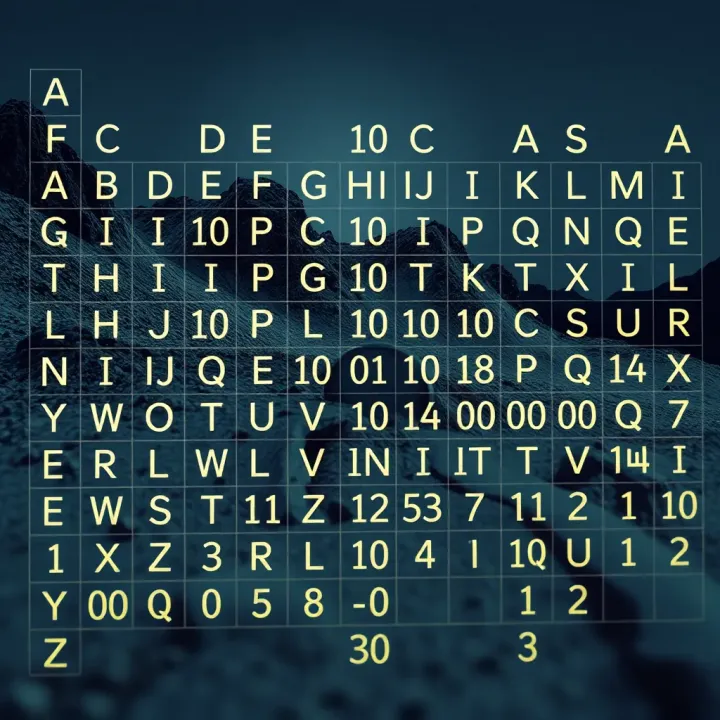
Why is this conversion important? Devices like computers, mobile phones, and networking hardware communicate solely through binary signals. By representing letters in binary, these devices can send, store, and interpret textual data reliably. This is especially significant in India, where rising digital literacy and widespread mobile use have made understanding such basics useful even outside traditional IT fields.
The binary alphabet chart bridges human language and machine language, enabling seamless digital communication.
Standardisation: ASCII is the most common standard that maps each alphabet letter to a fixed 7- or 8-bit binary code.
Compact and Reliable: Binary representation allows quick transmission over electronic circuits and networks.
Learning Tool: For students and professionals in finance, technology, or education, this chart helps decode encrypted data and develop coding skills.
Suppose you want to send the word "HELLO" over a network. Each letter is first converted to its binary equivalent:
H → 01001000
E → 01000101
L → 01001100
L → 01001100
O → 01001111
These sequences are transferred as electrical pulses, light signals, or wireless transmissions, making the digital exchange smooth and error-resistant.
Understanding this process equips you with a foundational insight into how data flows worldwide, supporting everything from stock trading platforms to messaging apps like WhatsApp and SMS, widely used across Indian cities and towns. Being familiar with the binary alphabet also aids in grasping broader computer science topics and digital security fundamentals.
In the following sections, we will explore the binary numbering system, how alphabets map onto it, and the tools that help convert and visualise these codes easily.
Binary code forms the backbone of modern digital technology. In simple terms, binary is a numbering system that uses only two digits: 0 and 1. Its importance lies in how effectively it represents data in digital devices, whether it is text, images, sound, or videos. This article explores the binary alphabet chart, which explains how the English alphabet translates into binary numbers for use in computers and other digital systems.
Binary code is essentially the language that computers understand. Each binary digit, or bit, can be either 0 (off) or 1 (on). For example, the binary number "01000001" corresponds to the letter 'A' in the widely used ASCII (American Standard Code for Information Interchange) format. Computers use streams of such bits to represent complex data by combining multiple 0s and 1s. Since electronic circuits naturally exist in two states – on and off – binary code fits perfectly with the hardware design.
Binary serves as the universal medium for all kinds of digital communication and computation. When you type a message on your smartphone in Bengaluru or send an email from Mumbai, that text is converted into binary code before transmission. Network devices, servers, and storage systems read and process this binary data to deliver the information accurately.
Beyond computing, binary also plays a key role in encryption, data compression, and error detection. For instance, financial transactions on Indian stock market apps like NSE or BSE rely on binary data exchange to ensure secure and fast processing. Without binary code, the digital economy, including online trading platforms, would be impossible.
Understanding binary isn't just for coders; it enhances your grasp of how digital systems function and interact daily.
In short, the binary alphabet chart shows the relationship between letters and their binary forms, which is crucial for anyone dealing with digital data. Knowing this foundation helps demystify how text gets stored, manipulated, and shared in the technology that powers our world today.
Understanding the structure of the binary alphabet chart is key to grasping how letters are converted into binary code. This chart lays out a systematic way to represent each letter as a sequence of 0s and 1s, which computers use to store and process text. For investors and professionals dealing with data streams or software developers, recognising these patterns helps in decoding or encoding information efficiently.
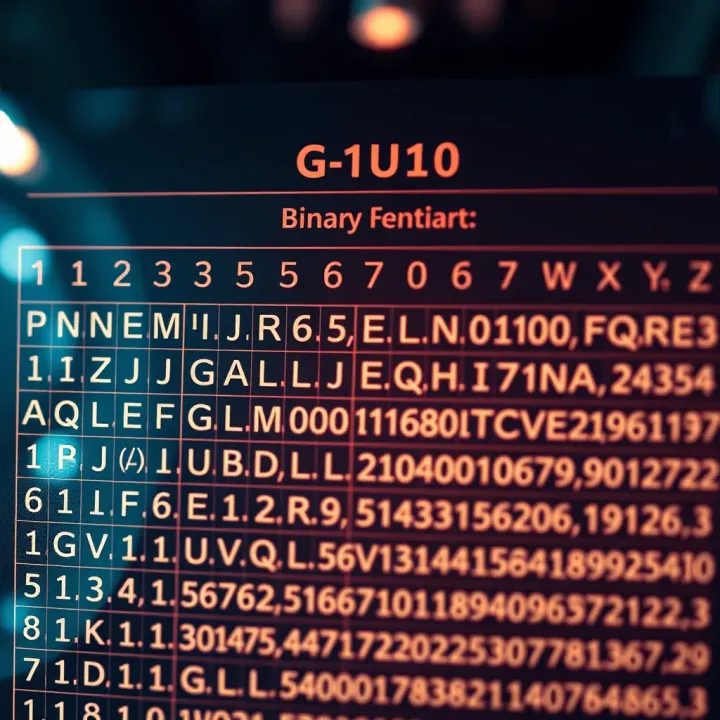
Each letter in the English alphabet corresponds to a unique binary number in the chart. This mapping is based on established encoding standards like ASCII (American Standard Code for Information Interchange), which assigns numbers from 0 to 127 to characters. For example, the letter 'A' is represented as 65 in decimal, which converts to 1000001 in binary in a 7-bit scheme. Such direct mappings offer a reliable method to translate text into signals a computer understands.
The 7-bit ASCII standard uses seven binary digits to code each letter, supporting English alphabets, digits, and some control characters. It became popular because it fits neatly into bytes with an extra bit for parity or control, making it easy for early computers and communication devices. For instance, 'E' is 1000101 in binary, while 'm' is 1101101, showing how letters map distinctly within this format.
This format still sees practical use in many systems where memory or bandwidth constraints exist. Understanding 7-bit ASCII is crucial for professionals engaged in legacy system integration or low-level data transmission over constrained channels.
While 7-bit ASCII covers basic characters, the 8-bit extended ASCII adds an extra bit, allowing for 256 unique codes—this expansion includes accented letters, special symbols, and some graphical signs. For instance, 8-bit coding can represent 'Ñ' or 'ç' which 7-bit cannot handle.
This extension finds relevance in globalised computing environments where multiple languages or symbols need representation. Traders or analysts working with multinational data might encounter files with extended ASCII encoding, making familiarity with these codes handy.
Uppercase and lowercase letters have different binary codes in these standards, reflecting case sensitivity important for programming and data systems. For example, 'A' in 7-bit ASCII is 1000001, whereas 'a' is 1100001. The difference often lies in a single bit, which simplifies converting between cases programmatically.
This distinction plays a role in sorting algorithms, password checks, and coding standards, where 'A' and 'a' are not interchangeable. Professionals must understand these differences to avoid errors in text processing or data comparison.
The binary alphabet chart’s structure forms the backbone of digital text representation, ensuring that every letter has a clear, unique binary form usable in various computing scenarios.
Binary codes use fixed-length bits (7 or 8) to maintain uniformity.
Case differences are encoded by specific bit variations.
Extended ASCII caters to multilingual and special character needs.
This structured approach makes binary alphabets a fundamental tool across computing, programming, and data analysis fields.
The binary alphabet chart plays a significant role in how computers handle and interpret text. By converting letters into binary codes, machines can store, process, and communicate information efficiently. This section explores practical uses of the binary alphabet chart in programming and data encoding, as well as real-world examples involving messaging and storage.
In programming, the binary representation of letters forms the backbone of text processing. When developers write code in languages like C, Python, or Java, each character is translated into its binary equivalent using standards such as ASCII or Unicode. This conversion ensures consistent interpretation across different systems and platforms.
For instance, the character 'A' is represented as 01000001 in 7-bit ASCII. This binary code allows the computer to recognise and manipulate the letter precisely. Encoding schemes also help in compressing and encrypting information, essential for secure communication and efficient storage. Programmers often use binary operations to manipulate text data directly, such as converting uppercase letters to lowercase by toggling specific bits.
Messaging apps you use daily, like WhatsApp or Signal, rely on binary data to transfer text across devices. Behind every message you send lies a stream of binary codes that the receiving device decodes into readable words. This process happens in milliseconds, allowing instant communication.
Similarly, storage devices use binary encoding to save text files. Whether you are saving a Word document or a simple Notepad file, the letters are stored as a sequence of binary digits. This arrangement enables quick retrieval and reduces errors during data transfer.
Understanding the binary alphabet chart gives you insight into how your mobile, computer, and even banks securely handle text data every day.
Besides text, binary encoding supports the inclusion of symbols and control characters, making digital communication versatile. Handling different languages and scripts also depends on extending basic binary representations, like shifting from ASCII to Unicode, which Indian IT professionals and developers frequently use to support multilingual environments.
In short, the binary alphabet chart isn't just a technical concept—it's the foundation of how digital devices understand and share information in text form, impacting everything from programming to everyday texting and file storage.
Working with binary alphabets requires practical tools and clear techniques to translate between human-readable text and machine-friendly binary code. For investors, traders, students, and professionals engaging with digital data or programming, knowing how to convert text to binary and back is essential. It helps in understanding data encoding formats, debugging digital communication, and enhancing technical literacy.
Converting text into binary means representing every letter as its corresponding binary code, usually following standards like ASCII (American Standard Code for Information Interchange) or Unicode. For example, the letter 'A' in ASCII converts to 01000001. This binary representation allows computers to process human language as electrical signals.
Reversing this process—binary back to text—is equally important. It ensures that encoded messages can be decoded accurately. For instance, a trading algorithm may receive text-based commands encoded in binary; timely conversion back to text ensures those commands execute without error.
Manual conversion can be tedious and error-prone, especially with large texts. Hence, automated tools speeding up the process are invaluable, reducing mistakes and saving time in fast-paced environments like finance and tech development.
Several online platforms offer binary alphabet charts and conversion tools tailored for different audiences. Indian tech communities often recommend sites like BrowserStack or GeeksforGeeks, which provide binary converters with detailed explanations. Globally, tools such as RapidTables and BinaryHexConverter are widely used for their simplicity and accuracy.
Having access to these resources supports learners and professionals who need quick reference or conversion without installing software. For example, a computer science student preparing for exams like the JEE can use these converters to practice encoding quickly.
Choosing the right binary conversion tool involves evaluating several factors:
Accuracy: The tool must reliably map alphabets to correct binary codes respecting encoding standards such as ASCII or Unicode.
User-Friendly Interface: A clear layout helps users convert text with minimal confusion, especially when handling mixed content.
Batch Processing: For professionals working with large datasets or multiple messages, the ability to convert entire texts at once is a big advantage.
Support for Case Sensitivity: Since uppercase and lowercase letters have different binary codes, a tool must treat them distinctly.
Additional Features: Options like exporting converted data, supporting special characters, or real-time conversion add practical value.
Selecting the right tool not only enhances productivity but also makes learning and working with binary alphabets less daunting.
Ultimately, mastering these tools and techniques simplifies interaction with digital encoding. Whether you are debugging a program or analysing encrypted data, efficient conversion between text and binary is a skill that adds real value in today’s data-driven world.
Understanding the binary alphabet chart gets tricky when common confusions come into play. Many readers find this area important because it clears misconceptions that hinder effective use of binary codes in computing, programming, and communication. It’s not just about converting letters to zeros and ones but recognising the nuances involved in different encoding systems and character sets.
A frequent misunderstanding occurs when people mix up binary codes with various encoding standards like ASCII, Unicode, or UTF-8. Binary is the base language of computers—all data boils down to ones and zeros—but encoding standards determine how letters and symbols map to these binary numbers. For example, ASCII uses 7-bit binary codes for English letters, suitable mostly for basic text. In contrast, Unicode, which supports multiple languages and symbols, uses more bits and a different scheme for encoding.
Consider someone trying to read a message encoded in UTF-8 but interpreting it using ASCII only. The result would be gibberish or errors, as ASCII can’t represent characters beyond its limited set. This misunderstanding is common among beginners who assume that all binary codes for letters must look alike. It's essential to know which encoding standard applies when handling binary data to avoid misinterpretation.
Another challenge arises with non-English letters and symbols. The standard binary alphabet chart mostly covers English alphabets (A-Z, a-z), but Indian languages like Hindi, Tamil, Telugu, or Bengali use entirely different scripts. These require encoding standards like Unicode which support these scripts through additional bits, making their binary representations longer and more complex.
Imagine a software developer trying to process Hindi text but relying on ASCII-based binary representations; the result will be incorrect or incomplete output. Therefore, one must understand that binary representation for non-English characters isn’t a simple extension of the English binary alphabet chart; it involves global standards like Unicode.
To avoid mistakes, always verify which encoding and binary standard a particular system or application uses, especially in multilingual environments common in India.
In sum, recognising the difference between the binary alphabet as a concept and specific encoding schemes prevents errors. Knowing how non-English characters are handled ensures your binary text processing works smoothly, especially in today’s diverse digital platforms.
Learn binary subtraction with clear rules and easy examples ✏️ Perfect for students and pros aiming to master digital maths, complements, and related operations.

📊 Learn how binary numbers work, convert between binary & decimal, and grasp binary math with real-life computer applications in this easy guide.

🔍 Understand binary search logic: learn to speed up element searches in sorted data, see practical Indian examples, avoid pitfalls & optimise performance efficiently.

Explore how binary code, using just 0 and 1, powers digital systems in programming, data storage & daily tech 📱💻. Understand its history and challenges.
Based on 5 reviews