
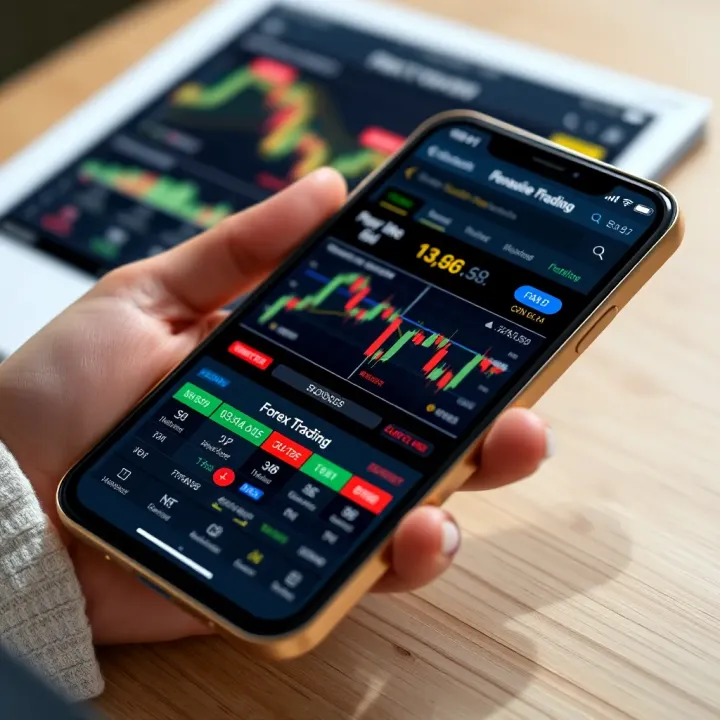
Best Forex Trading Apps in India 2024
Explore the best forex trading apps in India 📱 comparing features, usability, and regulation compliance to help you trade securely with ease and confidence.
Edited By
Charlotte Hughes
Forex trading has gained significant traction in India, especially among retail investors and young professionals looking to diversify their portfolios beyond traditional avenues like stocks and mutual funds. With the rise of smartphones and mobile internet, forex trading apps have become the preferred gateway for many to access currency markets directly from their mobiles.
These apps simplify forex trading by providing real-time currency rates, advanced charting tools, and instant execution of trades, all on handheld devices. However, not every forex trading app suits every trader — your choice depends on factors such as trading style, fee structure, platform security, and ease of use.

Choosing a reliable forex trading app is not just about flashy interfaces but involves assessing regulatory compliance, execution speed, spreads, and customer support.
Indian regulators like the Securities and Exchange Board of India (SEBI) have strict guidelines around forex trading, permitting it mainly through recognised frameworks and authorised brokers. Traders should always check if the app adheres to these rules to avoid legal troubles or risk of scams.
Some key considerations when evaluating forex apps include:
User Interface and Experience: Intuitive navigation and responsive design help in making quick decisions during volatile market conditions.
Security: Look for two-factor authentication, encryption, and compliance with data protection norms.
Trading Costs: Compare spreads, commissions, and withdrawal fees that can eat into profits.
Market Access: Access to major currency pairs as well as options for exotic pairs if you want diversification.
Research and Education: Availability of news, analysis, and tutorials within the app assist traders in making informed choices.
Customer Support: Reliable and prompt service matters when facing technical glitches or trade disputes.
In this article, we will review some of the top forex trading apps used by Indian traders, highlighting their strengths and weaknesses so you can make a confident choice based on your individual needs and level of experience.
Selecting the right forex trading app hinges on several important features. Indian traders must weigh aspects that directly impact their trading experience, such as ease of use, security, costs, and the range of analytical tools offered. These features not only improve day-to-day trading but also protect investments and help make informed decisions.
Ease of navigation and design plays a significant role. A cluttered or complicated layout can slow you down or cause mistakes during fast market movements. For example, apps like Zerodha Kite have focused on a clean design where order placement and portfolio tracking require minimal clicks. When trading forex, where timing and speed matter, a clear interface reduces distractions and boosts efficiency.
Mobile users in India often face connectivity bottlenecks, so mobile compatibility and speed are equally crucial. An app must load quickly and run smoothly even on mid-range smartphones with average network connections. Apps optimised for mobile use, like MetaTrader 4 mobile, allow seamless chart updates and order execution without lag. This is particularly valuable when trading sessions overlap with volatile periods such as US or London market openings.
Charting options offer visual insights needed for technical analysis. Indian traders usually prefer platforms that support multiple chart types (candlestick, bar, line) and allow scaling or zooming into price action. Good charting aids spotting trends or reversal patterns quickly, assisting in making timely trades.
Alongside charts, a variety of technical indicators like moving averages, RSI (Relative Strength Index), and MACD (Moving Average Convergence Divergence) enhance decision-making. For instance, traders often combine RSI with price support levels to identify overbought or oversold conditions, signalling potential price changes.
Automated trading support is becoming popular. This feature allows users to deploy algorithms or expert advisors (EAs) to automatically place trades based on pre-set criteria. Indian traders keen on avoiding emotional bias or who can’t watch markets constantly find this helpful. However, such tools require caution and testing, often through demo accounts, before live usage.
Data encryption and authentication protect sensitive user information and prevent unauthorised access. Traders should expect apps to use SSL encryption and support two-factor authentication (2FA). For example, apps like Upstox Pro Mobile integrate biometric login options, adding a layer of security without sacrificing convenience.
Compliance with licences and regulatory approvals indicates reliability. Apps regulated by authorities such as the Securities and Exchange Board of India (SEBI) or global bodies like the Financial Conduct Authority (FCA) generally follow strict guidelines. Indian traders should verify an app’s regulatory compliance to avoid scams and ensure their funds and data are handled responsibly.
Commissions and spreads affect profitability directly. Spread refers to the difference between the buying and selling price; lower spreads mean cheaper trades. Some apps offer zero commission but apply wider spreads, while others charge flat commissions per trade but with tighter spreads. Understanding the cost model helps traders optimise their transaction expenses.
Deposit and withdrawal charges also matter, especially for active traders moving funds frequently. Apps charging high fees on withdrawals or slow processing can negatively impact trading flexibility. Look for platforms with minimal or transparent fees and smooth fund transfer options using Indian banking methods like NEFT, RTGS, or UPI.
Choosing a forex trading app is not just about flashy features but also about comfort, security, and cost-effectiveness. Indian traders who carefully evaluate these aspects are better poised to manage risks and make the most of their trades.

Selecting a forex trading app that aligns with your needs is critical, especially in the Indian context where trading requirements blend global opportunities with local regulations. Top forex trading apps cater to these needs by offering a mix of advanced features, intuitive design, and reliable execution. Understanding their strengths helps traders pick tools that enhance their market entry and decision-making process.
Features and customisation
MetaTrader 4 (MT4) and MetaTrader 5 (MT5) are industry standards for forex trading worldwide, popular among Indian traders for their powerful features and flexibility. MT5, the newer version, supports trading across multiple asset types beyond forex, including stocks and commodities, whereas MT4 focuses primarily on forex. Both platforms offer extensive customisation — you can set your own indicators, automate trades using Expert Advisors (EAs), and design custom scripts. This flexibility suits traders who rely on technical analysis and algorithmic strategies.
Community and support
Both MT4 and MT5 benefit from large user communities and third-party developer support, which means access to a vast library of custom tools and trading robots. This ecosystem is valuable for Indian traders who want to tweak their strategies or seek help from experienced peers. Plus, many brokers in India and abroad integrate these platforms, ensuring reliable connectivity and customer service in multiple languages.
Integration with Indian markets
Zerodha Kite is uniquely positioned for Indian traders due to its seamless integration with Indian financial markets like NSE and BSE. This app not only supports forex but also equity and derivatives trading, making it versatile for traders who diversify across asset classes. The app fully complies with Securities and Exchange Board of India (SEBI) regulations, thereby giving users confidence about legal safeguards.
Ease of use and analytics
Kite offers an easy-to-navigate interface combined with data-rich charts and analytics tools. Features like variety in order types, live market feeds, and automated price alerts help traders act quickly. Beginners find its straightforward layout beneficial while experienced users appreciate in-depth technical indicators included in the app. Overall, it caters well to a broad range of trading expertise.
Global forex options
The IG Trading App stands out for Indian users who want access to global forex pairs beyond the common INR crosses. It offers a wide range of currency pairs, including exotic ones, which can be useful during specific economic events. This diversity allows traders to spread risk and capitalise on international trends not available locally.
Research and educational resources
IG complements trading with a strong focus on research and education. The app provides market news, analysis, and webinars, which help traders sharpen their understanding of macroeconomic factors and trading strategies. For Indian traders, these resources provide additional context beyond technical charts, especially when dealing with events affecting currency rates globally.
Trading tools and speed
Upstox Pro Mobile is praised for its fast order execution and an efficient suite of trading tools tailored for forex and equity traders. Features like advanced charting, real-time market depth, and easy modification of orders make it ideal for active traders who depend on speed and accuracy. Its performance handles high volumes without lag, a critical factor during volatile market periods.
Pricing structure
Upstox offers a competitive pricing model with low brokerage charges, appealing to cost-conscious Indian traders. It combines zero brokerage on equity delivery with a flat fee on intraday and F&O trades, making it simple to understand and plan expenses. Transparent charges without hidden fees help traders manage costs effectively, especially useful for those trading on tight margins.
Choosing the right forex trading app means balancing functionality, cost, and access. For Indian traders, apps like MT4/MT5, Zerodha Kite, IG Trading, and Upstox Pro Mobile each deliver unique strengths depending on your trading style and goals.
Security and compliance form the backbone of safe and reliable forex trading for Indian investors. Since forex markets can be volatile and fast-moving, traders need assurance that their personal data, funds, and trades are protected under strong regulatory oversight. Ignoring these factors can expose traders to risks like fraud, data leaks, or unauthorised transactions.
SEBI, India's financial markets regulator, plays a key role in overseeing forex trading platforms that operate in the country. Although SEBI primarily regulates securities, it has extended its jurisdiction over derivative trading and foreign exchange activities linked to Indian investors. For a forex app to gain credibility among Indian traders, it must comply with SEBI guidelines, ensuring transparency, fair practices, and investor protection.
Apps regulated or recognised by SEBI tend to have clear disclosures about their operations, risk factors, and trading conditions. For example, Zerodha Kite comes under SEBI regulation and offers strict adherence to compliance norms, giving users confidence in their trading environment. Conversely, foreign apps without SEBI oversight may not offer the same level of protection, making them riskier choices.
Stop-loss and limit orders help traders manage risk by automatically closing trades at predetermined price points. For example, if you buy a currency pair at ₹75, a stop-loss order set at ₹73 would sell your position automatically if the price dips, limiting potential losses. Similarly, a limit order lets you lock in profits by selling once the price hits a certain target.
Using these orders in forex apps protects your capital in sudden market movements. New traders especially benefit since these tools prevent emotional decision-making. Most leading apps like MetaTrader 4 and Upstox Pro include options to set stop-loss and limit orders easily within their interface.
Two-factor authentication (2FA) adds an essential layer of security by requiring two forms of verification before logging in or executing sensitive actions. Typically, 2FA combines something you know (password) with something you have (a one-time code on your mobile app). This means even if someone steals your password, they can’t access your account without your phone.
For Indian traders facing phishing threats and cyber fraud, 2FA markedly reduces the risk of unauthorised access. Apps like IG Trading and Zerodha Kite offer 2FA through popular methods such as Google Authenticator or SMS OTP. Enabling 2FA itself is a simple step but significantly strengthens your trading account’s defence.
Protecting your capital and data is not an option but a necessity in forex trading. Prioritising regulated apps and utilising risk management tools can save you from costly mistakes and security breaches.
Understanding security and compliance in forex apps helps Indian traders choose platforms that safeguard investments and offer peace of mind while trading foreign exchange.
Understanding the costs associated with forex trading apps is vital for Indian traders looking to optimise profits and manage expenses effectively. Since trading fees can eat into your gains, comparing these charges helps you select an app that fits your trading style and budget. Various apps adopt different pricing models, and being clear about these can prevent unwelcome surprises.
Forex brokers generally use two main pricing structures: spread-based and commission-based models. The spread is the difference between the buying (ask) and selling (bid) price for a currency pair. For example, if EUR/USD has a bid price of 1.1200 and an ask price of 1.1202, the spread is 2 pips. Some apps, like MetaTrader 4, offer variable spreads that fluctuate with market volatility, while others provide fixed spreads.
In contrast, a commission model charges a separate fee per trade or per lot traded, regardless of the spread. Platforms like Zerodha’s Kite may apply small commissions on forex trades besides the spread. For active traders who make large volumes, commission-based models can sometimes work out cheaper, especially if the spreads are low.
Traders must carefully evaluate which model suits them better based on their trade frequency and style. For instance, day traders might prefer tight spreads with low commissions, while swing traders may tolerate wider spreads to avoid commission fees.
Apart from spreads and commissions, forex apps may also apply hidden fees that impact the overall cost of trading. These include:
Deposit and withdrawal charges: Some platforms deduct fees when transferring funds in or out. While Indian banks support modes like UPI, NEFT, or RTGS, charges may vary, especially for international forex brokers.
Currency conversion fees: Since most forex trades involve foreign currencies, conversion charges apply when you deposit or withdraw Indian rupees (₹). These fees can differ significantly across platforms.
Inactivity or maintenance fees: Some apps levy charges if your account stays inactive for a set period.
Always review the fee schedule carefully before choosing a platform. A seemingly lower commission can be offset by high conversion or withdrawal fees, reducing your net returns.
By scrutinising these costs, Indian traders can avoid apps that appear cheap but have high extra charges. For example, if you trade frequently in USD pairs, a small conversion fee of 0.5% per transaction could add up to substantial costs over time.
Key takeaway: When comparing forex apps, factor in both visible costs like spreads and commissions and less obvious ones like withdrawal fees and currency conversion charges. This comprehensive approach ensures you find a cost-effective platform tailored to your trading habits.
Selecting the right forex trading app can significantly impact your experience and success in currency markets. Each trader has unique requirements based on their skill level, trading goals, and comfort with technology. Keeping these in mind helps narrow down options and ensures you pick an app that matches your style, whether you are a beginner or an expert.
Start by evaluating your trading experience and objectives. If you are a newbie, it’s best to opt for apps with user-friendly interfaces and educational resources, like Zerodha Kite or IG Trading App, which provide tutorials and insights alongside trading features. For seasoned traders, advanced charting tools and customisable technical indicators are crucial, making MetaTrader 5 or Upstox Pro good picks. Your goals also matter; whether you aim for quick intraday trades or long-term currency investments, look for apps offering relevant order types and risk management tools.
Many forex apps offer demo accounts that let you trade with virtual money. This feature is critical for understanding the app’s functionality, testing strategies, and getting comfortable without risking real capital. Demo accounts help you assess factors like execution speed, ease of placing orders, and reliability of data feeds. For example, MetaTrader’s demo mode is popular for practising complex strategies, while Zerodha’s Kite lets you explore Indian market-specific features alongside forex.
Using demo accounts can save money and frustration by revealing app limitations before committing funds.
Reliable customer support is a must, especially when trading involves real money and sensitive market timings. Choose apps that offer multiple support channels such as chat, phone, and email with prompt response times. Good apps also provide educational content — webinars, articles, and videos — tailored for different skill levels. IG Trading, for instance, has a strong focus on trader education, helping users stay updated on market trends and improve decision-making. In India, responsive support can differentiate an app when quick action is needed during volatile trading hours.
By focusing on these aspects — your trading level, trying demo accounts, and the quality of support and education — you can confidently choose a forex trading app that suits your needs and enhances your trading journey.
Explore the best forex trading apps in India 📱 comparing features, usability, and regulation compliance to help you trade securely with ease and confidence.
Explore legal forex trading apps in India 🇮🇳! Learn trading basics, regulations, and top app features to trade safely and make informed decisions.

Explore top forex trading apps 🖥️ tailored for Indian traders 🇮🇳. Learn about usability, security, cost, and local payment options to trade confidently and efficiently.

Explore top forex trading apps in India 📱, learn their key features, safety tips, and costs. Choose the best platform for secure, smart trading with ease.
Based on 15 reviews