
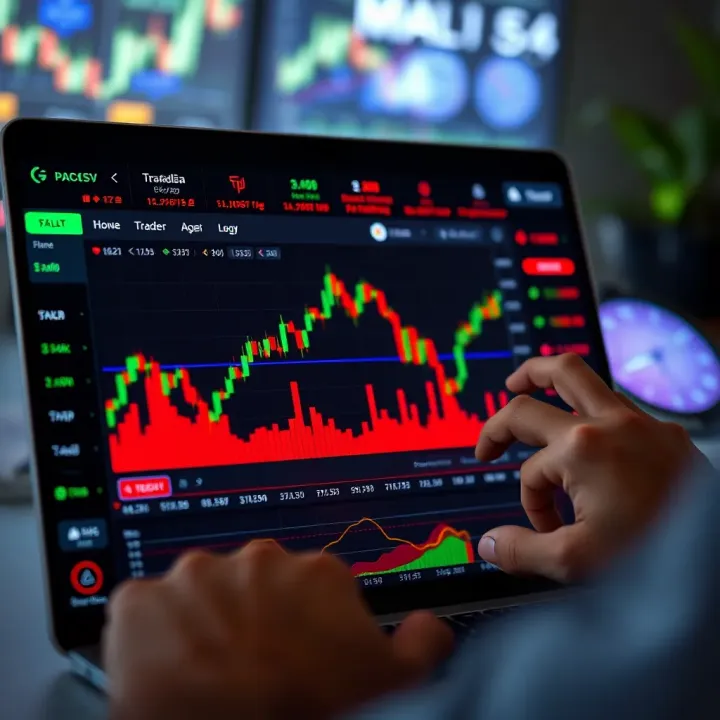
Best Free Paper Trading Apps in India
Explore the best free paper trading apps in India 📱 and practice investing risk-free! Learn market moves, test strategies, and gain confidence before real trading.
Edited By
Emily Carter
Paper trading has emerged as an essential tool for investors and traders in India who want to sharpen their market strategies without risking real money. Unlike live trading, paper trading allows you to simulate buying and selling stocks using virtual funds, providing a practical learning experience. This approach is especially helpful for beginners navigating the Indian stock markets, which can be volatile and complex.
Many apps now offer paper trading features, equipped with real-time market data, portfolio tracking, and analytics. These platforms mirror exchanges like NSE and BSE, making the simulated experience close to actual trading. For example, an app might let you test how your SIP (Systematic Investment Plan) or intraday trading methods would perform in markets without financial exposure.

Choosing the right paper trading app involves looking at several factors:
Market coverage: Does the app support Indian stocks, commodities, and derivatives?
Data accuracy and speed: How close is the virtual market data to real-time NSE/BSE prices?
User interface: Is the app easy to use, with clear dashboards for order placement and portfolio management?
Feature set: Does it provide options like technical indicators, charting tools, and risk management aids?
Cost: Most paper trading apps are free, but some may offer premium features for serious traders.
This section will guide you through the top apps widely used by Indian traders for practising without real financial risk and help you understand how to make the most of them.
Paper trading is like a rehearsal before the main performance; it sharpens your skills, tests your strategies, and builds confidence without putting your capital on the line.
With the right app, you can explore various trading styles, understand market behaviour, and prepare better for real trading decisions. Whether you are a student, professional investor, or a finance analyst, paper trading offers a safe space to experiment and learn in the dynamic Indian financial landscape.
Paper trading acts as a rehearsal stage for investors before stepping into the actual stock market. This approach lets traders test strategies using virtual money instead of risking real funds. For Indian traders, especially freshers or those shifting from traditional to digital markets, paper trading is a practical way to build confidence and understand market behaviour without financial exposure.
Paper trading is essentially a simulation of live stock trading where you buy and sell stocks, commodities, or other securities on a virtual platform. The prices mirror real market movements, but no actual money changes hands. This means investors can practise buying shares of companies listed on the BSE or NSE, experiment with intraday or delivery trades, and explore derivative strategies without worrying about losses.
Imagine you start with a virtual capital of ₹5 lakh on a paper trading app. You decide to buy shares of Reliance Industries and Tata Motors, track their price movement for a week, and then sell them based on your predictions. The app shows your gains or losses based on real market data, letting you assess how your strategy performed. This hands-on experience is critical when the actual market can be unpredictable and fast-paced.
Indian investors gain several benefits by turning to paper trading apps. Firstly, it offers a zero-risk environment to sharpen trading skills. For example, during volatile times like the monsoon season or election periods when markets can swing wildly, practising on paper trading platforms can help you develop strategies to minimise risk.
Secondly, many new investors face the challenge of understanding complex market terms such as Futures & Options (F&O), margin trading, or stop loss. Paper trading apps integrate educational tools that simplify these concepts so you can trade confidently. A case in point is how Zerodha’s Varsity complements its paper trading features, providing easy-to-understand modules alongside simulations.
Additionally, paper trading helps you understand the emotional side of trading in a controlled manner. Since no real money is involved, you may avoid panic selling or impulsive buying. However, understanding this limitation itself is a lesson for your live trading journey. Over time, by tracking your performance on these apps, you can spot patterns in your decision-making and improve.
For Indian traders planning to invest ₹1 lakh or more, starting with paper trading is a wise step before committing capital. It gives clarity on market timing, order types, and risk management without real loss.
To sum up, paper trading serves as a critical learning phase, especially in India’s growing retail investor market. It bridges the knowledge gap, helps build confidence, and lays a foundation for successful trading in real conditions.
Choosing the right paper trading app is vital for honing your skills before using real money. Indian traders should look for features that closely mimic actual market conditions while offering user-friendly tools to analyse data and simulate trades effectively. These features not only help you build confidence but also provide a realistic environment to test strategies.
A clean, intuitive interface makes paper trading less daunting, especially for beginners. If the app cluttered with too many options or complicated to navigate, it can discourage users from practising regularly. For instance, Zerodha’s Kite app offers a simple dashboard, letting users place simulated orders swiftly without confusion. Smooth navigation enables traders to focus on strategy rather than wasting time figuring out the tool itself.
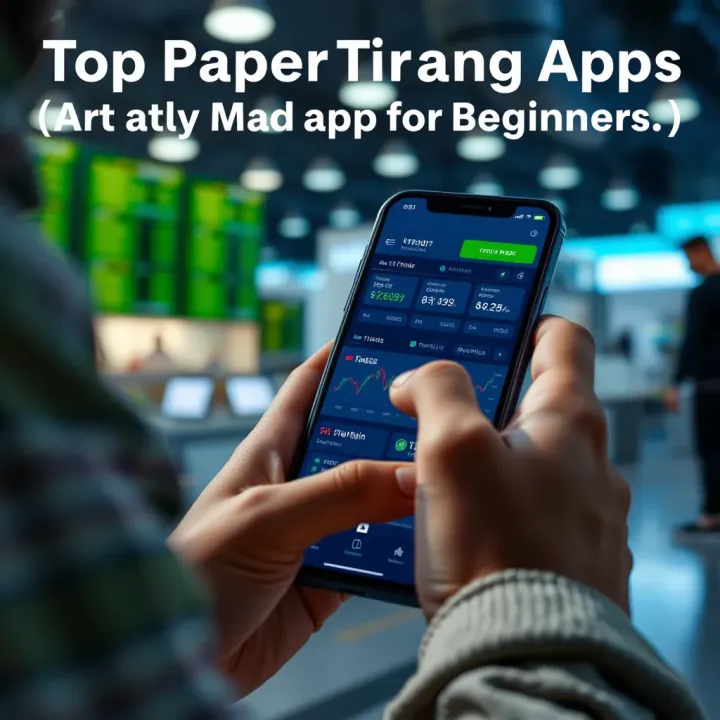
Accurate, real-time data is essential for effective practice. Delayed or outdated market prices can mislead your decision-making and damage your learning curve. Apps like TradingView provide up-to-the-minute price feeds along with sophisticated charting tools, allowing you to analyse price movements and spot trends. These tools help traders familiarise themselves with patterns they see in actual markets, such as resistance levels or moving averages.
A good paper trading app should cover a variety of securities—stocks, derivatives, commodities, and even currencies. This variety helps traders experiment with different asset classes and understand their distinct behaviours. For example, Moneycontrol’s Moneybhai lets Indian users trade NSE stocks, futures, and options in a simulated environment, offering a broad exposure to market scenarios you might face in live trading.
Practice alone won’t guarantee success unless backed by proper guidance. Some paper trading apps incorporate tutorials, webinars, and articles to improve your market understanding. NSE Paathshaala is an example designed for beginners, providing educational content alongside a simulated trading feature. Additionally, apps with active support teams help troubleshoot issues quickly, ensuring you don’t get stuck or frustrated while learning.
When selecting a paper trading app, balancing realistic data with usability and educational support makes your practice more productive. These features ensure that your virtual trading experience prepares you well for actual market conditions in India.
By focusing on these key aspects, investors and traders can find apps that suit their learning style and investment goals, making the transition from theory to real trading smoother and less risky.
Choosing the right paper trading app is essential for Indian traders to simulate market conditions closely and build effective trading strategies without risking real money. Several platforms cater specifically to Indian markets, offering a mix of usability, data accuracy, and educational content. Below, we explore some popular options tailored to Indian users and highlight their standout features.
Zerodha is a leading player in India's brokerage space, and its Varsity platform serves as a comprehensive learning hub, paired seamlessly with the Kite app’s paper trading feature. Varsity offers detailed lessons on market concepts, while Kite provides a live-like interface for executing simulated trades. This helps users practice with real-time data from NSE and BSE, allowing them to test strategies on Indian stocks, futures, and options.
The advantage here is the integration—learn theory on Varsity and apply it instantly on Kite without juggling platforms. For example, if you study option strategies in Varsity's modules, you can try them out on Kite's simulator the same day, making the learning practical and hands-on. Beginners and seasoned traders alike find this combination useful for honing skills in a familiar environment.
Moneybhai is Moneycontrol’s dedicated virtual stock market game tailored for Indian investors. It offers a neat simulation of trading stocks, commodities, and mutual funds with a virtual portfolio capped at ₹1 crore. The app’s interface is straightforward, making it easy for users to buy and sell securities, track gains or losses, and understand portfolio dynamics.
What sets Moneybhai apart is its alignment with real Indian market conditions, including current prices, corporate actions, and dividends. The app also allows you to compete with others in contests, adding a gamified layer that encourages serious practice while keeping it engaging. Many users look to Moneybhai to fine-tune their investment approach before moving to live markets.
TradingView is globally popular for advanced charting and technical analysis tools. Its Indian market simulator brings these capabilities to paper trading by providing access to NSE and BSE data within a simulated trading environment. This platform suits traders who rely heavily on technical indicators and want detailed chart analysis alongside trade simulation.
The simulator supports multiple asset types including equities, derivatives, and forex pairs relevant to Indian users. Its social community feature also lets you view trading ideas from other experts, offering a broader perspective beyond your own trades. While it doesn’t integrate educational content directly, the rich data and drawing tools make it a preferred choice for technically-inclined traders.
Developed by the National Stock Exchange (NSE), Paathshaala targets complete beginners with its free stock market learning modules coupled with a simple paper trading platform. It offers structured lessons on basics like order types, market timings, and risk management, followed by opportunities to practise these concepts in a no-risk setting.
Since this is an official NSE initiative, the data is reliable and reflects actual market timings and operations. Its user-friendly design helps those unfamiliar with trading jargon get comfortable. For freshers or students starting their investing journey, NSE Paathshaala provides a solid foundation with its blend of theory and practical application.
Selecting a paper trading app that fits your style—be it education-heavy, game-based, technical, or beginner-friendly—can make all the difference in preparing you for real market challenges.
In summary, Indian traders benefit from a healthy variety of paper trading apps that address different needs. Zerodha’s combination suits those who want an all-in-one learning and trading experience. Moneybhai adds competition and portfolio management skills. TradingView fits technical analysts who crave detailed charts. NSE Paathshaala remains the top pick for absolute beginners seeking government-backed guidance. Exploring these options lets you find the app that matches your current skill level and learning needs seamlessly.
Paper trading apps offer a valuable platform for practising stock market strategies without risking real money. However, to truly benefit, traders must approach these platforms thoughtfully. Simply executing trades without purpose defeats the exercise. Let’s break down practical ways to maximise your learning from paper trading.
Setting sensible goals is the first step towards effective use of paper trading apps. Instead of aiming for unrealistic profits, focus on what you want to improve—whether it’s mastering order types, understanding stock behaviour, or testing technical indicators. For instance, if you're new to options trading, concentrate on learning how to use Greeks and expiry dates instead of chasing big gains early on. This narrow focus helps you build skills systematically, avoiding frustration that comes with unmet expectations.
Moreover, set time-bound targets. You might decide to simulate intraday trades for a month before trying swing trading. Goals like "Increase win rate to 60% within two months" or "Master stop-loss placement" make your practice measurable and purposeful.
Paper trading shines when you actively analyse your trades. Most apps provide detailed reports; use these to review your winning and losing trades alike. Note patterns in your mistakes—maybe you tend to hold losing positions too long or enter trades without enough confirmation.
Maintain a trading journal alongside the app’s performance logs. Record your reasoning before entering each trade and reflect on the outcome later. For example, if you took a break-out trade on a volatile stock like Reliance Industries but ignored volume confirmation, acknowledge this in your notes. Going through such reflections repeatedly cements valuable lessons.
Avoid ignoring losing trades or blaming the market. Instead, understand what went wrong and adjust your strategy. This iterative learning is what transforms paper trading from a mock exercise into a training ground for real success.
Moving to live trading is a big step. Paper trading doesn’t expose you to the emotional pressure that real money brings. To bridge this gap, start small with actual funds, possibly 10-20% of your planned live capital.
Use insights from your paper trading experience to shape your live trading plan. For example, if your paper trades showed better results with certain sectors or strategies, prioritise them when you trade live.
Remember, expect some differences due to factors like slippage, execution delay, and market psychology. To mitigate these, consider using limit orders rather than market orders initially. Also, avoid overtrading just because the money is real; discipline remains key.
The true value of paper trading lies in disciplined practice, honest self-review, and a gradual shift to real markets with proper risk management.
By setting clear goals, keeping track of your performance, learning from mistakes, and moving carefully into live trading, you can leverage paper trading apps effectively to sharpen your skills and prepare for Indian stock markets with confidence.
Paper trading offers a safe way to practice stock market strategies without risking real money, but it has its share of challenges that traders in India need to keep in mind. While these platforms simulate market conditions well, certain elements of real trading remain absent, which can affect how well traders prepare for live markets.
One key limitation of paper trading is the absence of emotional pressure. In actual trading, emotions like fear, greed, and anxiety play a big role and directly impact decision-making. For instance, an investor might panic during a sudden market dip and close positions prematurely or hold on to losing stocks hoping for a rebound. Paper trading does not replicate this emotional rollercoaster, since no real money is at stake. As a result, traders often find themselves acting more rationally or mechanically than they would in a live environment.
This difference can lead to challenges when moving from paper to real trading. For example, a trader might find it hard to stick to their strategy under stress or might ignore stop-loss limits, which could lead to significant losses. While paper trading builds the technical skills of placing orders and analysing charts, it does not train you to manage the emotional side of trading decisions.
Simulated markets try to mimic real-time pricing and order execution, but some differences inevitably persist. In reality, markets may see issues like slippage—where your order fills at a different price than expected—especially in volatile situations. Paper trading apps typically execute trades instantly at displayed prices, skipping complications like latency and order queueing.
Another difference lies in liquidity. Real markets may have thin trading volumes for certain stocks or derivatives, causing difficulties in executing large orders without moving prices. Paper trading apps usually do not simulate liquidity constraints, leading traders to develop strategies that perform well in ideal conditions but struggle when applied to actual markets.
Moreover, occasional technical glitches, server downtimes, or delayed data feeds affect real trading but are often either absent or less impactful in paper environments. This can create a false sense of confidence regarding platform reliability.
Understanding these limitations is crucial before switching from paper to live trading. Paper trading is a useful training ground, but recognising where it falls short helps traders prepare better for the realities of the Indian stock markets.
In summary, paper trading apps are a valuable tool for beginners and experienced traders in India. However, managing emotions under real pressure and dealing with market quirks like slippage and liquidity require experience beyond simulated practice. Combining paper trading with small live trades can help bridge this gap effectively.
Explore the best free paper trading apps in India 📱 and practice investing risk-free! Learn market moves, test strategies, and gain confidence before real trading.
Explore the best forex trading apps in India 📱 comparing features, usability, and regulation compliance to help you trade securely with ease and confidence.
Explore top trading apps in India 📱 Compare fees, security, user experience & features to find the best platform for beginners and pros alike! 💹

📈 Explore India's most trusted trading apps with insights on security, costs, user ratings & tech support—pick the best platform for your trades today!
Based on 5 reviews