

Binary Code of the Letter A Explained
Learn how the letter 'A' is coded in binary, exploring ASCII and Unicode standards, plus how computers process text with this simple yet vital character 💻🔤
Edited By
Henry Foster
The letter 'A' stands as one of the foundational elements in English alphabets, but beyond just language, it carries an equally important identity in the digital world. When computers store or transmit characters, they rely on a universal system of representation—binary code. Understanding how 'A' converts into binary is vital for anyone keen on computer science, data communication, or even digital finance sectors in India where computing is omnipresent.
At its core, binary representation uses only two digits: 0 and 1. Each of these digits forms a 'bit'. A group of 8 bits, known as a byte, typically represents one character in computers. The American Standard Code for Information Interchange (ASCII) system assigns a unique binary number to every character, including alphabets, digits, and control commands.

For the letter 'A', the ASCII value is 65 in decimal notation. Its binary equivalent, expressed in 8 bits, is 01000001. This binary sequence starts with a leading zero to complete the byte length, essential for uniformity across computations and storage.
Binary representation forms the backbone of all digital processes. Whether it's storing text in your phone messages or communicating over internet protocols, characters are converted into strings of 0s and 1s that machines can easily process.
Know the ASCII decimal value of 'A' which is 65.
Convert 65 from decimal to binary:
Divide 65 by 2, keep track of remainders.
Continue until the quotient reaches 0.
Write the remainders in reverse order to get the binary number.
You get 1000001, then add a leading zero to fit 8 bits, resulting in 01000001.
This binary data doesn't just sit idle; it plays a key role in Indian digital ecosystems. For example, secure messaging apps and digital wallets convert characters and keys into binaries to encrypt transactions, ensuring safety. Furthermore, understanding such binary basics aids investors and analysts in grasping how software parses and processes data streams, which could relate to algorithmic trading or blockchain technology.
In summary, the binary form of 'A' is a small yet critical piece of the massive digital puzzle. Mastering this helps bridge language and machine logic, touching everything from daily smartphone usage to complex financial modelling and digital communications in India.
Understanding the binary number system is the foundation for grasping how computers represent and process data, including characters like the letter 'A'. This system uses only two digits — 0 and 1 — making it ideal for digital circuits that operate with two states: off and on. Knowing how binary works helps demystify many aspects of computing, trading platforms, and data communication.
Binary digits, or bits, are the smallest unit of data in computing. Each bit carries a value of either 0 or 1. For example, in the simplest sense, a bit can represent a yes/no or true/false condition. This simple system allows computers to perform complex calculations and store large amounts of data efficiently.
In practice, binary is the 'language' computers understand directly. Unlike humans who use decimal (base-10) numbers, computers use binary (base-2). This is because electronic components process signals in two distinct voltage levels, making binary a natural fit. When you type the letter 'A', your device translates it into binary code so the processor and memory can handle it.
Comparing binary with the decimal system highlights key differences important for digital processes. Decimal uses ten digits (0–9), which suits human counting but complicates electronic implementation. For instance, while decimal 65 represents the letter 'A', in binary, 65 converts to 01000001, a form machines use for computation. This binary format reduces complexity in circuit design and enhances reliability.
A single bit can hold one piece of information—either 0 or 1—but this often isn't enough to represent meaningful data. So, bits are grouped into bytes, where one byte equals eight bits. For example, 01000001 is a byte representing the letter 'A' in ASCII encoding.
Bytes are crucial because they serve as the basic addressing units in computer memory and storage. Grouping bits into bytes streamlines data handling, making it easier to store, retrieve, and transmit information efficiently. For example, a typical SMS message contains several bytes representing letters and symbols.
The significance of bits and bytes extends to data storage devices like hard drives and RAM. Storage capacity is measured in bytes (kilobytes, megabytes, gigabytes, etc.), signalling how much binary data the device can hold. Understanding this helps traders and analysts appreciate why data loads fast or slow, influencing choices in technology and software.
The binary number system—through bits and bytes—forms the backbone of how all digital information, including letters, numbers, images, and sounds, is represented and processed in today's technology.
By mastering these basics, you grasp how the letter 'A' translates into digital signals, setting the stage to understand deeper topics like ASCII encoding and binary conversion methods.
Representing letters in binary is fundamental for computers to understand and process text. Since computers operate using binary digits (bits), every character—letters, numbers, symbols—must be converted into a binary format. Without this, digital systems would not be able to transmit, store, or display meaningful information. For example, when you type the letter 'A' on your keyboard, it is transformed into a specific binary code that computers recognise and handle efficiently.
Standard encoding systems exist to create uniformity in how characters are translated into binary numbers. This uniformity ensures that text data can be shared, understood, and processed across different devices and platforms without misinterpretation. Without such standards, the same binary sequence might represent different characters depending on the device, leading to confusion.
Take, for example, communication between two Indian banks exchanging transaction details electronically. Both systems must agree on a common way to represent characters like 'A' or '₹' so that the message remains unchanged and accurate across platforms.
Several encoding schemes have been developed, each with specific purposes and coverage. ASCII (American Standard Code for Information Interchange) is one of the earliest and most widely adopted, mainly covering English letters, digits, and common symbols.
For languages with larger character sets such as Hindi, Marathi, or Tamil, Unicode is the preferred encoding scheme. Unicode accommodates thousands of characters by assigning unique binary codes to each, enabling consistent representation of Indian scripts across digital devices.
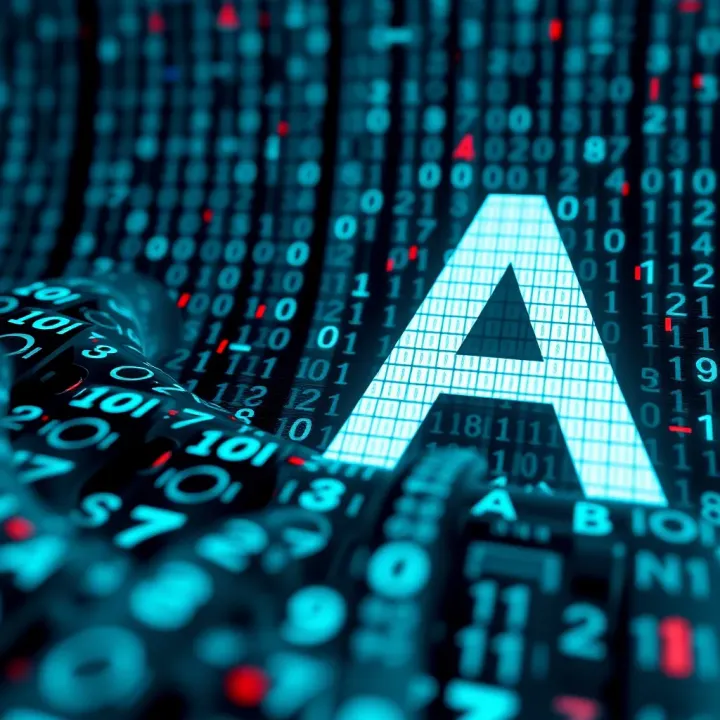
ASCII is a character encoding standard that assigns numeric values to 128 characters, including the English alphabet (both uppercase and lowercase), digits, and some special symbols. It uses 7 bits to represent each character, which fits comfortably in a byte (8 bits) with one bit remaining unused for basic text encoding.
ASCII remains relevant because of its simplicity and compatibility with many computer systems. For financial applications, like stock ticker displays or messaging in Indian trading platforms, ASCII provides a reliable way to encode standard Latin characters.
In ASCII, the uppercase letter 'A' is assigned the decimal number 65. When converted to binary, 65 becomes 01000001. This 8-bit binary sequence is what computers use internally to represent 'A'.
This binary form is what you’ll see in programming or data transfer layers when dealing with text at the lowest level. For instance, when a trade alert shows up on your mobile, the letter 'A' transmitted is represented in this binary format before being converted back into readable text.
ASCII works by establishing a clear relationship between characters and numbers. Each character is assigned a unique number starting from 0 for control characters up to 127 for printable ones like letters and digits.
This consistent mapping means software can easily convert between characters and their binary representations. For example, programming languages use ASCII values to process strings, allowing operations like sorting names alphabetically or validating alphanumeric inputs in banking apps.
Understanding ASCII's role in mapping characters to binary is essential for appreciating how computers handle text, especially in India's growing digital economy where data exchange precision is key.
Understanding how to convert the letter 'A' into binary is essential for grasping how computers handle text data internally. This knowledge helps in areas like programming, data encoding, and troubleshooting digital communication issues. Since binary is the basic language of computers, knowing the conversion process demystifies how alphabets translate into digital signals.
The uppercase letter 'A' holds a specific decimal value in the widely used ASCII (American Standard Code for Information Interchange) encoding system — which is 65. This decimal representation acts as a bridge between the letter as humans understand it and the machine language that computers process.
Knowing this decimal equivalent is practical for learners and professionals alike. It facilitates understanding how characters map into numbers before being converted into binary. For instance, if you are debugging character encoding problems or writing low-level programs, recognising these decimal values is fundamental.
To convert the decimal number 65 into binary, you repeatedly divide by 2 and keep track of the remainders. The process works like this:
Divide 65 by 2; quotient 32, remainder 1
Divide 32 by 2; quotient 16, remainder 0
Divide 16 by 2; quotient 8, remainder 0
Divide 8 by 2; quotient 4, remainder 0
Divide 4 by 2; quotient 2, remainder 0
Divide 2 by 2; quotient 1, remainder 0
Divide 1 by 2; quotient 0, remainder 1
Writing the remainders bottom-up gives the binary number 1000001. This 7-bit sequence forms the binary representation of 'A' in ASCII. Practically, for a computer, this binary string is what it reads and stores to represent the letter.
Confirming this binary conversion ensures accuracy, especially when working on complex systems or writing code. One common verification method is converting the binary back to decimal by calculating each bit’s value:
Starting from right, multiply each bit by 2 raised to the position index
Add all these values
For 1000001, it’s (1×2^6) + (0×2^5) + + (1×2^0) = 64 + 1 = 65, which matches the original decimal.
This back-and-forth process helps solidify understanding and avoid errors when converting manually — a handy skill when debugging encoding errors or understanding data payloads at the bit level.
Manual conversion works well for learning, but in day-to-day tasks, online binary converters come handy. These web tools quickly translate letters or strings into binary code with just a click, saving time and reducing errors.
Especially for professionals dealing with large datasets or rapid prototyping, these converters speed up handling ASCII codes without deep involvement in the process. Besides, most converters allow batch processing, which is helpful when working with entire texts for digital communications or cryptography.
For coders and analysts, programming languages offer efficient ways to convert characters to binary. For example, in Python:
python char = 'A' binary_repr = format(ord(char), '08b') print(binary_repr)# Output: 01000001
This snippet gets the ASCII decimal with `ord()`, then formats it as an 8-bit binary string. JavaScript has similar capability:

```javascript
let char = 'A';
let binary = char.charCodeAt(0).toString(2).padStart(8, '0');
console.log(binary);  // Output: 01000001
These scripts enable rapid conversions within software applications or data processing pipelines, vastly preferred over manual methods for efficiency and fewer errors. For Indian contexts, this is particularly useful in developing text-processing solutions for regional languages or communicating with systems that require binary inputs.
Mastering both manual and automated conversion methods to binary equips you to handle data encoding challenges confidently and improves your programming and analytical skills.
The binary representation of characters, such as the letter 'A', plays a vital role in various aspects of computing and digital communication. Understanding these applications helps clarify why binary encoding remains foundational in how devices handle information, making technologies in India and worldwide efficient and reliable.
Computers store letters by converting each character into a binary code, which is then saved in memory or on storage devices. For example, the letter 'A' is stored as the binary sequence 01000001 using the ASCII encoding system. This method allows computers to represent vast amounts of text data compactly and uniformly. Storage devices like hard drives and solid-state drives save these sequences as electrical or magnetic signals, ensuring that text information remains intact and retrievable.
In practical terms, this means that every email, document, or webpage you access on your laptop or smartphone has its characters encoded in binary. The uniformity of this system ensures compatibility across different devices and platforms, which is essential for smooth data handling.
Data transfer protocols define how binary data moves between devices or across networks. When you send a document containing the letter 'A', it's transmitted in its binary form following specific rules that manage error checking, data integrity, and timing. Protocols such as TCP/IP used in the internet ensure the correct sequence and completeness of binary data packets.
This binary handling enables thousands of transactions per second on Indian networks, from sending WhatsApp messages to accessing government portals via DigiLocker. These protocols prevent data loss and corruption during transmission, ensuring that the recipient receives the exact characters sent.
Messaging systems, including SMS and chat apps, rely on binary encoding to represent text messages. Each character in your message is converted into binary code before it transmits over mobile networks. This conversion enables quick and reliable delivery, even over variable network conditions common in many parts of India.
Further, binary encoding allows support for different languages and symbols through extended encoding systems, such as Unicode, ensuring that messages reflect the diversity of Indian languages accurately.
Indian telecom operators like Reliance Jio, Airtel, and Vodafone use binary encoding within their infrastructure to handle massive volumes of message and data traffic. For instance, the SMS protocol (Short Message Service) transmits messages by sending binary packets representing the characters. This approach streamlines network traffic management and supports features like message concatenation and delivery reports.
Additionally, mobile broadband services in cities like Mumbai and Bengaluru rely on binary encoding for web pages, app data, and streaming content. Efficient binary handling behind the scenes helps provide smooth user experiences despite high subscriber numbers.
Understanding the role of binary representation in these applications reveals why this simple system underpins the complex digital communications we use daily.
In summary, the binary encoding of characters such as the letter 'A' is the backbone of data storage, transmission, and communication, forming the undercurrent of India's digital ecosystem.
Binary encoding of letters extends beyond simple representation; it also includes mechanisms to ensure accuracy and accommodate a wide range of characters. These additional aspects are vital in maintaining data integrity and supporting diverse languages, including Indian scripts.
Error detection methods help identify mistakes when data travels through networks or is stored in memory. One common technique is parity checking, where an extra bit is added to ensure the total number of 1s is even or odd. If the parity doesn't match upon reception, an error is flagged. Another popular method is the Cyclic Redundancy Check (CRC), which adds a checksum calculated from the data bits. This is more reliable for spotting errors, especially in long messages.
Ensuring character data integrity is essential because even a single bit flip can change a letter entirely or corrupt the message. For instance, if the binary for 'A' (01000001) turns one bit wrong, it might become another character or an unrecognisable symbol. In financial transactions, such errors could cause incorrect information processing, leading to losses or disputes. That's why banking networks and communication protocols in India implement robust error detection and correction standards to protect data.
ASCII encoding, while useful, covers only 128 characters, focusing mainly on English alphabets and basic symbols. Extended ASCII bumped this to 256 characters, adding some special letters and symbols. However, this still falls short for languages with large character sets, such as Hindi, Tamil, or Bengali.
Unicode offers a comprehensive solution by assigning unique codes to over 143,000 characters, covering Indian scripts and many more. It bases its encoding on multiple bytes (typically 16-bit or more), allowing computers to represent letters from Devanagari, Kannada, Punjabi, and other scripts accurately. This shift is critical for multilingual computing environments and online platforms catering to Indian users.
Handling Indian scripts in binary is challenging because these languages have complex characters formed by combining consonants, vowels, and modifiers. Unicode's design supports this via combining characters and ligatures, ensuring text displays correctly. For example, in Hindi, the letter "क" plus a vowel sign "ि" forms "कि" as a single visual unit but multiple binary codes. Indian software and apps, from messaging to government portals, rely heavily on Unicode to enable seamless communication in native languages.
Error detection and Unicode support are not just technicalities; they shape how reliably and inclusively we can use computers and digital communication in India and worldwide.
By understanding these additional aspects of binary encoding, readers can better appreciate why the simple letter 'A' represents just a starting point in the complex world of digital text processing.
Learn how the letter 'A' is coded in binary, exploring ASCII and Unicode standards, plus how computers process text with this simple yet vital character 💻🔤
Learn how binary to decimal decoders work, their circuit designs, and practical uses in digital electronics, with examples relevant to Indian technology 🇮🇳💻

🔍 Discover how binary search efficiently finds elements in sorted arrays. Learn its implementation, advantages, common uses, and real coding tips for better results.
Explore binary tree depth concepts 📚, learn calculation methods, and see practical applications in data structures to enhance your coding skills effectively.
Based on 15 reviews